
Offbeat Place · North India
Aharbal: Kashmir's Hidden Fall in the Pines

By Beauty of Bharat — India travel guide, every place, every flavour.
Guides covering all 36 States and UTs, researched from official sources and checked at publish time. Corrections welcome — see About Beauty of Bharat.

Aharbal lies in Kulgam district in South Kashmir, where the Veshaw River, flowing down from the Pir Panjal, throws itself over a rocky drop in a deep, forested gorge. Pine woods crowd the slopes, meadows open nearby, and the river's roar reaches you before the falls come into view. It is one of Kashmir's most substantial waterfalls, yet it sits well off the standard Srinagar–Gulmarg–Pahalgam circuit. The surrounding country is classic South Kashmir: rice fields and orchards on the approach, then suddenly this dramatic, forested gorge. The contrast between the gentle farmland and the falls' raw power is a large part of Aharbal's effect on visitors.
That geography keeps Aharbal refreshingly local. Visitors are mostly Kashmiri families and young travellers rather than tour groups, facilities stay simple, and the mood is of a beloved picnic-and-viewpoint spot rather than a developed attraction. Paths and steps lead to viewpoints above and closer to the cascade, and the surrounding forest invites short, shaded walks. Come after good flow and the falls are thunderous; come anytime and the gorge, pines and river reward the detour. Because development is light, carry what you need for the day and expect simple local eateries rather than cafés. Photographers should allow time for spray, shifting light in the gorge and the river's changing colours between sun and pine shade.
Aharbal at a Glance
| State | Jammu & Kashmir |
| Region | North India |
| Known for | Aharbal is known for its waterfall and forest setting in South Kashmir, where the Veshaw River plunges… |
| Gateway | Srinagar airport & the road via Shopian |
| Best time to visit | Spring to early autumn is generally best, when flow is strong from snowmelt and rains, roads are easier and… |
| Time needed | one full day from Srinagar |
| State capital | Srinagar / Jammu |
| More offbeat in Jammu & Kashmir | 3 more places in this guide |
Why Aharbal Stays Off the Beaten Path
Aharbal is known for its waterfall and forest setting in South Kashmir, where the Veshaw River plunges through a pine-clad gorge — a powerful, surprisingly uncrowded cascade long loved locally as one of the valley's finest falls. Aharbal has stayed off the standard circuit because it sits a little beyond the usual route through Jammu & Kashmir — close enough to reach in a day, far enough to keep its quiet.
Presented honestly as lesser-known, never as an “undiscovered secret”: Aharbal is known and loved locally, and facilities are plainer than in Srinagar. Go for the place itself — the slower mornings, the unhurried conversations, the sense of Jammu & Kashmir without a crowd in front of it — and it will not disappoint.
Things to Do in Aharbal
The highlights below are the reasons to make the detour. None of them need a packed schedule — Aharbal rewards travellers who pick two or three and linger over them.
View the falls from above
Take in the full drop from the main viewpoints, where the Veshaw River plunges into its gorge in a cloud of spray.
Descend towards the cascade
Follow the steps down closer to the water where permitted, feeling the volume and sound that define Aharbal up close.
Walk the pine forest
Stroll the shaded forest trails around the falls area, a cool contrast to the open meadows elsewhere in Kashmir.
Picnic by the Veshaw
Find a spot near the riverbanks for a relaxed picnic, as local families do on weekends and holidays.
Explore nearby meadows
Wander the grassy stretches around Aharbal village for wide Pir Panjal views and a slower end to your visit.
Best Time to Visit Aharbal
Spring to early autumn is generally best, when flow is strong from snowmelt and rains, roads are easier and the forest is green. Winter can be cold with reduced flow. Check local conditions and advisories before travelling in South Kashmir.
Across Jammu & Kashmir the wider season runs like this: Spring–autumn for valley sightseeing; winter for snow destinations. Check current local travel advisories and road status. Time Aharbal inside that window and you get the place at its best — and, this being the offbeat list, usually without the peak-season pressure of the headline stops.
How to Reach Aharbal
Aharbal is reached by road from Srinagar via Shopian and Kulgam, making a long day trip or a stop on a South Kashmir circuit. Srinagar, with its airport, is the main gateway; hire a local car and driver familiar with the route.
Treat Srinagar / Jammu and the gateway above as your logistics base: stock up there, confirm local transport onward, and keep a buffer in the plan — remoter corners reward travellers who are not racing the clock.
Aharbal — Transport at a Glance
| Nearest airport | Srinagar International Airport (SXR) — the main gateway for Kashmir |
| Nearest railway station | Srinagar and Anantnag stations serve the valley; Srinagar is the practical railhead |
| By road | By road from Srinagar via Shopian and Kulgam — a long day trip or a stop on a South Kashmir circuit; hire a local car and driver familiar with the route |
| Getting around | The waterfall viewpoints and meadows are walked; your driver links Aharbal with the Mughal Road side |
More Offbeat Places in Jammu & Kashmir
Aharbal is one of 4 offbeat corners in the Jammu & Kashmir state guide — pair it with a sibling below for a slower, deeper trip.
Gurez Valley

Known for: remote Himalayan valley. Gurez Valley has stayed off the standard circuit because it sits a little beyond the usual route through Jammu & Kashmir — close enough to reach in a day, far enough to keep its quiet.
Doodhpathri
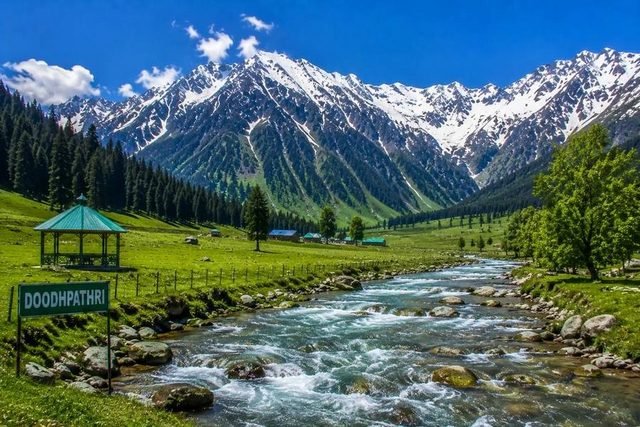
Known for: meadow landscapes. Doodhpathri has stayed off the standard circuit because it sits a little beyond the usual route through Jammu & Kashmir — close enough to reach in a day, far enough to keep its quiet.
Yusmarg
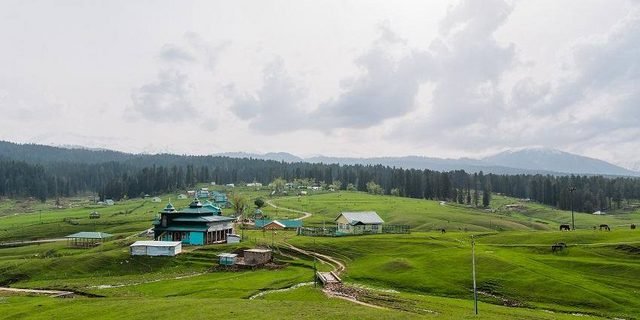
Known for: quieter meadow destination. Nothing about Yusmarg is staged for visitors. Come outside the short peak window and you may share its best hours with almost no one — that, more than any single sight, is the luxury here.
While You Are in Jammu & Kashmir
Start from the full Jammu & Kashmir travel guide for the complete picture. Headline destinations to pair with this trip: Srinagar · Gulmarg · Pahalgam. And eat the state properly while you are there — Rogan josh · Yakhni lead the table in the Food Atlas.
Frequently Asked Questions
What is Aharbal known for?
Aharbal is known for its waterfall and forest setting in South Kashmir, where the Veshaw River plunges through a pine-clad gorge — a powerful, surprisingly uncrowded cascade long loved locally as one of the valley's finest falls. It sits in this atlas on Jammu & Kashmir's offbeat list — the state's quieter, lesser-visited side.
What is the best time to visit Aharbal?
Spring to early autumn is generally best, when flow is strong from snowmelt and rains, roads are easier and the forest is green. Winter can be cold with reduced flow. Check local conditions and advisories before travelling in South Kashmir. For Jammu & Kashmir as a whole, Spring–autumn for valley sightseeing; winter for snow destinations.
How do I reach Aharbal?
Aharbal is reached by road from Srinagar via Shopian and Kulgam, making a long day trip or a stop on a South Kashmir circuit. Srinagar, with its airport, is the main gateway; hire a local car and driver familiar with the route. The usual gateway is Srinagar airport & the road via Shopian.
How many days do I need for Aharbal?
Plan on one full day from Srinagar. Most travellers pair Aharbal with Gurez Valley and Doodhpathri or the headline stops in the Jammu & Kashmir state guide rather than rushing it as a whistle-stop.
When is Aharbal waterfall at its most powerful?
Flow is generally strongest in late spring and summer, fed by snowmelt and seasonal rain, and quieter in winter. Exact volume varies with weather, so recent rain helps. Even at lower flow, the gorge and forest setting make the journey worthwhile.
Every Place. Every Flavour.
Aharbal is one of 154 offbeat places in this atlas — alongside 36 states and union territories, 188 destinations and 213 regional dishes, each with its own full guide page.
Explore all 36 states Read the blog