
Offbeat Place · North India
Sultanpur National Park: A Bird Sanctuary Beside Busy Gurugram

By Beauty of Bharat — India travel guide, every place, every flavour.
Guides covering all 36 States and UTs, researched from official sources and checked at publish time. Corrections welcome — see About Beauty of Bharat.

Just outside Gurugram's towers, in Haryana's flat farming country, Sultanpur National Park protects a shallow jheel and its surrounding acacia woodland and grassland. What began as a celebrated bird sanctuary — championed by ornithologist Peter Jackson and visited by Dr Salim Ali — is now a compact national park with watchtowers, hides and a walking trail around the water. Resident species such as painted storks, ibises and purple herons share the lake with large wintering flocks of ducks, geese and waders.
Sultanpur's offbeat charm is its contrast: one of north India's easiest birding escapes sitting almost in a metropolis's backyard, yet inside the gates the mood is all patience and quiet. A visit means arriving at dawn, walking slowly between hides, and letting the lake reveal itself — a sarus crane in the shallows, a kingfisher's blue flash, winter ducks rafting in mist. Because it is compact, it suits beginners perfectly, while serious birders still log remarkable winter lists here before breakfast in the city. Carry binoculars, move quietly between the hides, and the jheel will keep surprising you all morning long with new arrivals, small dramas and sudden flights of wings.
Sultanpur National Park at a Glance
| State | Haryana |
| Region | North India |
| Known for | Sultanpur National Park in Haryana is known for birding — a jheel-centred sanctuary near Gurugram where… |
| Gateway | Gurugram, Haryana |
| Best time to visit | November to February is peak season, when winter migrants fill the jheel and cool mornings make dawn walks… |
| Time needed | a dawn half-day from Gurugram or Delhi |
| State capital | Chandigarh |
| More offbeat in Haryana | 3 more places in this guide |
Why Sultanpur National Park Stays Off the Beaten Path
Sultanpur National Park in Haryana is known for birding — a jheel-centred sanctuary near Gurugram where painted storks, herons and winter migrants from Siberia and Europe gather, long championed by ornithologist Peter Jackson and local birdwatchers. It helps that Sultanpur National Park asks a little more of the traveller — a slower road, a plainer stay, a plan made around seasons rather than weekends — and repays the effort with room to breathe.
Presented honestly as lesser-known, never as an “undiscovered secret”: Sultanpur National Park is known and loved locally, and facilities are plainer than in Gurugram. Go for the place itself — the slower mornings, the unhurried conversations, the sense of Haryana without a crowd in front of it — and it will not disappoint.
Things to Do in Sultanpur National Park
The highlights below are the reasons to make the detour. None of them need a packed schedule — Sultanpur National Park rewards travellers who pick two or three and linger over them.
Walk the lake trail at dawn
Circle the jheel on the walking trail in the first hours, when birds are most active and the winter mist lifts slowly.
Watch from the hides and towers
Settle into the bird hides and watchtowers with binoculars, scanning shallows and reedbeds for storks, herons, ducks and shy waders.
Spot the winter migrants
Look for visiting ducks, geese and waders that travel from northern latitudes each winter, alongside resident painted storks and ibises.
Visit the interpretation centre
Browse the park's education and interpretation facilities to learn the sanctuary's story, its champion Peter Jackson and its key species.
Photograph birds responsibly
Bring a long lens if you have one, keep to the trails, and photograph without approaching nests or flushing resting flocks.
Best Time to Visit Sultanpur National Park
November to February is peak season, when winter migrants fill the jheel and cool mornings make dawn walks delightful. Resident birds reward visits year-round, but summer is harsh, and in dry years low water can reduce the spectacle considerably.
Across Haryana the wider season runs like this: October–March for outdoor and heritage exploration. Time Sultanpur National Park inside that window and you get the place at its best — and, this being the offbeat list, usually without the peak-season pressure of the headline stops.
How to Reach Sultanpur National Park
Sultanpur is reached by road from Gurugram in Haryana, with taxis and app cabs the easiest option from the city or Delhi. The park sits just off the Gurugram–Jhajjar road, making it a straightforward early-morning excursion for city-based birders.
Treat Chandigarh and the gateway above as your logistics base: stock up there, confirm local transport onward, and keep a buffer in the plan — remoter corners reward travellers who are not racing the clock.
Sultanpur National Park — Transport at a Glance
| Nearest airport | Delhi's Indira Gandhi International Airport (DEL) is the air gateway |
| Nearest railway station | Gurugram's stations serve the city; the park is a road trip from there |
| By road | By road from Gurugram just off the Gurugram–Jhajjar road; taxis and app cabs from the city or Delhi are the easiest option |
| Getting around | Boardwalks and hide trails around the lake are walked; go at dawn, when the birds are active |
More Offbeat Places in Haryana
Sultanpur National Park is one of 4 offbeat corners in the Haryana state guide — pair it with a sibling below for a slower, deeper trip.
Rakhigarhi

Known for: major Harappan archaeological site. Nothing about Rakhigarhi is staged for visitors. Come outside the short peak window and you may share its best hours with almost no one — that, more than any single sight, is the luxury here.
Pinjore
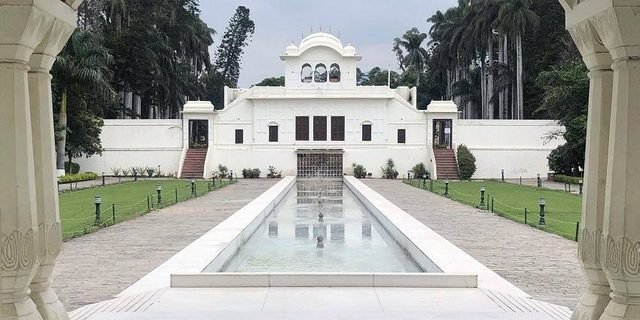
Known for: Mughal Gardens and heritage. It helps that Pinjore asks a little more of the traveller — a slower road, a plainer stay, a plan made around seasons rather than weekends — and repays the effort with room to breathe.
Kalesar National Park

Known for: forest landscape. Kalesar National Park has stayed off the standard circuit because it sits a little beyond the usual route through Haryana — close enough to reach in a day, far enough to keep its quiet.
While You Are in Haryana
Start from the full Haryana travel guide for the complete picture. Headline destinations to pair with this trip: Gurugram · Kurukshetra · Panipat. And eat the state properly while you are there — Bajra roti · Churma lead the table in the Food Atlas.
Frequently Asked Questions
What is Sultanpur National Park known for?
Sultanpur National Park in Haryana is known for birding — a jheel-centred sanctuary near Gurugram where painted storks, herons and winter migrants from Siberia and Europe gather, long championed by ornithologist Peter Jackson and local birdwatchers. It sits in this atlas on Haryana's offbeat list — the state's quieter, lesser-visited side.
What is the best time to visit Sultanpur National Park?
November to February is peak season, when winter migrants fill the jheel and cool mornings make dawn walks delightful. Resident birds reward visits year-round, but summer is harsh, and in dry years low water can reduce the spectacle considerably. For Haryana as a whole, October–March for outdoor and heritage exploration.
How do I reach Sultanpur National Park?
Sultanpur is reached by road from Gurugram in Haryana, with taxis and app cabs the easiest option from the city or Delhi. The park sits just off the Gurugram–Jhajjar road, making it a straightforward early-morning excursion for city-based birders. The usual gateway is Gurugram, Haryana.
How many days do I need for Sultanpur National Park?
Plan on a dawn half-day from Gurugram or Delhi. Most travellers pair Sultanpur National Park with Rakhigarhi and Pinjore or the headline stops in the Haryana state guide rather than rushing it as a whistle-stop.
I am a beginner at birding — is Sultanpur a good start?
It is one of the best starting points near Delhi: the trail is flat and compact, birds are plentiful in winter, and hides place you close to the action. Carry binoculars, wear muted colours, and consider joining a local birding walk on weekends.
Every Place. Every Flavour.
Sultanpur National Park is one of 154 offbeat places in this atlas — alongside 36 states and union territories, 188 destinations and 213 regional dishes, each with its own full guide page.
Explore all 36 states Read the blog