
Offbeat Place · East India
Kesaria Stupa: Towering Buddhist Stupa Rising from Bihar's Fields

By Beauty of Bharat — India travel guide, every place, every flavour.
Guides covering all 36 States and UTs, researched from official sources and checked at publish time. Corrections welcome — see About Beauty of Bharat.

In East Champaran district of Bihar, rice fields part around an astonishing sight: the Kesaria Stupa, a massive terraced brick mound rising in receding circular levels, with niches that once held Buddha images. Tradition connects Kesaria with the Buddha's last journey towards Kushinagar and with the ancient Kesaputta people addressed in the Kalama Sutta. Long buried and overgrown, the stupa was brought back to scholarly attention in modern excavations that revealed its true, immense scale.
Kesaria remains offbeat because it stands almost alone in the countryside, without a tourist town around it. Farmers work the surrounding fields, a handful of visitors climb the terraces, and the view from the top takes in an endless green Champaran plain. That simplicity is its power: one of Buddhism's largest monuments encountered in near silence, still half-wrapped in local life and legend. Combined with nearby Vaishali or the Valmiki country, it anchors a north Bihar Buddhist trail few travellers ever make. Visit early or late in the day for the kindest light on the brick terraces, carry water for the climb, and pause at the summit in silence, because Kesaria's scale is best understood slowly, with the wind moving over Champaran below.
Kesaria Stupa at a Glance
| State | Bihar |
| Region | East India |
| Known for | Kesaria Stupa is known as a large Buddhist stupa site in East Champaran, a towering terraced mound linked to… |
| Gateway | Motihari town & its railway station |
| Best time to visit | Visit between October and March for cool, clear days ideal for climbing the exposed terraces and enjoying the… |
| Time needed | half a day, paired with Vaishali |
| State capital | Patna |
| More offbeat in Bihar | 3 more places in this guide |
Why Kesaria Stupa Stays Off the Beaten Path
Kesaria Stupa is known as a large Buddhist stupa site in East Champaran, a towering terraced mound linked to the Buddha's final journey and the Kesaputta tradition, among the largest Buddhist stupas in the world. Nothing about Kesaria Stupa is staged for visitors. Come outside the short peak window and you may share its best hours with almost no one — that, more than any single sight, is the luxury here.
Presented honestly as lesser-known, never as an “undiscovered secret”: Kesaria Stupa is known and loved locally, and facilities are plainer than in Bodh Gaya. Go for the place itself — the slower mornings, the unhurried conversations, the sense of Bihar without a crowd in front of it — and it will not disappoint.
Things to Do in Kesaria Stupa
The highlights below are the reasons to make the detour. None of them need a packed schedule — Kesaria Stupa rewards travellers who pick two or three and linger over them.
Climb the terraced mound
Ascend the stupa's receding terraces for views over Champaran's fields, appreciating the sheer scale of this ancient brick monument from above.
See the Buddha niches
Walk the levels to find the niches and remains of Buddha images that once adorned the terraces in meditative rows.
Hear the Kesaputta story
Learn the tradition linking Kesaria to the Buddha's final journey and the Kalama Sutta's famous counsel on free inquiry.
Explore the surrounding countryside
Spend time in the villages and fields around the stupa, where daily Champaran life continues in the monument's great shadow.
Pair with Vaishali
Combine Kesaria with Vaishali, the ancient republic and Buddhist site in the same north Bihar region, for a deeper heritage day.
Best Time to Visit Kesaria Stupa
Visit between October and March for cool, clear days ideal for climbing the exposed terraces and enjoying the plain's views. Winter mornings can be misty and atmospheric. Avoid the harsh summer midday on the open mound and the monsoon's muddy approaches.
Across Bihar the wider season runs like this: October–March is generally comfortable for heritage circuits. Time Kesaria Stupa inside that window and you get the place at its best — and, this being the offbeat list, usually without the peak-season pressure of the headline stops.
How to Reach Kesaria Stupa
Reach Kesaria by road in East Champaran district, travelling from Motihari, the district headquarters with rail links, or as part of a circuit from Patna via Vaishali. Most visitors hire a car, as the stupa stands in open countryside outside town.
Most travellers fold Kesaria Stupa into a wider Bihar trip rather than coming only for it — paired with Bodh Gaya or the state guide's headline stops, it becomes the quiet chapter of the journey.
Kesaria Stupa — Transport at a Glance
| Nearest airport | Patna Airport (PAT) is Bihar's main air gateway |
| Nearest railway station | Motihari, the East Champaran district headquarters, has the rail links for Kesaria |
| By road | By road from Motihari, or on a circuit from Patna via Vaishali; most visitors hire a car, as the stupa stands in open countryside outside town |
| Getting around | The mound and its terraces are explored on foot; carry water — shade and facilities are minimal |
More Offbeat Places in Bihar
Kesaria Stupa is one of 4 offbeat corners in the Bihar state guide — pair it with a sibling below for a slower, deeper trip.
Vikramshila
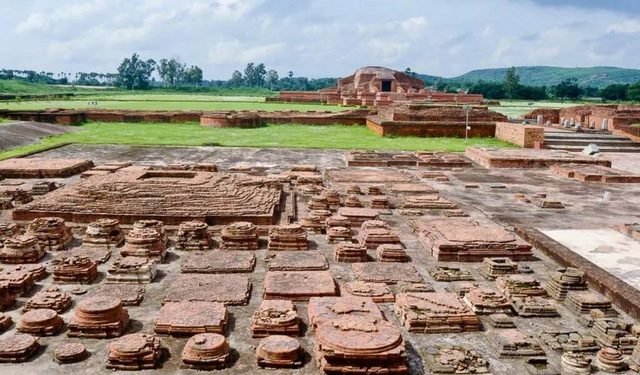
Known for: ancient Buddhist university ruins. Vikramshila has stayed off the standard circuit because it sits a little beyond the usual route through Bihar — close enough to reach in a day, far enough to keep its quiet.
Valmiki National Park

Known for: forest and wildlife. It helps that Valmiki National Park asks a little more of the traveller — a slower road, a plainer stay, a plan made around seasons rather than weekends — and repays the effort with room to breathe.
Madhubani region

Known for: Mithila art and culture. It helps that Madhubani region asks a little more of the traveller — a slower road, a plainer stay, a plan made around seasons rather than weekends — and repays the effort with room to breathe.
While You Are in Bihar
Start from the full Bihar travel guide for the complete picture. Headline destinations to pair with this trip: Bodh Gaya · Nalanda · Rajgir. And eat the state properly while you are there — Litti chokha · Sattu sharbat lead the table in the Food Atlas.
Frequently Asked Questions
What is Kesaria Stupa known for?
Kesaria Stupa is known as a large Buddhist stupa site in East Champaran, a towering terraced mound linked to the Buddha's final journey and the Kesaputta tradition, among the largest Buddhist stupas in the world. It sits in this atlas on Bihar's offbeat list — the state's quieter, lesser-visited side.
What is the best time to visit Kesaria Stupa?
Visit between October and March for cool, clear days ideal for climbing the exposed terraces and enjoying the plain's views. Winter mornings can be misty and atmospheric. Avoid the harsh summer midday on the open mound and the monsoon's muddy approaches. For Bihar as a whole, October–March is generally comfortable for heritage circuits.
How do I reach Kesaria Stupa?
Reach Kesaria by road in East Champaran district, travelling from Motihari, the district headquarters with rail links, or as part of a circuit from Patna via Vaishali. Most visitors hire a car, as the stupa stands in open countryside outside town. The usual gateway is Motihari town & its railway station.
How many days do I need for Kesaria Stupa?
Plan on half a day, paired with Vaishali. Most travellers pair Kesaria Stupa with Vikramshila and Valmiki National Park or the headline stops in the Bihar state guide rather than rushing it as a whistle-stop.
Why is Kesaria Stupa so little known despite its size?
The stupa lay buried under earth and vegetation for centuries and was scientifically explored only in recent decades, while Bihar's fame concentrated on Bodh Gaya and Nalanda. Its rural location also kept it off circuits, which now makes visiting feel like a genuine discovery.
Every Place. Every Flavour.
Kesaria Stupa is one of 154 offbeat places in this atlas — alongside 36 states and union territories, 188 destinations and 213 regional dishes, each with its own full guide page.
Explore all 36 states Read the blog