
US–Iran · News Corner
US Strikes on Iran's Qeshm Island Land as Talks Continue in Parallel

By Beauty of Bharat — India travel guide, every place, every flavour.
Guides covering all 36 States and UTs, researched from official sources and checked at publish time. Corrections welcome — see About Beauty of Bharat.
How does a strike happen on the same day diplomats call the talks "very intensive"? On the night of Monday 2 November 2026, explosions were reported on Iran's Qeshm Island in the Strait of Hormuz, and United States officials described the action as limited and defensive — while, in parallel, Iran's foreign minister confirmed that indirect discussions with Washington through mediators were continuing. The two tracks did not cancel each other out. This article sets out what is verified, what remains unconfirmed, and what the next few days are likely to turn on.
What happened on Qeshm Island on Monday night
Iran's state news agency IRNA reported that several explosions were heard in rapid succession late on Monday on Qeshm Island, off Iran's southern coast near the Strait of Hormuz, and that witnesses said they saw two aircraft flying over the island. The semi-official Fars news agency reported explosions in the port city of Bandar Lengeh as well, coming from the direction of the sea. The Wall Street Journal, citing United States officials, was first to report that the United States military had carried out the strikes.
American officials described the operation in narrow terms. One official told the Associated Press that the targets were Iranians using surface-to-air missiles against United States assets. Other officials told the Journal that the strikes were defensive, aimed at restricting Iran's ability to attack commercial shipping in the Strait of Hormuz, and that they were limited rather than a return to major combat operations. The Journal also reported that Washington had carried out a series of smaller-scale strikes in recent weeks and had kept them quiet, so as not to signal a return to its wider campaign; the last attacks known before this one were in early September. The Pentagon referred questions to United States Central Command, which did not immediately respond to Reuters.
What exactly was hit, and with what effect, is not yet established. Iranian state media reported five explosions, but damage and any casualties had not been confirmed in the reporting available at the time of writing, and this article states neither. Treat any social-media claim about destroyed targets or casualties as unconfirmed unless an official source or reputable news organisation verifies it.
The drone claims that came first
Earlier on the same Monday, Iran's Islamic Revolutionary Guard Corps (IRGC) claimed it had captured two United States drones, described as reconnaissance aircraft, south of Qeshm using electronic-warfare systems, and destroyed an MQ-9 drone east of the Strait of Hormuz. Reporters with Fox News and Axios, citing a United States official, linked the American strikes to the IRGC firing at a United States aircraft in the strait on Monday. Another account, reported by The National News citing a United States official via Axios, said an Iranian surface-to-air missile had brought down an American drone over waters east of the strait and that a United States fighter jet then destroyed the missile launcher on Qeshm in self-defence.
These accounts overlap but are not identical — Iranian claims on one side, unnamed American officials on the other. The safest reading is that a drone and missile incident preceded the strikes, but the precise sequence, the number of drones, and the exact target remain conflicting or incomplete. On Tuesday 3 November, President Donald Trump confirmed in a Fox News telephone interview that the United States had struck Iran, describing it as a "minor attack" on an anti-aircraft facility: "They built an anti-aircraft facility... As soon as it was completed, we hit it last night very nicely," as reported by NDTV and other outlets. That confirms the strike, but does not settle the damage or the full target list.
Why Qeshm matters
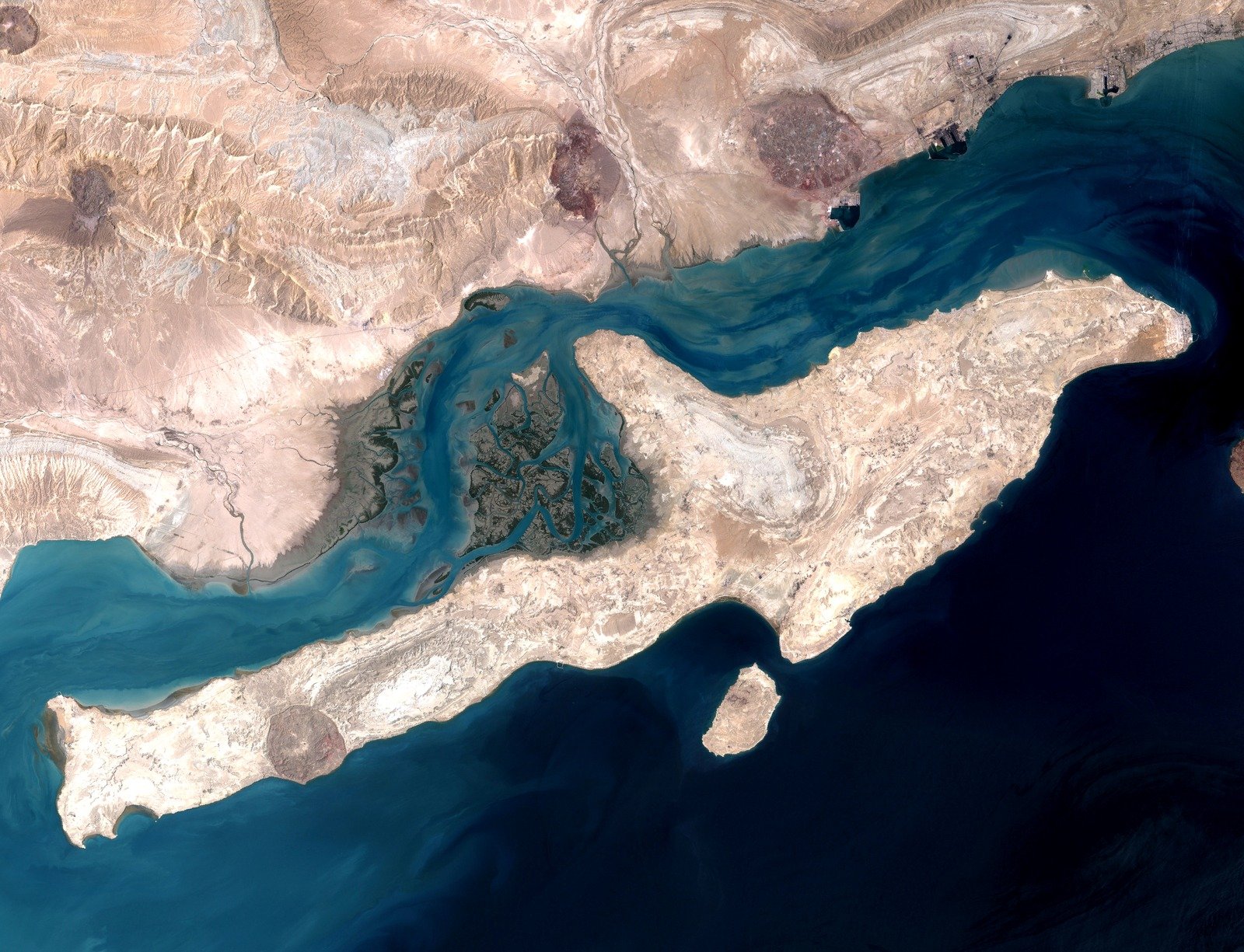
Qeshm is Iran's largest island in the Persian Gulf, about 1,491 square kilometres and roughly 135 kilometres long, in Hormozgan province near Bandar Abbas. Separated from the mainland by the narrow Clarence Strait, it sits at the mouth of the Strait of Hormuz, the waterway between the Persian Gulf and the Gulf of Oman through which a large share of the world's seaborne oil and gas has historically passed. Its mangroves and geological sites form part of the Qeshm Island UNESCO Global Geopark, the first such geopark in the Middle East.
That geography is why a strike on Qeshm carries weight beyond the island itself: anything threatening Hormuz shipping moves energy markets quickly. After the strike reports emerged, oil prices rose early on Tuesday, with Al Jazeera reporting West Texas Intermediate crude up $1.60 at $98.06 a barrel and Brent up $1.84 at $106.61 by 07:44 GMT. That followed a sharp fall on Monday, when Brent settled $8.66, or 7.63 percent, lower at $104.77 as hopes of talks grew, according to Reuters figures reported by the Indian Express. The strait has been largely blocked to normal commercial traffic since the war began in late February 2026, according to NDTV's summary.
Talks running in parallel
While the strikes were being reported, the diplomatic track had not stopped. On Monday, Iran's Foreign Minister Abbas Araghchi said in a video interview with IRNA that indirect talks with the United States were under way through mediators and were "very intensive". He said: "Given the sensitivity and gravity of the current situation, consultations and deliberations are very intensive. Qatar and Pakistan are playing a very active mediating role in these negotiations." Reuters later reported, via Arab News, that Qatari mediators travelled to Tehran on Monday night for further talks with Araghchi, and that a version of a draft United States–Iran deal that had been under negotiation for eight days was under discussion.
At the same time, the talks had not produced a breakthrough. The Jerusalem Post, citing Reuters, reported that days-long Qatari-mediated indirect talks ended on Monday with no significant movement toward a deal, and that Araghchi warned that renewed military operations would be met with a heavy response. Foreign Ministry spokesperson Esmaeil Baghaei said dialogue was continuing through mediators, and that Iran's plan to reopen the Strait of Hormuz had been condensed and could be implemented within two days if Washington met Tehran's conditions — including, per Al Jazeera and the Indian Express, an end to the naval blockade of Iranian ports, repeal of sanctions, a guarantee that strikes will stop, and a full regional ceasefire, especially in Lebanon.
On the American side, President Trump said on Monday that a deal was "coming together very nicely" and that Iran wants a settlement, writing on Truth Social that it "could happen". Vice President JD Vance said the United States had held "a number of good conversations with the Iranians" and that he and the president felt "pretty good about the prospects for potentially coming to a negotiated settlement". When Trump was asked on Monday whether he was considering striking Iran after Tuesday's midterm elections, he replied "no", according to Al Jazeera — an answer given hours before the Qeshm strikes were reported, and one reason the timing drew so much attention.
Context and what to watch
The Qeshm strikes sit inside a war that, by the reporting of the Indian Express and Al Jazeera, began on 28 February 2026, when the United States and Israel attacked Iran, and that has now run for about eight months. A memorandum signed by Washington and Tehran in June did not end tension over security arrangements and shipping through the strait. The strikes on Qeshm were not the island's first experience of this war: Mathrubhumi noted that Qeshm was previously struck by the United States on 2 June 2026.
A second pressure point is political. The strikes were reported on the eve of the United States midterm elections on Tuesday 3 November, deciding control of the House and Senate. The Associated Press reported that Israeli Prime Minister Benjamin Netanyahu had pressed Trump in a weekend call for another wave of strikes after the elections, and that Trump did not commit. The same reporting said a return to full-scale war could help Netanyahu form an emergency government after he and his allies lost their parliamentary majority the previous week — a motive attributed by AP to its sources, not a confirmed fact. Other regional allies, the Indian Express reported, have warned that more strikes would destabilise the area.
For readers in India and elsewhere, the practical stakes are energy prices, shipping, and the risk of a wider conflict, rather than the island itself. No specific price forecast can responsibly be made from one night's strikes, but the honest summary is divided: the military signal points toward continued limited strikes, while the diplomatic signal points toward intensive, mediator-led talks with no agreement yet announced. Both can be true at once, and the next steps will show which track gains ground.
What to watch next
Watch for any official statement from United States Central Command or Iranian authorities confirming what was hit and whether there were casualties, since neither has been verified so far. Watch also for further Qatari mediator meetings in Tehran or Doha, and for any statement changing the conditions for reopening the Strait of Hormuz. Until then, the story remains what reporting supports: a limited strike, intensive talks, and no deal announced.
Frequently Asked Questions
Did the United States strike Iran's Qeshm Island?
Yes. The Wall Street Journal first reported the strikes citing United States officials, the Associated Press cited an American official describing defensive strikes, and President Donald Trump confirmed on Fox News on 3 November that the United States had struck an anti-aircraft facility on Qeshm, calling it a "minor attack".
When did the strikes happen, and what was reported on the island?
Explosions were reported late on Monday 2 November 2026. Iran's IRNA news agency reported several explosions in rapid succession on Qeshm Island, with witnesses reporting two aircraft overhead, and the Fars news agency reported explosions in Bandar Lengeh as well.
Why did the United States say it struck Qeshm?
American officials described the strikes as defensive. One official told the Associated Press the targets were Iranians using surface-to-air missiles against United States assets, and other officials told the Wall Street Journal the aim was to restrict Iran's ability to attack commercial shipping in the Strait of Hormuz.
Were the strikes a return to full-scale war?
Not according to the officials cited in the reporting. They described the operation as limited, not a resumption of major combat operations, and no official announcement of a wider campaign accompanied the Qeshm reports.
Are the United States and Iran still talking?
Yes, through mediators. Iran's Foreign Minister Abbas Araghchi said on 2 November that indirect talks were "very intensive" and that Qatar and Pakistan were playing a very active mediating role. Reuters reported Qatari mediators travelled to Tehran on Monday night, but the same reporting said the talks had ended that day with no significant movement toward a deal.
What is still unconfirmed?
The exact targets hit, the extent of any damage, and whether anyone was killed or injured. Iranian and American accounts also differ on the drone and missile incident before the strikes, so the precise sequence remains unconfirmed.
The Hormuz incident this story is not
This is separate from the earlier Hormuz tanker-fires story — see our earlier report: Hormuz tanker fires.