
Nitish Setu · Bihar · News Corner
Nitish Setu Opens: Bihar’s ₹4,280 Crore, 19.7 km Bridge Across the Ganga — and What It Changes for Travellers

By Beauty of Bharat — India travel guide, every place, every flavour.
Guides covering all 36 States and UTs, researched from official sources and checked at publish time. Corrections welcome — see About Beauty of Bharat.
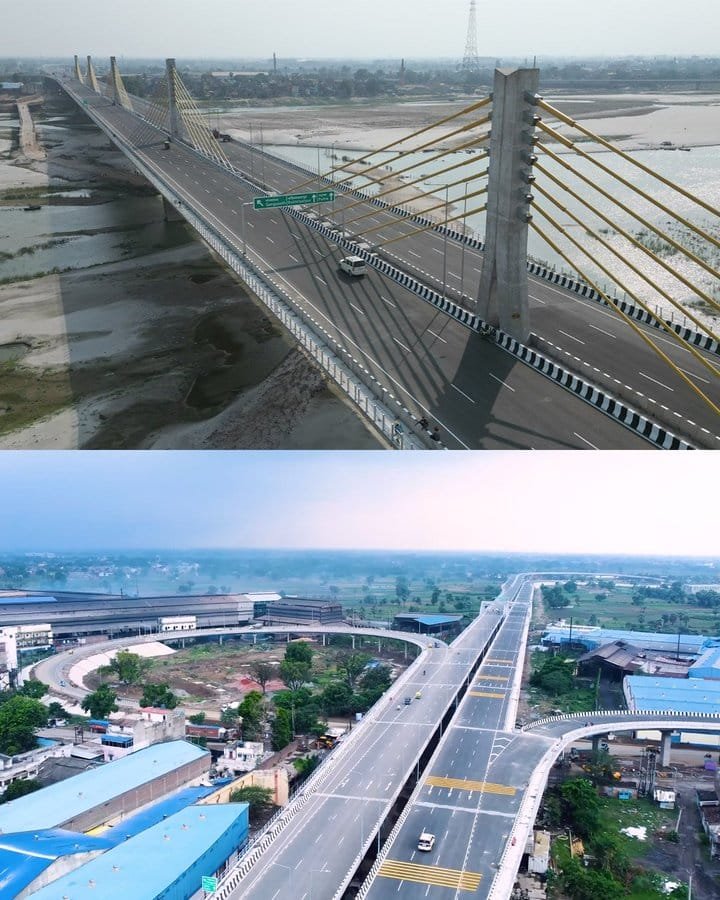
Nitish Setu, a 19.7 km six-lane bridge across the Ganga in Bihar, was inaugurated on Saturday 21 November 2026, when Prime Minister Narendra Modi visited Vaishali district and dedicated the project to the nation. Built at a cost of around ₹4,280 crore, the extradosed cable-stayed bridge connects Kachhi Dargah on NH-22 in Patna district with Bidupur on NH-322 in Vaishali district — and it is meant to take the pressure off the two crossings travellers in Bihar have relied on for decades, the Mahatma Gandhi Setu and the JP Setu.
Fourteen years after the project was first taken up, a 19.7 km bridge across the Ganga finally opened on Saturday — and it was named after the man who started it, which is why the opening itself became a political argument. The Bihar government named the completed structure “Nitish Setu” on 13 November 2026, after former Chief Minister Nitish Kumar, under whom the project began in 2012. By the time the Prime Minister arrived in Vaishali, the name had already drawn a sharp reaction from the opposition — and a warm public moment between the two men at the centre of it.
The bridge in numbers
On paper, Nitish Setu is one of the longest river bridges in the country. The Press Information Bureau puts the project at 19.7 km in total: a 9.7 km main bridge over the Ganga and 10 km of approach roads on either bank. Some press reports put the figures a fraction higher, at about 19.76 km in total with a 9.76 km main bridge. Either way, it is a very long crossing — the main bridge alone is nearly ten kilometres of concrete and cable over the river.
| Detail | Nitish Setu |
|---|---|
| Total length | 19.7 km (9.7 km main bridge + 10 km approach roads) |
| Lanes | Six |
| Width | About 32 m |
| Bridge type | Extradosed cable-stayed bridge |
| Longest spans | Up to 150 m between main pillars |
| Cables | 15.2-mm specialised cables sourced from South Korea |
| Cost | Around ₹4,280 crore |
| Route | Kachhi Dargah (NH-22, Patna district) to Bidupur (NH-322, Vaishali district), via Raghopur Diyara island |
| Built by | Larsen & Toubro and Daewoo E&C (South Korea) joint venture, for Bihar State Road Development Corporation Ltd (BSRDCL), on an EPC model |
| Also on the bridge | Pedestrian pathways |
The engineering tells its own story. An extradosed cable-stayed bridge uses low pylons and taut cables to carry the deck — a design chosen for long spans over a wide, shifting river like the Ganga. The main pillars stand up to 150 metres apart, and the 15.2-mm cables holding the deck were brought in from South Korea. The crossing also passes through Raghopur Diyara, the river island between the two banks, which is part of why the approaches alone run to 10 km. And unlike the older crossings it relieves, the new bridge has pedestrian pathways built in.
What happened on Saturday
The Prime Minister’s day in Bihar was built around the bridge. According to the Press Information Bureau, he visited Nitish Setu in Vaishali district at about 1:15 pm on 21 November, then inaugurated and dedicated development projects worth around ₹34,470 crore in Vaishali and addressed a gathering there. The bridge was the centrepiece of the visit, but it was presented as part of a much larger package of projects for the district.
The day also produced the image that travelled furthest. At Patna airport, the Prime Minister hugged former Chief Minister Nitish Kumar, and later waved a gamcha — the traditional cotton towel that has become a familiar political prop in Bihar — to the crowd. It was a deliberately warm public moment, and it sat in sharp contrast to the argument running alongside the inauguration about the bridge’s name.
Why it matters for travellers
For anyone who travels in Bihar, the Ganga has always been the bottleneck. North and South Bihar sit on opposite banks, and every crossing funnels through a small number of bridges. The Mahatma Gandhi Setu, which links Patna with Hajipur and the north, has carried far more traffic than it was built for over the years, and the JP Setu has taken its share too. A new six-lane crossing changes that arithmetic: it gives traffic a third major route across the river in this stretch, and it should ease the congestion that has defined the Patna–Vaishali crossing for years.
The practical effect is straightforward. Travellers heading between Patna and the districts of north Bihar — Vaishali, Muzaffarpur and beyond — now have a new direct link, and the older bridges should carry less of the load. What no source we checked does is put a number on the saving: there is no published figure for how much time the new route cuts off a journey, so plan on the crossing being easier rather than on a specific number of minutes saved.
One thing to be careful about: the bridge was inaugurated and dedicated to the nation on 21 November, and the sources we checked do not state plainly when regular traffic begins using it. If you are planning a trip that depends on crossing by Nitish Setu, check locally first — with your hotel, your driver, or local news — before routing your journey across it.
Why it is called Nitish Setu
The bridge spent most of its life under a different name. It was planned and built as the Kachhi Dargah–Bidupur Bridge, named for the two places it joins, and it was first taken up in 2012, when Nitish Kumar was Chief Minister of Bihar. Fourteen years later, on 13 November 2026, the Bihar government announced that the completed structure would be called “Nitish Setu”, after the former Chief Minister.
The naming did not pass quietly. RJD working president Tejashwi Yadav questioned the decision, alleging that the BJP was signalling that Nitish Kumar’s political career was over. The reaction was reported as a political response to the naming, not as a dispute about the bridge itself — nobody in the row questioned the bridge, only what its name was taken to mean. It is worth saying plainly: the argument is about politics, and the bridge is about a crossing. Travellers will judge it by the second.
There is also a longer story behind the fourteen years. Big river bridges in India are slow to build at the best of times — the Ganga shifts its course, the foundations have to reach deep, and a project of this size passes through several governments. That Nitish Setu took from 2012 to 2026 is not unusual for a crossing of this scale. What is unusual is that it was named, in the end, for the chief minister who first took it up.
If you are travelling in Bihar
Vaishali, on the northern bank, is one of Bihar’s oldest and most storied districts, and Patna, on the southern bank, is the base most travellers use for this part of the state. The new bridge joins the two directly, and once traffic is flowing across it, it should make the Patna–Vaishali run simpler than the older crossings allowed. Until then, the Mahatma Gandhi Setu and JP Setu remain the established routes across the river here.
Our advice is simple: if your trip depends on the new bridge, confirm it is carrying traffic before you set out, and keep the older crossings as your fallback. The bridge is a genuine improvement to Bihar’s road network — it is just worth remembering that an inauguration and the first day of regular traffic are not always the same day.
Frequently asked questions
Where is Nitish Setu?
Nitish Setu crosses the River Ganga between Kachhi Dargah on NH-22 in Patna district and Bidupur on NH-322 in Vaishali district, Bihar, passing through Raghopur Diyara island.
How long is Nitish Setu, and what did it cost?
The project is 19.7 km long in total — a 9.7 km main bridge plus 10 km of approach roads — with six lanes, and it was built at a cost of around ₹4,280 crore, according to the Press Information Bureau. Some press reports put the figures a fraction higher, at about 19.76 km in total with a 9.76 km main bridge.
When was Nitish Setu inaugurated?
On Saturday 21 November 2026. Prime Minister Narendra Modi visited the bridge at about 1:15 pm that day, then inaugurated and dedicated development projects worth around ₹34,470 crore in Vaishali and addressed a gathering there.
Is Nitish Setu open to traffic?
It was inaugurated and dedicated to the nation on 21 November 2026. The sources we checked do not state plainly when regular traffic begins, so check locally before planning a crossing on the new bridge.
Why is it called Nitish Setu?
The Bihar government named the completed bridge “Nitish Setu” on 13 November 2026, after former Chief Minister Nitish Kumar. The project was first taken up in 2012, during his tenure as Chief Minister. It was formerly known as the Kachhi Dargah–Bidupur Bridge.
What does Nitish Setu change for travellers?
It gives North and South Bihar a new direct link across the Ganga, easing traffic congestion and taking pressure off the existing Mahatma Gandhi Setu and JP Setu. No source we checked quantifies a travel-time saving, so there is no published figure to plan around yet.
Planning a trip across the Ganga in Bihar?
Start with our Vaishali guide and our Patna guide, plus the best weekend trips from Patna and the Bihar state guide. For the latest updates, see the News Corner.