
Swachh Survekshan 2025–26 · News Corner
Navi Mumbai Is Now India’s Cleanest City — and It Ended Indore’s Eight-Year Reign

By Beauty of Bharat — India travel guide, every place, every flavour.
Guides covering all 36 States and UTs, researched from official sources and checked at publish time. Corrections welcome — see About Beauty of Bharat.
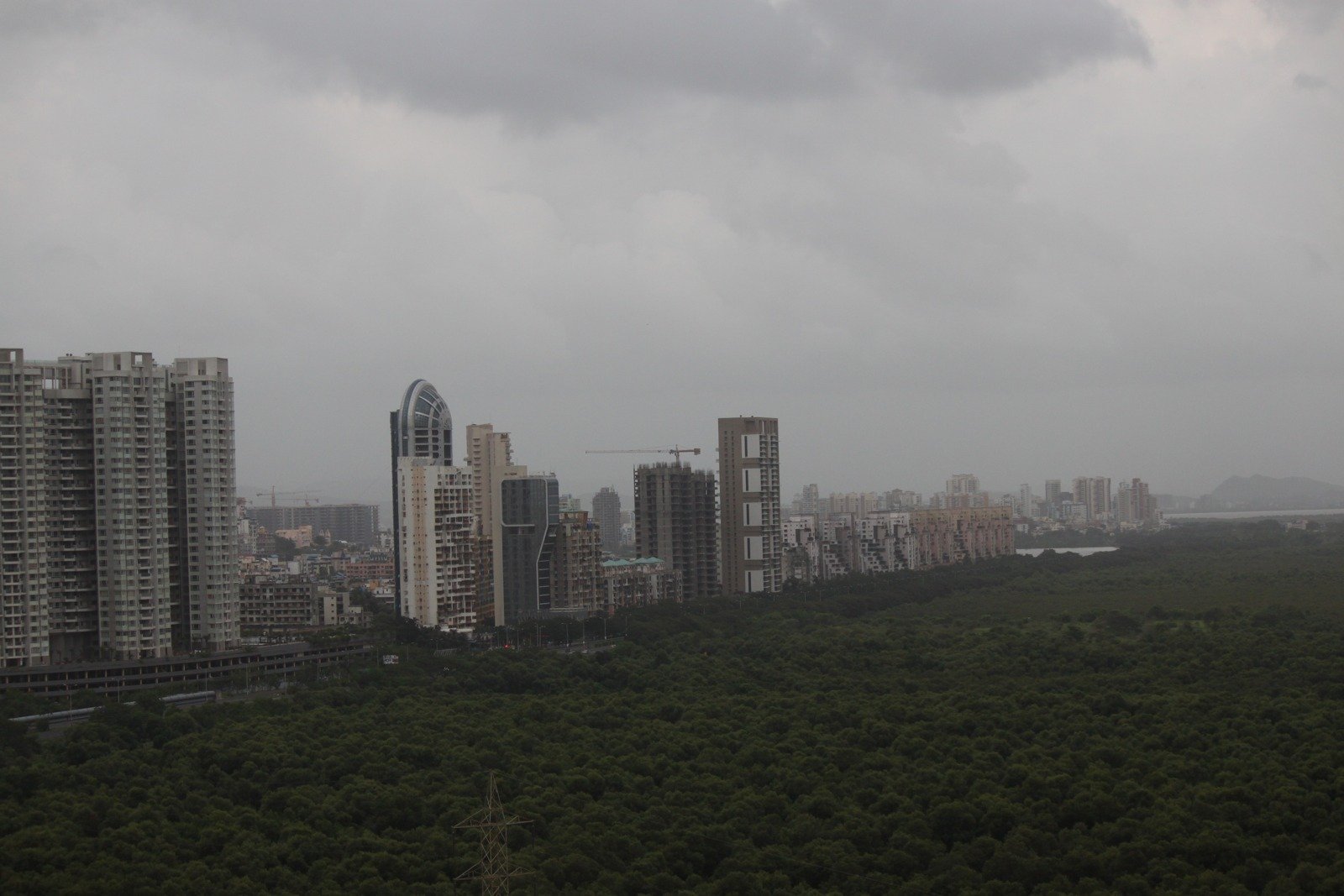
For eight years, one city owned this crown so completely that the award felt like a formality. Then, on Wednesday 11 November 2026, in New Delhi, President Droupadi Murmu called a different name — and handed India’s cleanest-city award to Navi Mumbai’s Mayor, Sujata Patil. The planned city across Thane Creek had finished first in the Super Swachh League of Swachh Survekshan 2025–26, ahead of Surat in second and Vijayawada in third, among 4,751 urban local bodies. Indore, the eight-time champion, was not even in the top three this year. But it has not vanished from the rankings — it has taken on a new job instead.
The awards were presented at the 10th Swachh Survekshan Awards, the flagship cleanliness assessment of the Swachh Bharat Mission–Urban. This edition carried the theme Swachhata Ki Nayi Pehel – Badhayein Haath, Karein Safai Saath — a new beginning for cleanliness, with everyone lending a hand. More than 3,000 trained assessors carried out on-ground checks across the country, backed by real-time GPS-enabled monitoring, and the whole process — from evidence submission to verification — was conducted digitally. The survey also put fresh weight on citizen feedback and on keeping tourist spots, riverfronts and coastlines clean.
The result in one minute
Navi Mumbai topped the overall ranking — the Super Swachh League — with Surat second and Vijayawada third. That is a sharp climb: in last year’s survey, the order was Indore first, Surat second and Navi Mumbai third. The survey also named winners by population and geography, so several cities went home with a title on the same day:
| Category | Winner | Runners-up |
|---|---|---|
| Cleanest city overall (Super Swachh League) | Navi Mumbai, Maharashtra | Surat; Vijayawada |
| Cities above 10 lakh population | Greater Visakhapatnam | Jabalpur; Lucknow |
| Cities of 3–10 lakh population | Ujjain | Chandigarh; Guntur |
| Cities of 50,000–3 lakh population | Dewas | New Delhi Municipal Council area; Sagar |
| Cities of 20,000–50,000 population | Vita, Maharashtra | Aska; Panaji |
| Cleanest riverfront town | Rewa | Bilaspur; Varanasi |
| Cleanest coastal town | Puri | Alappuzha; Ratnagiri |
| Cleanest Himalayan city | Rudrapur | Jammu; Shopian |
Maharashtra had a good day beyond the top prize: Vita topped the 20,000–50,000 category, Panchgani finished second among cities below 20,000 people, Ratnagiri was third among coastal towns, and Pimpri-Chinchwad was recognised as the state’s first Swachh city.
Eight years of Indore — and the climb from third
To understand what Navi Mumbai beat, start with Indore. The Madhya Pradesh city had topped the cleanliness rankings for eight consecutive years, built on unglamorous sequencing: its corporation began a door-to-door collection pilot in two of 85 wards in January 2016 and reached full coverage by the end of that year, households now separate waste into six streams, a GPS-tracked fleet reports to a central command centre, and fines back up the rules on segregation and littering. Its bio-CNG plant turns wet waste into fuel for city buses. That is a formidable record to displace — and Navi Mumbai did it in a single year, jumping from third to first.
The Navi Mumbai Municipal Corporation (NMMC) dates the climb to three to four years of sustained effort under the motto Nischay Kela, Number Pahila — determined to be number one. Commissioner Dr Kailas Shinde credits two things above all: technology and public participation. The city’s Integrated Command and Control Centre tracks garbage vehicles by GPS, residents file complaints and follow their resolution through the MyNMMC app and a Citizen Grievance Portal, and students and young people have been drawn into cleanliness drives across the nodes.
How Navi Mumbai actually won
The award rests on systems rather than a single clean-up drive. Navi Mumbai holds the Seven-Star Garbage-Free City rating and Water Plus certification, treats 100% of its sewage, and has curbed plastic use across the city. Its Textile Recovery Facility at Belapur, built with the Union Ministry of Textiles’ Textile Committee, is described as the country’s first municipal facility of its kind — old clothes and fabric waste are collected and processed instead of going to landfill.
The honest picture includes gaps: housing societies have been slow to adopt the textile bins, and segregation at source remains inconsistent — the weak spot that holds back most Indian cities. The ranking rewards the systems that are working and the direction of travel; keeping them working every day of the year, not just in survey season, is the harder test. Experts quoted after the results called the ranking only a first step, and the NMMC is already preparing a follow-up, the Sugandhi Shahar Abhiyan — a Fragrant City Campaign — to build on the win.
Indore didn’t lose — it got promoted to mentor
Here is the twist that makes this year’s result more interesting than a simple changing of the guard. Indore has not dropped out of the Swachh Survekshan story; it has moved into a new category, the Mentor City category, under the Centre’s Swachh Shehar Jodi initiative, which pairs high-performing cities with other urban centres to help them improve. Ahmedabad and its partner town Sanand took first place in this category, Indore finished second with its partner town Depalpur, and Tirupati with Kuppam finished third.
The mentorship idea is showing measurable results. According to the Union Housing and Urban Affairs Ministry, cities participating as mentees improved between the 2024–25 and 2025–26 surveys: visible cleanliness rose from 48% to 70%, door-to-door waste collection from 52% to 74%, source segregation from 16% to 30%, access to sanitation from 11% to 38%, used-water management from 32% to 53%, and advocacy for swachhata from 48% to 66%.
The eight-year champion is now teaching others how to win the crown — and the students are catching up fast.
No — Navi Mumbai is not a Mumbai suburb
Every report of this award has had to clear up the same misconception, and it matters: Navi Mumbai is not part of Mumbai. It was planned as a satellite city across Thane Creek after Greater Mumbai’s population doubled from three million to nearly six million between 1951 and 1971, and the City and Industrial Development Corporation (CIDCO) was formed in 1971 to build it on marshland and former village land. The Navi Mumbai Municipal Corporation began functioning in 1992, governs the nodes from Airoli to Belapur, and is headed by its own mayor and municipal commissioner — while Mumbai is run by the Brihanmumbai Municipal Corporation (BMC). Navi Mumbai grew out of Mumbai’s need for space, but it was never carved out of the older city, so this award belongs to the NMMC alone.
The contrast with its older neighbour is stark. In the 2024–25 survey, Greater Mumbai was listed among the 10 lowest-scoring cities with populations above 10 lakh. The BMC handles more than 6,500 tonnes of waste a day, around 5,900 tonnes of it going to the Kanjurmarg landfill, and limited public participation and incomplete segregation have slowed its goal of a zero-garbage city by 2030. Air quality adds to the strain: only seven days of ‘good’ air were counted across the five winters from 2021 to 2026. Navi Mumbai’s win is, among other things, a demonstration that a planned city with enforced segregation, live monitoring and recycled water for dust suppression can do what a much bigger, older city has struggled to do — though Mumbai’s scale makes the task genuinely harder.
What the win means if you visit
For travellers, the practical meaning of the award is simple: clean streets, cared-for public spaces and a waterfront you can actually enjoy. Navi Mumbai is organised into planned nodes — Vashi, Nerul, Belapur, Kharghar and Airoli among them — linked by wide roads and the Palm Beach Road promenade that runs along the creek, past the mangroves in the photograph above. It is an easy hop from Mumbai by local train across the Vashi Creek bridge, and the Atal Setu sea bridge has made the drive quicker still.
Come with the right expectations. This is a working planned city, not a heritage destination — the award measures civic cleanliness, not tourist sights. What it offers is a pleasant, orderly base: the Palm Beach Road waterfront at sunset, Kharghar’s Central Park, the DY Patil Stadium at Nerul, and green spaces noticeably better kept than their counterparts across the creek. Pair it with our Mumbai guide and the difference becomes visible within a single day trip — two cities, one creek apart, run on two very different systems.
Frequently asked questions
Which city is India’s cleanest city now?
Navi Mumbai, Maharashtra. It finished first in the Super Swachh League of Swachh Survekshan 2025–26, announced on 11 November 2026 in New Delhi, ahead of Surat in second and Vijayawada in third.
How long had Indore held the title?
Eight consecutive years. Indore topped the cleanliness rankings every year until this edition, when it moved into the new Mentor City category under the Swachh Shehar Jodi initiative, finishing second with its partner town Depalpur.
Who were second and third in the overall ranking?
Surat in Gujarat finished second and Vijayawada in Andhra Pradesh finished third, in the same Super Swachh League as Navi Mumbai.
Is Navi Mumbai part of Mumbai?
No. Navi Mumbai is a separate planned city across Thane Creek, built by CIDCO from 1971 and governed since 1992 by its own municipal corporation, the NMMC, with its own mayor and commissioner. Mumbai is run by the BMC.
How was Swachh Survekshan 2025–26 conducted?
As many as 4,751 urban local bodies took part. More than 3,000 trained assessors carried out on-ground checks with real-time GPS-enabled monitoring, the process was conducted digitally from evidence submission to verification, and citizen feedback and the cleanliness of tourist and heritage hotspots carried fresh weight.
What does the win mean for visitors?
Cleaner streets, public spaces and waterfronts, and a well-kept planned city that works as a relaxing day trip or base next to Mumbai. The award measures civic cleanliness, not tourist sights, so come for the order and the open spaces rather than heritage monuments.
Planning a Maharashtra trip?
Start with our Maharashtra state guide and the Mumbai guide, then the best places to visit in Maharashtra, plus Alibaug for the coast and Pune for the city’s food and history. And the News Corner for the day’s other stories.