
Japan · News Corner
Japan at 80: A Constitution Never Amended, and a Debate That Will Not Settle

By Beauty of Bharat — India travel guide, every place, every flavour.
Guides covering all 36 States and UTs, researched from official sources and checked at publish time. Corrections welcome — see About Beauty of Bharat.
Can a country's supreme law survive eighty years without a single change? In Japan, the answer so far is yes — and the anniversary of that document on 3 November 2026 arrived with the same unresolved question that has followed it for decades: whether, and how, it should ever be amended.
What happened on 3 November
Japan on Tuesday 3 November 2026 marked 80 years since the promulgation of its postwar Constitution, Kyodo News reported. The Constitution was promulgated on 3 November 1946 and went into force in May the following year, after being drafted by the United States-led occupation forces following the Second World War. Eight decades on, Kyodo described the path toward a first-ever amendment as uncertain, despite Prime Minister Sanae Takaichi's push for a proposal to be "in sight" by early 2027.
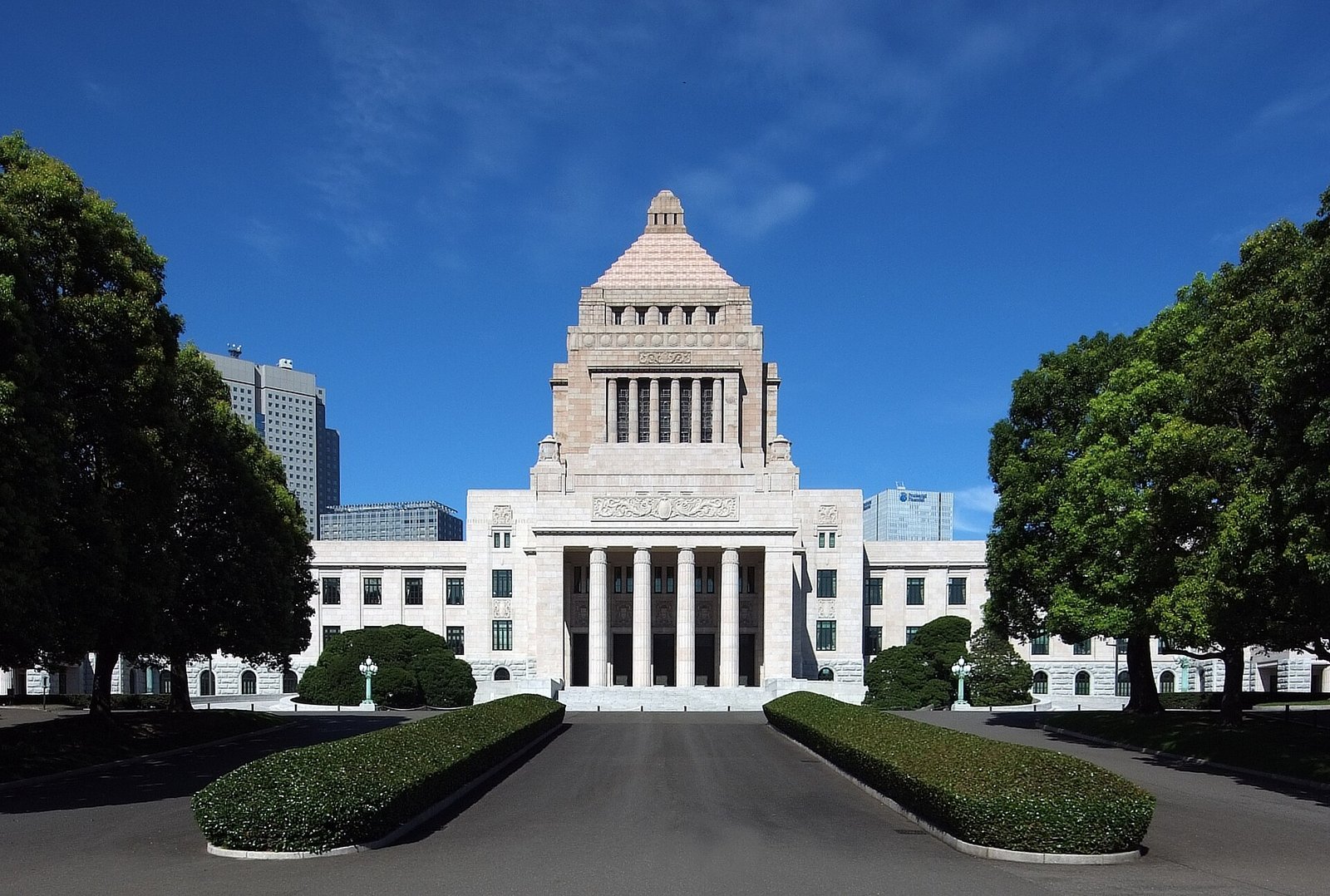
The anniversary did not pass quietly in Tokyo. More than 10,000 people gathered in front of the National Diet building to protest moves by Takaichi's government to revise the Constitution and expand military capabilities, according to a report on the rally. The demonstrators' central demand was the protection of the Constitution in its current form, and in particular of its pacifist provisions. Some of those quoted at the rally argued that the Constitution had kept Japan out of other countries' wars, and warned that revision would move the country in the opposite direction.
The rally also reflected wider unease about the direction of security policy. The same report noted recent discussion in the Takaichi administration about nuclear policy, including Defence Minister Shinjiro Koizumi repeatedly saying that "no options are ruled out" in discussions about introducing nuclear-powered submarines, and Takaichi telling parliament that the government would seriously consider the possibility of the Self-Defense Forces acquiring such submarines in a "concrete and realistic manner". Japanese media have also reported, according to the rally report, that the government may revise wording concerning the Three Non-Nuclear Principles when it updates the country's three key security documents by the end of this year. Those reports are not, on their own, a constitutional amendment — but they help explain why the anniversary felt, to protesters, like a turning point rather than a ceremony.
Why the Constitution has never been changed
The most striking fact about Japan's postwar Constitution is its untouched text. It has never been amended since it came into force in 1947. That is not an accident of neglect: the amendment procedure itself is deliberately demanding.
Under Article 96 of the Constitution, an amendment must first be initiated by the Diet, Japan's parliament, through a concurring vote of two-thirds or more of all the members of each House. It must then be submitted to the people for ratification, which requires the affirmative vote of a majority of all votes cast at a special referendum or at an election specified by the Diet. Only after ratification is the amendment promulgated by the Emperor in the name of the people, as an integral part of the Constitution.
In practice, that means two separate supermajorities and then a public majority — a sequence that has never yet been completed for any proposal. The hurdle also shapes the politics: a government can command a large majority in one House and still fall short in the other, and even a Diet majority does not guarantee a referendum majority. That double lock is a large part of why debate has run for decades without producing a single amendment.
What Takaichi wants, and where the push stalls
At the heart of the current debate is Article 9, the clause that renounces war and prohibits Japan from possessing military forces or other "war potential". Kyodo identified revising Article 9 as part of the continuing debate. Takaichi, who is also president of the ruling Liberal Democratic Party (LDP), has made constitutional revision a stated priority, and the LDP's 2026 policies, adopted at its annual convention on 12 April 2026, included a goal of submitting a draft constitutional amendment to the Diet.
At that convention, Takaichi said "the time has come" to reform the Constitution, and said the party would like to hold the following year's convention with a proposal for a constitutional amendment in sight — the timeline Kyodo later summarised as early 2027. She did not, at the convention, elaborate in detail on the proposed changes to Article 9, according to the Mainichi's account of the event. The LDP's 2026 policy also aimed to set up drafting committees within the relevant commissions in both Houses of the Diet.
One widely discussed form of change would keep the existing paragraphs of Article 9 but add an explicit constitutional basis for the Self-Defense Forces. The UK Parliament's House of Commons Library briefing of July 2026 noted that Takaichi supports amending Article 9 to make it explicit that the Self-Defense Forces are constitutional, while also noting that there was no agreement within the LDP, nor with its coalition partner the Japan Innovation Party (JIP), on the precise form of change. The same briefing recorded that the JIP advocates deleting the second part of Article 9 altogether — a considerably further step. That gap between coalition partners matters, because it affects what kind of proposal could command support in the Diet at all.
A second strand of the debate concerns an emergency clause. The Japan Times reported on 3 November 2026 that debate continues over whether the Constitution should include such a clause, with supporters saying it could enable faster responses to disasters, while critics warn it may concentrate power in the government. Some experts argue such a clause is needed for swift initial responses to disasters, while others worry it could lead to concentrated authority. An emergency clause and an Article 9 change are different proposals, and they do not necessarily move at the same speed — a point that matters when judging what, if anything, might actually reach a referendum.
The parliamentary arithmetic is also part of the stall. The Commons Library briefing noted that the LDP–JIP coalition held a two-thirds majority in the House of Representatives, the lower house, but not in the upper house, the House of Councillors. The Mainichi similarly reported after the February 2026 lower-house election that the ruling camp had secured more than three-quarters of the lower house's 465 seats, well above the two-thirds threshold for putting a revision to a national referendum — while the upper-house threshold remained a separate, unmet test. A proposal therefore cannot be treated as a referendum question until it clears both Houses, and the upper house is where the current push faces its hardest test.
Context and what to watch
To understand why this anniversary carries weight beyond Japan, it helps to recall what the Constitution replaced. The postwar Constitution, which succeeded the Meiji Constitution, placed sovereignty with the people rather than the Emperor, set out a parliamentary system with the National Diet, a Cabinet led by a Prime Minister, and a Supreme Court, and guaranteed fundamental rights. Its three principles most often cited are popular sovereignty, respect for fundamental human rights, and pacifism — the last of these embodied in Article 9.
The document was drafted under the United States-led occupation after the Second World War, then deliberated in the Imperial Diet before promulgation. Japan's National Diet Library records that the Cabinet first decided the Constitution would come into effect on 3 May 1947, then counted backwards to 3 November 1946 to fix the promulgation date — 3 November being the birthday of Emperor Meiji, a choice the Cabinet worried the occupation authorities might object to, but which drew no objection. The result is a document whose anniversary date was chosen, in part, for symbolic resonance, and whose text has since acquired its own symbolic weight for both sides.
That symbolism is why the debate is so hard to settle by argument alone. For supporters of revision, the Constitution is a postwar document that should be updated, in Takaichi's words reported in May 2026, "in accordance with the demands of the times". For opponents, the same document is the legal anchor of Japan's postwar peace, and any change to Article 9 is a step away from that anchor rather than a technical update. The amendment procedure gives neither side a shortcut past the other.
Public opinion is therefore not a footnote but a decisive stage. Even if a proposal cleared both Houses, it would still need a majority of votes cast in a national referendum. That is why the disagreement inside the ruling coalition, the opposition of some parties, and the scale of public protest on the anniversary itself all matter: they are early signs of how difficult the referendum stage could prove, not merely parliamentary noise.
What to watch next
The immediate test is whether a concrete amendment proposal comes into sight by early 2027, as Takaichi has pushed for, and in what form. Watch for agreement — or continued disagreement — between the LDP and the Japan Innovation Party on Article 9, for movement in the upper house, and for any separate progress on an emergency clause. If no proposal emerges, the anniversary will stand as another marker of a debate that has lasted eighty years without changing a word.
Frequently Asked Questions
When was Japan's postwar Constitution promulgated, and when did it take effect?
It was promulgated on 3 November 1946 and came into force on 3 May 1947. That is why 3 November 2026 marked 80 years since promulgation, while the 80th anniversary of it taking effect falls in May 2027.
Has Japan's Constitution ever been amended?
No. It has never been amended since it came into force in 1947, which is why any change under the current push would be a first.
What does Article 9 say?
Article 9 renounces war as a sovereign right of the nation and the threat or use of force as a means of settling international disputes, and states that land, sea and air forces, as well as other war potential, will never be maintained to achieve that aim.
How can the Constitution be amended?
Under Article 96, an amendment must be approved by two-thirds or more of all members of each House of the Diet, and then ratified by a majority of votes cast in a national referendum (or at an election specified by the Diet).
What change is Prime Minister Sanae Takaichi pushing for?
Takaichi has pushed for a constitutional amendment proposal to be in sight by early 2027, with revising Article 9 at the centre of the debate, including discussion of giving the Self-Defense Forces an explicit constitutional basis. The precise wording has not been settled.
Why is the path to amendment described as uncertain?
Because a proposal needs two-thirds support in both Diet Houses plus a referendum majority, the ruling coalition holds a two-thirds majority in the lower house but not the upper house, coalition partners disagree on the form of an Article 9 change, and public protest on the anniversary showed organised opposition to revision.