
Dev Diwali · Varanasi · Kartik Purnima · News Corner
11 Lakh Diyas, 2,100 Drones, One River of Light: Dev Diwali 2026 in Varanasi

By Beauty of Bharat — India travel guide, every place, every flavour.
Guides covering all 36 States and UTs, researched from official sources and checked at publish time. Corrections welcome — see About Beauty of Bharat.
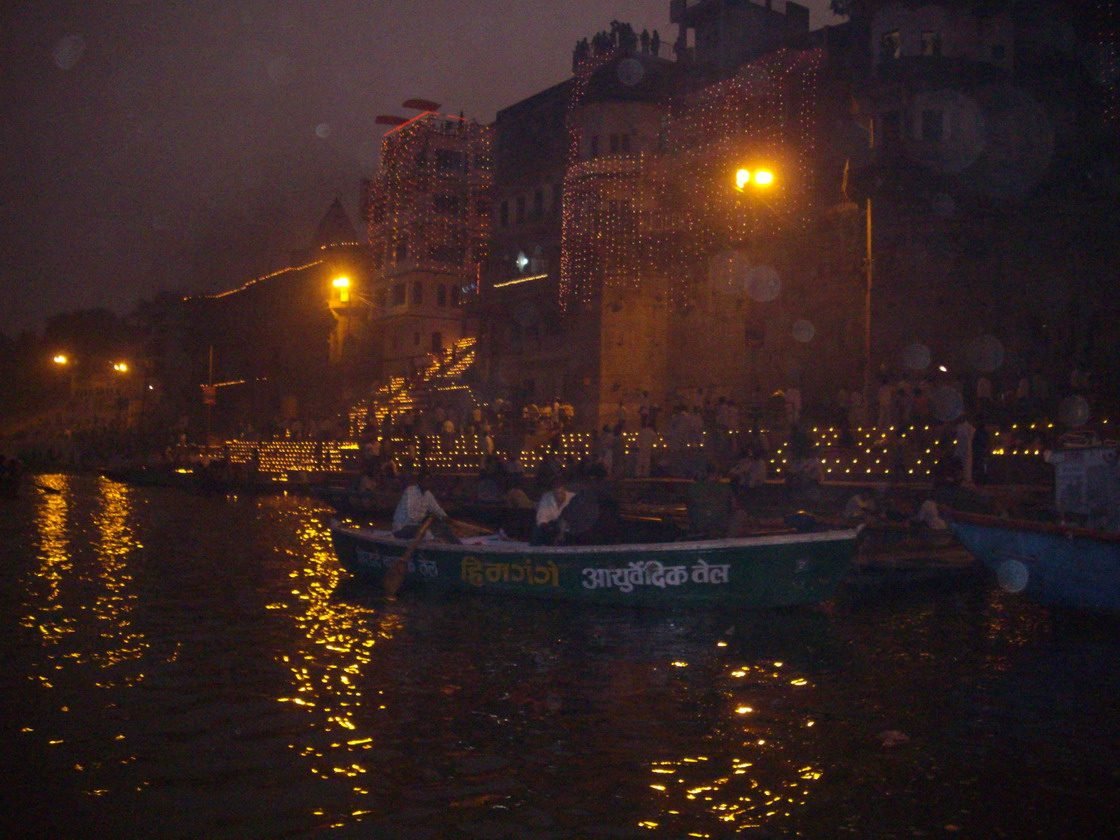
Varanasi kept its promise on Tuesday 24 November 2026. More than 11 lakh earthen lamps were lit along the ghats, ponds, kunds and the sandbank across the Ganga for Dev Diwali — the Diwali of the Gods — while 2,100 indigenous drones painted Lord Shiva, the Maheshwar Sutras, Shiv Tandav and the descent of Ganga across the night sky. And for all the lasers and drones, the night still ran on what it has always run on: earthen lamps, ghee and a river at dawn.
Dev Diwali falls on Kartik Purnima, the full moon of the month of Kartik, fifteen days after Diwali — which fell on 8 November this year. It is the one night of the year when Varanasi, rather than any home, is the centre of the festival: Hindu belief holds that on Kartik Purnima the gods descend to the city to bathe in the Ganga, and the city lights lamps to welcome them. Lakhs of devotees and tourists from India and abroad were there to see it, and the scale of what they saw was the most ambitious the festival has staged yet.
The night in numbers
The headline figure is more than 11 lakh lamps. The Times of India’s report from the night breaks the total down, and the breakdown is worth reading in full, because it shows how far beyond the main ghats the light now reaches:
| Where the lamps were lit | How many |
|---|---|
| Along the ghats | Nearly 5 lakh diyas |
| On the sandbank across the Ganga | More than 3.5 lakh diyas |
| Across 103 kunds | More than 2.5 lakh diyas |
| Earthen lamps in total | About 10 lakh |
| Cow-dung lamps | About 1 lakh |
One honest note on the numbers, as our preview flagged three days ago: sources do not agree on the ghat count. The Times of India reports the lamps spread across 88 ghats, with around 83 committees and public participation arranging them; NDTV reports all 84 ghats lit. The difference is a matter of which stretches are counted as separate ghats, and it does not change the picture: every ghat from Assi to Rajghat was lit at once, and the light was reflected in the river so that the whole riverfront glowed.
What the preview promised — and what actually happened
Our preview, published on 21 November, set out the plan reported by The Times of India and NDTV after Chief Minister Yogi Adityanath reviewed preparations: more than 11 lakh diyas at the permanent ghats, on the sandy riverbanks and at more than 100 ponds across the city, with the Maha Aarti at Dashashwamedh Ghat, a projection and laser show at Chet Singh Ghat, drone displays near Dashashwamedh and Assi ghats, and green fireworks near Kashi Vishwanath Dham Ghat. Every element of that plan happened on the night.
The build-up ran as scheduled too. The four-day Ganga Mahotsav ran from Friday 20 to Monday 23 November at Namo Ghat, with cultural programmes every evening, and the lamps were lit in the Pradosh Kaal deepdan window in the evening — 5:08 PM to 7:47 PM in Varanasi, per Drik Panchang. Special lighting was also arranged at Sarnath, Markandey Mahadev Temple and Shooltankeshwar Temple, and in rural areas around the city, as the plan had promised. The day also coincided with Guru Nanak Jayanti, with langars, kirtans and gurdwara gatherings running alongside the Dev Deepawali preparations.
2,100 drones and a laser show over the Ganga
The most photographed part of the night was not a lamp at all. A fleet of 2,100 indigenous drones rose over the river and painted the sky with images of Lord Shiva, the Maheshwar Sutras, Shiv Tandav and the descent of Ganga — the story of the river itself, told in light above the water it describes. At Chet Singh Ghat, a 3D projection-mapping and laser show ran in three sessions of 25 minutes each, turning the ghat’s facade into a screen for the festival’s mythology. Green fireworks were used, and prominent buildings along the riverfront wore tricolour spiral lighting and decorative facade illumination.
The combination is the point. Dev Diwali is an old festival — older, in its own telling, than the Diwali most of India celebrates — and this year it was staged with the newest tools the city has: drones, lasers and projection mapping, all in the service of a story about Shiva and the Ganga. The drones were the spectacle; the diyas were the festival.
Dashashwamedh Ghat: 21 priests, 51,000 lamps, 21 quintals of flowers
The ceremonial heart of the night was Dashashwamedh Ghat, where the Ganga Aarti organised by Ganga Seva Nidhi featured 21 priests and 42 young girls. The ghat was decorated with 21 quintals of flowers and 51,000 lamps of its own, and the ghat area was divided into 20 sectors, with the sandy stretch across the river divided into 14, to manage the crowds and the lighting. Uttar Pradesh tourism and culture minister Jaiveer Singh attended as chief guest.
Dashashwamedh is where most first-time visitors watch the evening aarti on any night of the year, and on Dev Diwali it becomes the centre of the whole city’s celebration — the aarti, the lamps and the crowds all in one place, with the drone show overhead. If you are planning a visit, our Varanasi guide covers the ghats, the aarti and how to see them by boat.
The day began at dawn: Kartik Purnima snan
Long before the first lamp was lit, the day began in the dark. Kartik Purnima is one of the great bathing days of the Hindu calendar, and devotees took holy dips at dawn in Varanasi — sunrise at 6:21 am, with Brahma Muhurat running from 4:36 to 5:29 am — and at Prayagraj’s Sangam, where sunrise was at 6:26 am. The snan is the other half of the festival, and the one most visitors miss: the night belongs to the lamps, but the morning belongs to the river, and the same devotees who bathed at dawn were lighting lamps by evening. The month-long Kartik Snan observance concluded with the day.
Prayagraj: over 1 lakh diyas at the Sangam
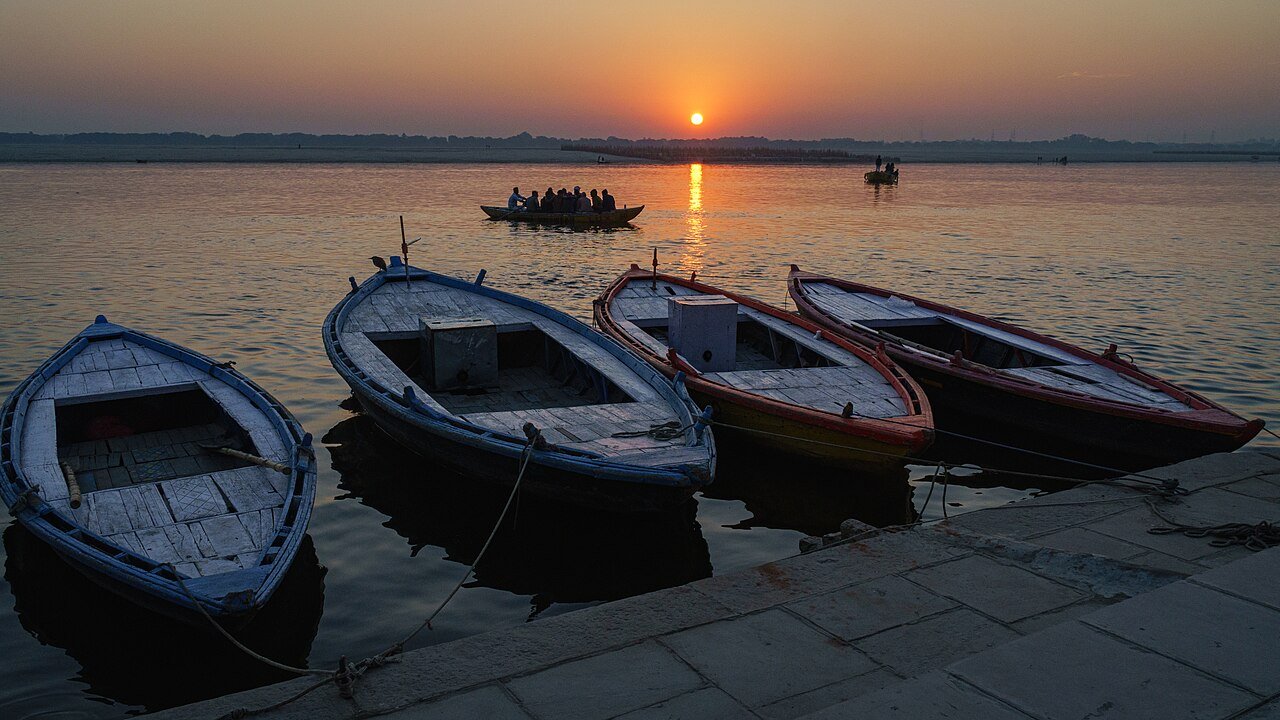
Varanasi was not the only city lit on 24 November. At Prayagraj, over 1 lakh diyas were lit on the banks of the Ganga and Yamuna for Dev Deepawali at the Sangam, with Ganga Aarti, rangoli and cultural programmes, ICCC monitoring and traffic diversions in place for the crowds. The same day’s Kartik Purnima snan at the Sangam drew devotees from before dawn, and the lighting in the evening closed the month-long Kartik Snan observance there as well. For travellers, the pairing is worth knowing: Varanasi and Prayagraj are the two great Kartik Purnima centres, and both marked the day from dawn to night.
Why it is called the Diwali of the Gods
Dev Deepawali means the Diwali of the gods, and the name is the story. The night is also called Tripurari Purnima, for Lord Shiva’s victory over the demon Tripurasura — the triumph the lamps celebrate. That is why the festival belongs to Shiva’s city above all others, and why its centre is the river rather than the home: Diwali celebrates Lord Ram’s return to Ayodhya, while Dev Diwali is a festival of the Ganga and the ghats. Read our Dev Deepawali festival guide for the full story, the rituals and how the night is traditionally observed.
That distinction is also the practical one for travellers. Diwali is celebrated everywhere; Dev Diwali is celebrated in Varanasi. The city does not just host it — the festival is the city, lit end to end, and the river carries the reflection.
Planning a trip to Varanasi
The lamps are out now, but the ghats are not. Varanasi’s riverfront, its temples and its evening aarti run all year, and the city is at its best in the cooler months from November to February. If Dev Diwali has put Varanasi on your list, start with our Varanasi destination guide and our 3-day Varanasi itinerary, and read our Dev Deepawali guide before planning a return for the next Kartik Purnima. More news is on the News Corner.
Frequently asked questions
When was Dev Diwali 2026 celebrated in Varanasi?
Dev Diwali 2026 was celebrated in Varanasi on Tuesday 24 November 2026, on Kartik Purnima, fifteen days after Diwali, which fell on 8 November.
How many diyas were lit in Varanasi for Dev Diwali 2026?
More than 11 lakh earthen lamps were lit: nearly 5 lakh along the ghats, more than 3.5 lakh on the sandbank across the Ganga, and more than 2.5 lakh across 103 kunds — about 10 lakh earthen lamps plus about 1 lakh cow-dung lamps. The Times of India reports 88 ghats lit; NDTV reports 84.
What did the 2,100 drones show over the Ganga?
The 2,100 indigenous drones painted the night sky with images of Lord Shiva, the Maheshwar Sutras, Shiv Tandav and the descent of Ganga. At Chet Singh Ghat, a 3D projection-mapping and laser show ran in three sessions of 25 minutes each.
What happened at Dashashwamedh Ghat during Dev Diwali 2026?
The Ganga Aarti organised by Ganga Seva Nidhi featured 21 priests and 42 young girls. The ghat was decorated with 21 quintals of flowers and 51,000 lamps, and the ghat area was divided into 20 sectors, with the sandy stretch divided into 14. UP tourism and culture minister Jaiveer Singh attended as chief guest.
What is Dev Diwali, and why is it called the Diwali of the Gods?
Dev Deepawali means the Diwali of the gods: Hindu belief holds that on Kartik Purnima the gods descend to Varanasi to bathe in the Ganga, and the city lights lamps to welcome them. It is also called Tripurari Purnima, for Lord Shiva’s victory over the demon Tripurasura.
What happened at Prayagraj on the same day?
At Prayagraj, over 1 lakh diyas were lit on the banks of the Ganga and Yamuna for Dev Deepawali at the Sangam, with Ganga Aarti, rangoli and cultural programmes. Devotees took the Kartik Purnima snan at dawn at the Sangam, and the month-long Kartik Snan observance concluded.
Planning a trip to Varanasi?
Start with our Varanasi guide, our 3-day Varanasi itinerary and our Dev Deepawali festival guide. Read our Dev Diwali 2026 preview to see what was planned for the night, and our Dev Deepawali guide for the festival itself. More news is on the News Corner.