
Cyclone Murasu · News Corner
Cyclone Murasu Crossed Andhra’s Coast Before Dawn: 120 kmph Winds, Cancelled Flights, and What Travellers Should Do Next

By Beauty of Bharat — India travel guide, every place, every flavour.
Guides covering all 36 States and UTs, researched from official sources and checked at publish time. Corrections welcome — see About Beauty of Bharat.
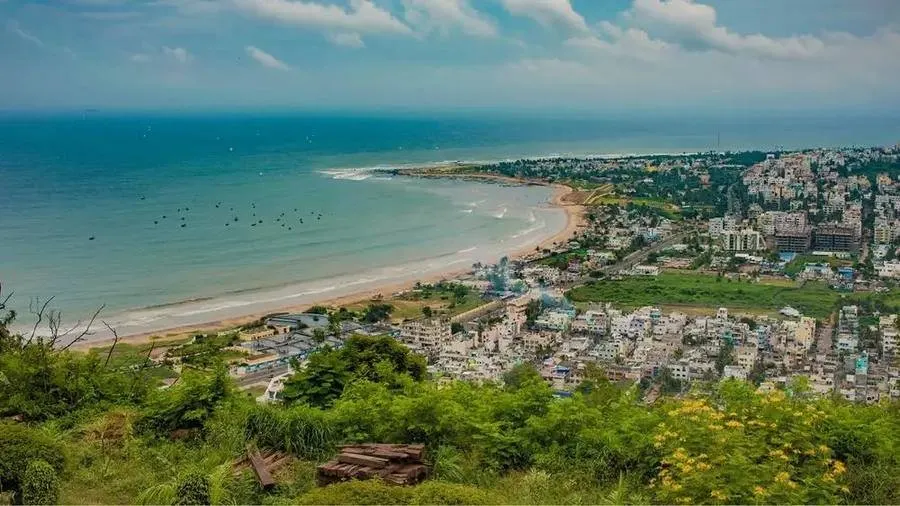
Severe Cyclonic Storm Murasu crossed the Andhra Pradesh coast near Ongole between 3:30 and 5:30 this morning, Tuesday 3 November 2026, with winds of 100–110 kmph gusting to 120 kmph — six days after Cyclone Arnab battered the same coastline. The landfall process began at 1 am, the India Meteorological Department (IMD) said, and was completed early this morning. Heavy rain is expected to continue over south coastal Andhra Pradesh through the day, flights were cancelled at Chennai and three Andhra airports on Monday, and fishermen have been told to stay off the sea until 4 November. If you have travel planned to the Andhra coast, Chennai, or Tirupati this week, here is what is confirmed and what to check before you go.
This post reflects reporting available on the morning of 3 November 2026, including IMD bulletins, the Andhra Pradesh State Disaster Management Authority (APSDMA), and reporting from The Hindu, The New Indian Express, Oneindia, News18, ETV Bharat, Down To Earth, and Times Now. Because a weakening cyclone’s track and warnings are revised through the day, check the IMD’s current bulletin before travelling anywhere near the coast.
What happened overnight
Murasu — a name given by India, meaning “war drum” — began as a low-pressure area over the southern Andaman Sea on 29 October. It became a deep depression on 1 November and a cyclonic storm the same day, then intensified into a severe cyclonic storm by the early hours of 2 November as it moved west-northwestwards across the Bay of Bengal.
On Monday 2 November, the IMD tracked it closing on the coast: at 8:30 am it lay about 160 km east-southeast of Nellore and 180 km northeast of Chennai; by 2:30 pm it was about 100 km east of Nellore and 160 km southeast of Ongole, after moving at around 22 kmph before slowing. Doppler weather radars at Chennai, Machilipatnam, and Visakhapatnam tracked it continuously.
The landfall process began at 1 am on Tuesday, as the storm’s northern spiral band and then its wall cloud moved over the south Andhra coast. Between 3:30 and 5:30 am, the system crossed the coast between Nellore and Narsapur, close to Ongole — near latitude 15.53°N and longitude 80.22°E — with sustained winds of 100–110 kmph and gusts to 120 kmph. APSDMA confirmed early on Tuesday that the landfall process was complete. Three National Disaster Response Force teams totalling 90 personnel were deployed, and families in vulnerable coastal areas were moved to relief camps.
The IMD expects Murasu to weaken as it moves inland: to a cyclonic storm (80–90 kmph, gusting to 100 kmph) by noon on Tuesday, and further to a deep depression (55–65 kmph, gusting to 75 kmph) by midnight, tracking north-northwestwards towards Telangana. That weakening is good news — but it does not end the rain, which is why the warnings below run into 4 November.
The numbers that matter
Winds: 100–110 kmph, gusting to 120 kmph, at landfall — strong enough to uproot trees and damage power lines, but well below the nearly 160 kmph gusts reported when Arnab crossed the same coast on 28 October.
Storm surge: the IMD warned of a surge of 1 to 1.5 metres above the astronomical tide over low-lying parts of south coastal Andhra Pradesh until Tuesday morning, with seawater projected to reach up to 330 metres inland in Ongole mandal and 190 metres in Bapatla mandal.
Rain: heavy spells are likely to continue for about 12 hours across south coastal Andhra Pradesh. Red alerts were in force for Krishna, Guntur, Bapatla, Palnadu, NTR, and Prakasam districts, and waterlogging disrupted traffic in parts of Vijayawada on Tuesday morning.
Chennai and north Tamil Nadu: Chennai received an average of 7.6 cm of rain between Sunday evening and Monday morning, with Madhavaram recording 11 cm in 24 hours. Squally winds of 55–65 kmph, gusting to 75 kmph, were forecast over Chennai, Tiruvallur, Chengalpattu, Kancheepuram, Ranipet, Vellore, Tiruvannamalai, Villupuram, and Puducherry, and Chennai carried an orange alert for very heavy rain of 11–20 cm.
Sea warnings: fishermen have been advised not to venture out along and off the Andhra Pradesh coast until the afternoon of 4 November, and along the north Tamil Nadu–Puducherry coasts until the morning of 4 November. Great Danger Signal Number X was hoisted at Nizampatnam and Vadarevu ports, Signal IX at Machilipatnam, and Visakhapatnam Port was placed under a high-level Signal 9 warning.
What it means for travellers
Flights. Eleven flights were cancelled at Chennai airport on Monday, including four IndiGo services on the Chennai–Tiruchy route (6E7357, 6E7363, 6E7358, 6E7364), three on Chennai–Vijayawada (6E7304, 6E7306, 6E7305), and two each on the Rajahmundry and Kadapa routes. At least 19 domestic flights were cancelled across Vijayawada, Tirupati, and Visakhapatnam airports, and IndiGo issued a travel advisory for delays at Visakhapatnam. If you are flying to or from any of these airports, check your airline’s status before leaving for the airport — Monday’s cancellations do not guarantee Tuesday’s schedule.
Trains. No train cancellations had been reported as of Monday — a sharp contrast with Arnab, which saw 36 trains cancelled. That can change as the system moves inland and rain affects tracks, so check your train’s running status rather than assuming the timetable holds.
Roads and the coast. Avoid beaches, coastal roads, and low-lying areas in south coastal Andhra Pradesh today. In Chennai, all 21 subways remained open to traffic on Monday, but the city logged 237 water-stagnation complaints, 32 fallen trees, and 144 streetlight complaints by Monday evening — treat low-lying routes with caution and allow extra time.
What to check before you go. The IMD’s current bulletin (mausam.imd.gov.in) is the authority on warnings; your airline or railway status is the authority on your journey; and your hotel can confirm local road and power conditions. Do not head to the coast to watch the storm — the surge and wind warnings exist precisely because the shoreline is the most dangerous place to be.
The second cyclone in six days
Andhra Pradesh has barely had time to count the cost of the last one. Cyclone Arnab crossed the Andhra coast in the early hours of Wednesday 28 October 2026 as a very severe cyclonic storm, with winds of nearly 160 kmph, causing at least Rs 500 crore of damage to the state’s electricity network alone and a total preliminary loss put at Rs 4,600 crore, with 36 trains cancelled. Murasu arrived six days later, weaker at landfall but still a severe cyclonic storm — and it struck a coast still repairing Arnab’s damage. Readers following the earlier storm can read our full account of Cyclone Arnab’s damage and the trains it cancelled.
Context and what to watch
The background here is a coastline that has now taken two cyclone landfalls in a single week, in the same state, with the second storm arriving while the first storm’s damage was still being assessed. For travellers, the practical consequence is a week of disrupted plans in coastal Andhra Pradesh and northern Tamil Nadu: flights cancelled on Monday, a sea closed to fishermen until 4 November, and a storm spending Tuesday weakening over land rather than disappearing at the shoreline.
What to watch next: whether Murasu weakens on the IMD’s forecast schedule (cyclonic storm by noon Tuesday, deep depression by midnight); whether airlines restore the Chennai, Vijayawada, Tirupati, and Visakhapatnam schedules on Tuesday; and whether heavy rain shifts inland towards Telangana as the system moves northwest. Travellers with Diwali-week plans in Andhra Pradesh or Tamil Nadu should keep checking IMD updates rather than treating Tuesday’s landfall as the end of the story.
One caution applies to every figure in this post: it reflects bulletins and reporting from the morning of 3 November 2026. Damage assessments, flight restorations, and rainfall totals will be revised through the day — check the IMD bulletin and your airline before travelling.
Frequently Asked Questions
What is Cyclone Murasu, and where did it make landfall?
Severe Cyclonic Storm Murasu, named by India — “Murasu” means war drum — crossed the south Andhra Pradesh coast between Nellore and Narsapur, close to Ongole, between 3:30 and 5:30 am on Tuesday 3 November 2026. The landfall process began at 1 am.
How strong was it at landfall?
Sustained winds of 100–110 kmph, gusting to 120 kmph, with a storm surge of 1 to 1.5 metres over low-lying parts of south coastal Andhra Pradesh. It was weaker than Cyclone Arnab, which brought gusts of nearly 160 kmph to the same coast on 28 October.
Which flights were cancelled?
On Monday, 11 flights were cancelled at Chennai airport and at least 19 domestic flights across Vijayawada, Tirupati, and Visakhapatnam airports. Check your airline’s status before travelling, as schedules are being restored through Tuesday.
Is it safe to travel to the Andhra coast or Chennai right now?
Avoid beaches, coastal roads, and low-lying areas in south coastal Andhra Pradesh today. Chennai city travel is possible with caution. Fishermen have been told to stay off the sea until 4 November, and the IMD bulletin is the authority on current warnings.
How is Murasu different from Cyclone Arnab?
Arnab (28 October) was a very severe cyclonic storm with gusts near 160 kmph, at least Rs 500 crore of power-network damage, and 36 trains cancelled. Murasu (3 November) was a severe cyclonic storm with gusts to 120 kmph, and no train cancellations had been reported as of Monday. They struck the same coast six days apart.
When will the storm weaken and the warnings lift?
The IMD forecast weakening to a cyclonic storm by noon on Tuesday and a deep depression by midnight, tracking towards Telangana. Sea advisories run until the morning of 4 November for the north Tamil Nadu–Puducherry coasts and until the afternoon of 4 November for the Andhra coast — all subject to revised IMD bulletins.
Planning the Andhra coast or Chennai?
If your trip is later in the month, start with our Andhra Pradesh guide and our guides to Visakhapatnam, Tirupati, and Chennai — and check the IMD bulletin before you set out.