
China · News Corner
China Expels a Record 33 Officials as Xi's Anti-Graft Drive Reaches the Top

By Beauty of Bharat — India travel guide, every place, every flavour.
Guides covering all 36 States and UTs, researched from official sources and checked at publish time. Corrections welcome — see About Beauty of Bharat.
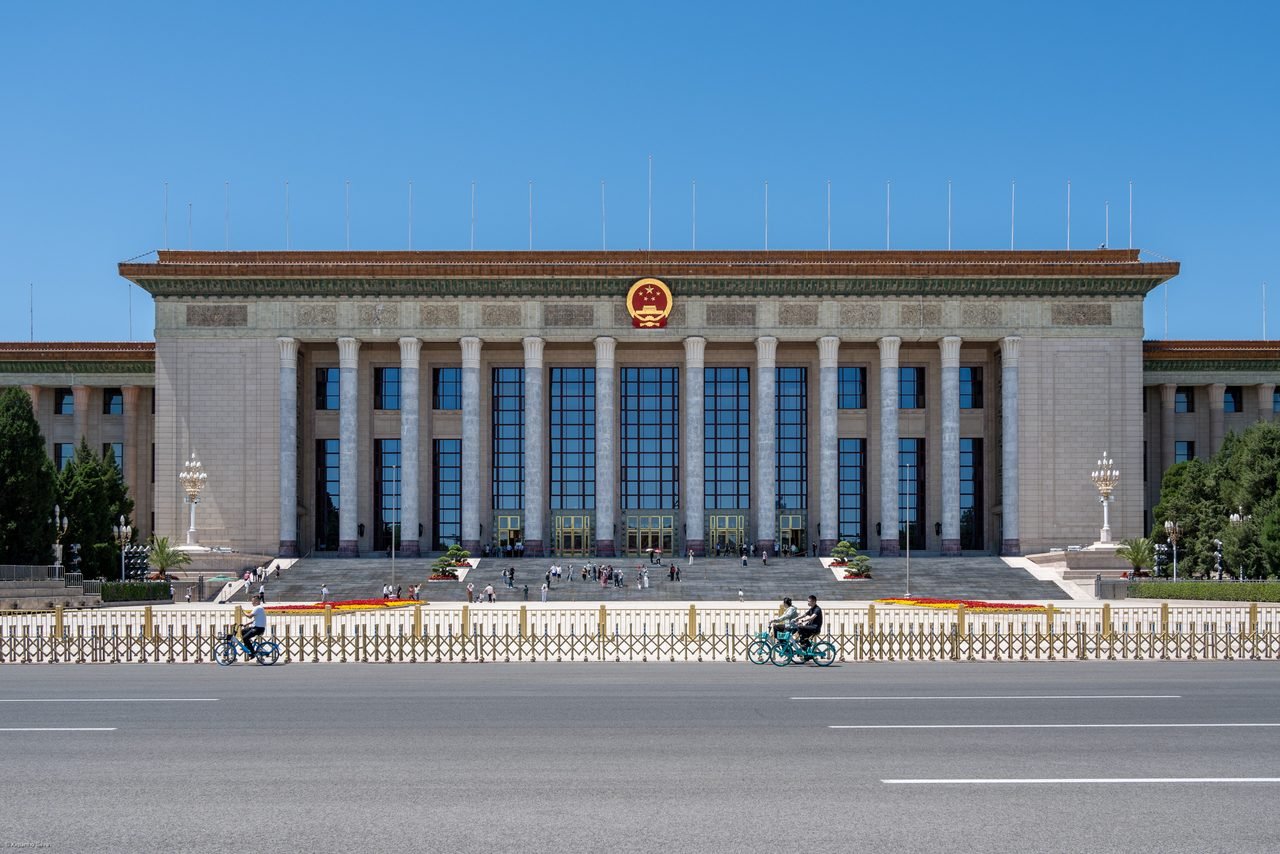
China's ruling Communist Party has confirmed the expulsion of 33 senior officials at its four-day fifth plenum in Beijing, the largest single purge of its kind, while promoting military anti-corruption chief Zhang Shengmin to the Politburo. The shake-up leaves President Xi Jinping's top military command with just two members and sets the stage for a party congress in 2027 that is widely expected to extend his rule.
This post reflects reporting available on 30 October 2026, including Reuters via ThePrint, The Hindu, PTI via The Week and BBC via Times of India. Where sources disagree or a detail is unconfirmed, the article says so.
What happened at the plenum
The expulsions were formally ratified in a communique issued on Thursday 29 October at the end of the closed-door meeting of the party's Central Committee, its largest top decision-making body. The gathering was the fifth plenum since the current leadership cohort was formed in 2022. Among those expelled were former Politburo members Ma Xingrui, a former Xinjiang party chief, and Zhang Youxia, once China's highest-ranking general, along with former senior general Liu Zhenli, former senior diplomat Liu Jianchao and former industry minister Jin Zhuanglong.
Sixteen of the 33 expelled officials were from the military, according to the official communique. The meeting also logged the highest absence rate of the post-Mao era: only 279 full and alternate Central Committee members attended, compared with the 376 originally named in 2022, meaning more than a quarter of the original cohort was absent, many of them because of purges. The party cited serious disciplinary and legal violations, without publicly detailing the specific allegations against individual officials.
The military command, cut down to two
The most striking consequence is the state of the Central Military Commission, the supreme military command. Five of the seven members appointed in the 2022 reshuffle have now been purged, leaving only Xi himself as chairman and vice-chair Zhang Shengmin in office. Zhang, who served as the military's anti-corruption chief from 2018 until July 2026 and was promoted to vice-chair of the commission last year, was unexpectedly elevated to the elite Politburo at the plenum.
With that promotion, Zhang becomes the Politburo's military representative, bringing its current membership to 22 of its 24 seats after three sitting Politburo members were ousted during the current term, the highest number since 1980. The plenum also set the 21st Party Congress for the second half of 2027 in Beijing, formally starting the countdown to China's twice-a-decade leadership reshuffle.
Why Xi is purging so hard
Xi has made the fight against corruption a central pillar of his rule since taking power in 2012, when he warned the leadership that unchecked corruption would lead to the total collapse of the party and the state. At this plenum he urged the party and the military to turn the blade inward and eradicate what he called viruses corroding their health. The scale of the campaign is vast: the anti-corruption watchdog reported that 680,000 people across the party apparatus were disciplined in the first nine months of 2026, and a senior discipline official said 7.9 million people have been punished since 2012.
The latest expulsions bring the total number of members removed during Xi's third term to a record 51, compared with 35 in his first term and five in his second. Analysts quoted by Reuters offered differing readings: one said the main message was unity and discipline, while another argued the drive is less about purging rivals and more about building a disciplined system that can sustain Xi's priorities across leadership cycles.
What happens next
The plenum adopted a decision on advancing full and rigorous governance of the party, including reducing corruption among cadres, and vowed to keep waging what it called a tough, protracted and all-out battle against corruption. Analysts widely expect Xi, 73, who already holds an unprecedented third five-year term as head of the party, the state and the military, to secure five more years at the party's helm next autumn, though state media have offered no hint of any loosening of his grip.
One open question raised by analysts is generational: to what extent the old guard around Xi will be willing and able to let younger leaders assume greater power. The plenum communique itself said the party should improve the quality of training and selecting outstanding young cadres. What is still unconfirmed is the specific charge behind each individual expulsion, since the party has so far given only the general formula of serious disciplinary and legal violations.
Context and what to watch
The scale and the targets are what make this plenum stand out. Thirty-three expulsions is a record for a single session, and the senior names — former Politburo member Ma Xingrui, once Xinjiang party chief, and Zhang Youxia, once China's highest-ranking general, along with former senior general Liu Zhenli, former senior diplomat Liu Jianchao and former industry minister Jin Zhuanglong — span the military, the regions and the bureaucracy. The military story is the sharpest: the Central Military Commission has been reduced to just Xi Jinping and Zhang Shengmin, Xi's vice-chair and former anti-corruption chief, whose elevation to the Politburo makes him its military representative at a moment of unusual concentration at the top.
The plenum also set the calendar. The 21st Party Congress is scheduled for the second half of 2027, and analysts widely expect Xi to secure a further five-year term there — though the party has given no official indication of any change at the top, and that expectation should be read as analysis, not announcement. Watch for further personnel moves as the congress approaches, and for whether the purge is followed by policy shifts or simply by a tighter circle around the same leadership.
Frequently Asked Questions
Who were the most senior figures expelled?
Former Politburo members Ma Xingrui, the former Xinjiang party chief, and Zhang Youxia, once China's highest-ranking general, along with former senior general Liu Zhenli, former senior diplomat Liu Jianchao and former industry minister Jin Zhuanglong.
Why does Zhang Shengmin's promotion matter?
Zhang is Xi's vice-chair on the Central Military Commission and its former anti-corruption chief. His elevation to the Politburo makes him its military representative at a moment when the commission itself has been reduced to just Xi and Zhang.
What happens in 2027?
The plenum set the 21st Party Congress for the second half of 2027. Analysts widely expect Xi to secure a further five-year term there, though the party has given no official indication of any change at the top.
For more world news, see our News Corner.
More world news
Follow the day's developing stories and the rest of today's world news from the News Corner hub.
More from News Corner →