
Ayodhya · Uttar Pradesh · News Corner
25 Lakh Pilgrims, 42 Kilometres, One Night: Ayodhya's 14 Kosi Parikrama Begins Today

By Beauty of Bharat — India travel guide, every place, every flavour.
Guides covering all 36 States and UTs, researched from official sources and checked at publish time. Corrections welcome — see About Beauty of Bharat.
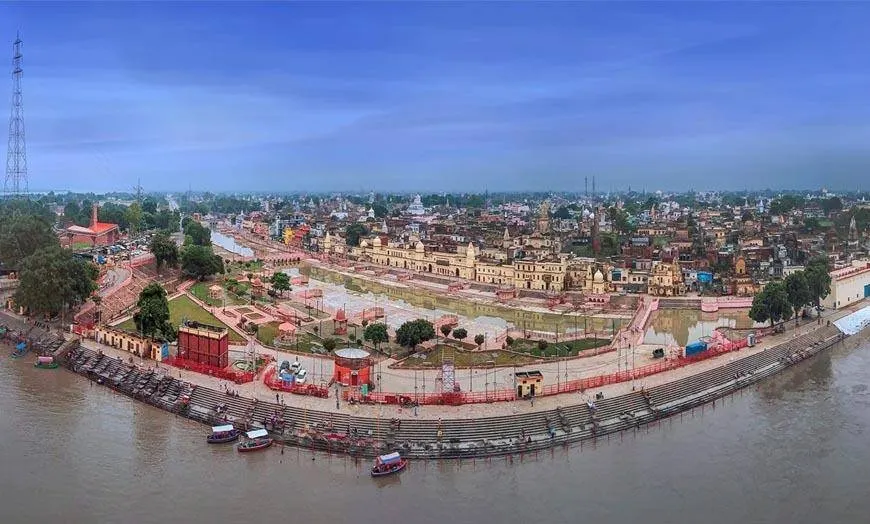
Tonight, Ayodhya will do something no other city in India attempts at this scale: more than 25 lakh pilgrims will set out on foot to walk 42 kilometres around the ancient city — in a single night, many of them barefoot. The walk is the 14 Kosi Parikrama, and it begins on Akshaya Navami, Wednesday 18 November 2026 — the same day on which families across India worship the amla tree. One city, one night, two festivals: a 42-kilometre circle of faith, and a tree honoured for the good deeds that never decay.
The 14 Kosi Parikrama — Chaudah Kosi in Hindi — is Ayodhya’s great circumambulation: a full loop around the outer boundary of the ancient city, walked clockwise, starting and ending at Ram Janmabhoomi. It is the reason the phrase “14 कोसी परिक्रमा अयोध्या” surged on Google Trends in India overnight. Here is what is verified about tonight — the walk, the festival it falls on, and the week of pilgrimage that follows it.
14 Kosi Parikrama at a glance
| What | 14 Kosi Parikrama, 18–19 November 2026 |
|---|---|
| Event | 14 Kosi Parikrama (Chaudah Kosi), Ayodhya |
| Date | Wednesday 18 – Thursday 19 November 2026 |
| Festival day | Akshaya Navami (Kartik Shukla Navami), also called Amla Navami |
| Walk begins | 9:12 pm, Wednesday 18 November, as listed in Ayodhya’s festival calendar |
| Walk ends | 7:15 pm, Thursday 19 November |
| Distance | 42 kilometres — 14 kos around the outer boundary of ancient Ayodhya |
| Pilgrims expected | 25 lakh-plus, according to the festival calendar |
| Route | Clockwise (pradakshina), starting and ending at Ram Janmabhoomi / Ram Mandir |
| Navami tithi | 6:04 am on 18 November to 7:05 am on 19 November (Drik Panchang, New Delhi timings) |
What the 14 Kosi Parikrama actually is
A kos is an old Indian unit of distance, roughly three kilometres — so fourteen kos make the 42-kilometre circuit that gives the parikrama its name. The route encircles the ancient Ayodhya Nagar, the city-state that tradition remembers as the capital of the Ikshvaku dynasty, and it is walked clockwise, in pradakshina, beginning and ending at Ram Janmabhoomi. The walk can be done at any time of year, but Akshaya Navami is its great gathering: the night when the city’s outer boundary becomes a moving river of people.
The scale is hard to picture until it is set against the last time it happened. In November 2024, district officials estimated that around 30 lakh devotees completed the 14 Kosi walk — the largest turnout the city had seen since the consecration of the Ram Mandir. This year’s festival calendar puts the expected figure at 25 lakh-plus: an expectation, not a count, and the count will only be known once the walk is done.
How the walk unfolds
Ayodhya’s festival calendar lists the auspicious start at 9:12 pm tonight, with the walk concluding at 7:15 pm on Thursday 19 November — a full 24 hours on the road. Many pilgrims walk through the night, and the route is lined with the free tea, water and food stalls known as bhandaras, along with medical camps, that the calendar lists for the season. The calendar’s own advice to walkers is practical rather than poetic: comfortable walking shoes or thick socks, because 42 kilometres punishes new footwear.
The festival calendar lists entry as free, and the walk is open to anyone fit enough to attempt it. Those who cannot manage the full circuit can do a partial parikrama by vehicle for the sections they cannot walk, a provision the city’s pilgrim guides note for senior citizens and the physically challenged. Dates follow the Hindu lunisolar calendar, so the calendar advises travellers to verify arrangements with the Shri Ram Janmabhoomi Teerth Kshetra trust before travelling.
The other festival today: Amla Navami
Akshaya Navami and Amla Navami are not two festivals that happen to share a date — they are the same day, under two names. “Akshaya” means that which does not decay, and the day is kept for charity and good deeds believed to keep their merit; “Amla Navami” is the same day seen through its best-known ritual, the worship of the amla tree. Families gather beneath an amla tree, worship it, and traditionally share a meal together under its branches.
The timings come from Drik Panchang: the Navami tithi begins at 6:04 am today and ends at 7:05 am on Thursday 19 November, with the morning puja muhurat — the Purvahna period — running from 6:46 am to 12:06 pm. Those are New Delhi timings; sunrise shifts them by a few minutes from city to city. Tradition also holds that Satya Yuga, the first of the four ages, began on this tithi — one reason the day carries the weight it does. And the festival week does not end here: Dev Uthani Ekadashi, when Lord Vishnu is said to wake from his four-month sleep, falls on Friday 20 November.
The week ahead: 5 Kosi, then Kartik Purnima
The parikrama season runs until 24 November. The shorter 5 Kosi Parikrama — a 15-kilometre circuit — begins on Dev Uthani Ekadashi, Friday 20 November, at 11:20 pm according to the festival calendar, and ends on Saturday 21 November at 9:40 pm. The season closes with the Kartik Purnima Mahasnan, the full-moon ritual bath, on Tuesday 24 November. A word of caution for anyone planning around dates found online: a few guides still list Kartik Purnima as 5 November this year. That is wrong for 2026 — the full moon of Kartik falls on 24 November.

From Deepotsav to Parikrama: Ayodhya’s festival fortnight
The parikrama arrives ten days after Ayodhya’s Deepotsav, the festival of lights that ran from 5 to 8 November in its tenth edition, with the main lamp-lighting at Ram Ki Paidi on Saturday 7 November. We covered the festival — and the Choti Diwali celebrations that framed it — in our Choti Diwali report from Ayodhya and Goa, and the wider season in our Diwali in Ayodhya guide.
In effect, Ayodhya has barely drawn breath between its two great gatherings: first the lamps, now the walkers. And the parikrama tradition runs across the region — in Mathura and Vrindavan, devotees circled Govardhan Hill for Govardhan Puja earlier in the season, as we reported in our Govardhan Puja report.
A new way to see the parikrama trail
For visitors who are not walking the 42 kilometres, Uttar Pradesh Tourism has added a gentler way into the season. Its ‘Ayodhya Divine Heritage Trail’, a one-day guided tour launched by the Uttar Pradesh State Tourism Development Corporation (UPSTDC) for the Deepotsav season, has been running since 1 November with two daily batches, 10 am to 4 pm and 1 pm to 7 pm. The trail starts at Lata Mangeshkar Chowk and takes in the Ramayana Wax Museum, Surya Kund, Girija Kund, Panchmukhi Mahadev Temple, Guptar Ghat, Jhunkhi Ghat, Lakshman Kila and Sheshavatar Temple, ending with the Saryu Aarti on the riverbank. Transport is by air-conditioned vehicle with a local guide; hotel stays and meals are not included. Bookings are through the UPSTDC website or its helpline, 8130966118.
If you are going
Walk at your own pace and rest when you need to; the bhandaras and medical camps along the route exist for exactly that. Carry water, wear shoes you have already broken in, and keep your phone charged. If you are driving in, expect the city to be full and plan parking and transport in advance — and check the latest arrangements with the Shri Ram Janmabhoomi Teerth Kshetra trust before you travel, since festival timings follow the lunar calendar and can shift.
Frequently asked questions
When does the 14 Kosi Parikrama start in 2026?
On Akshaya Navami, Wednesday 18 November 2026. Ayodhya’s festival calendar lists the auspicious start at 9:12 pm on 18 November, with the walk concluding at 7:15 pm on Thursday 19 November — 24 hours later.
How long is the 14 Kosi Parikrama?
42 kilometres — fourteen kos, at roughly three kilometres to the kos — around the outer boundary of ancient Ayodhya. It is walked clockwise, in pradakshina, starting and ending at Ram Janmabhoomi / Ram Mandir.
Is Akshaya Navami the same as Amla Navami?
Yes — the same day, under two names. Akshaya Navami falls on Kartik Shukla Navami, Wednesday 18 November 2026, and Amla Navami is its other name, after the amla tree that is worshipped on the day. The Navami tithi runs from 6:04 am on 18 November to 7:05 am on 19 November, with the morning puja muhurat from 6:46 am to 12:06 pm (Drik Panchang, New Delhi timings).
How many pilgrims are expected for the parikrama?
The festival calendar puts the expected figure at 25 lakh-plus. That is an expectation, not a count. For scale, district officials estimated that around 30 lakh devotees completed the walk in November 2024.
What is the 5 Kosi Parikrama, and when is it?
The shorter, 15-kilometre circuit of Ayodhya. In 2026 it begins on Dev Uthani Ekadashi, Friday 20 November, at 11:20 pm, and ends on Saturday 21 November at 9:40 pm, according to the festival calendar. The Kartik Parikrama season then closes with the Kartik Purnima Mahasnan on Tuesday 24 November.
I am not walking the full 42 kilometres. Can I still see the parikrama’s temples and ghats?
Yes. UPSTDC’s ‘Ayodhya Divine Heritage Trail’ is a one-day guided tour that has run since 1 November, with two daily batches from 10 am to 4 pm and 1 pm to 7 pm. It starts at Lata Mangeshkar Chowk, visits the Ramayana Wax Museum, Surya Kund, Girija Kund and other sites along the parikrama route, and ends with the Saryu Aarti. Bookings are through the UPSTDC website or its helpline.
Planning an Ayodhya trip?
Start with our Ayodhya destination guide and the Uttar Pradesh state guide, then our Diwali in Ayodhya guide and Deepotsav festival guide. For the season’s other stories, read our Choti Diwali report and our Govardhan Puja report. And the News Corner for the day’s other stories.