
Asia Economy · News Corner
Asia's factories kept growing in October, but the chip-led pace cooled

By Beauty of Bharat — India travel guide, every place, every flavour.
Guides covering all 36 States and UTs, researched from official sources and checked at publish time. Corrections welcome — see About Beauty of Bharat.
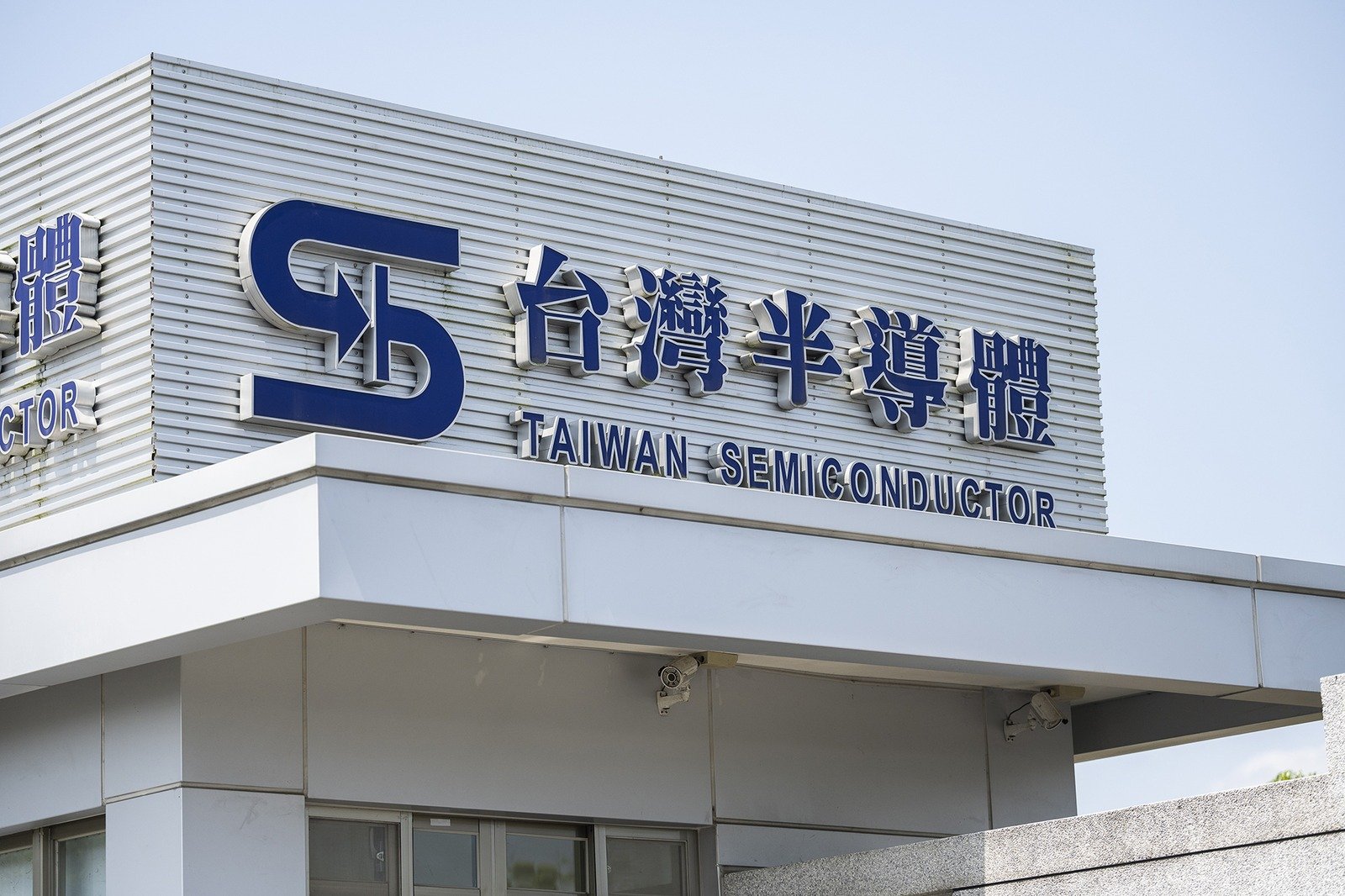
If artificial intelligence demand was supposed to carry Asia's factories through anything, October tested that idea — and the factories still grew, just more slowly, in every one of the region's big chip exporters at once. Private surveys released on 2 November showed expansion cooling in China, Japan, South Korea and Taiwan, even though demand for chips and AI-related goods stayed resilient. The slowdown does not mean the AI boom is over, and the surveys do not say that. What they do show is a narrower margin: strong technology orders now having to work harder against higher fuel and food prices, longer supply chains and weaker demand elsewhere.
The October slowdown in numbers
First, a plain explanation of the yardstick. A purchasing managers' index, or PMI, is a monthly survey of factory managers about orders, output, hiring and related conditions. A reading above 50 points to expansion; below 50 points to contraction. A falling reading that stays above 50 therefore means growth is slowing, not that factories are shrinking.
On that measure, October was a month of cooling rather than collapse. The RatingDog China General Manufacturing PMI, compiled by S&P Global, stood at 52.0 in October, down slightly from 52.1 in September, according to surveys reported on 2 November. That marked the eleventh consecutive month of growth in the private survey, and S&P Global data cited in the coverage showed China's manufacturing output rising at its fastest pace in six months, supported by solid growth in new orders.
Japan's manufacturing PMI eased to 53.3 in October from 54.1 in September, its slowest expansion in seven months, as output and new orders lost momentum. South Korea's PMI fell more sharply, to 51.3 from 53.9, its slowest pace of growth in eight months, on weaker output and demand. Taiwan's PMI declined to 54.9 from 56.7 in September, a level that still signals solid growth but a clear step down from the previous month. In Taiwan's case, growth in new orders slowed to its weakest pace since March, even though demand for AI components remained strong.
By contrast, official data released the previous Saturday showed China's factory activity shrinking in October, its third contraction in four months. The two surveys cover different sets of firms and can move in different directions in the same month, so the gap is a reason to read the headline carefully rather than to pick whichever number suits a story. Capital Economics' China economist Nguyen Hoang Nam was quoted as saying the PMIs suggested China's activity lost momentum in October after a September pick-up, with manufacturing softening only slightly while foreign demand still looked resilient.
Why chip demand is no longer covering everything
The central tension in October's surveys is easy to state and hard to resolve. Demand for semiconductors and AI-related goods remained a genuine support for Asian factories. At the same time, the prolonged conflict in the Middle East — described in the survey coverage as the US-Israeli war on Iran — kept fuel and food prices elevated, weighing on household spending, business confidence and export-oriented industries outside the technology core.
Toru Nishihama, chief emerging market economist at Dai-ichi Life Research Institute in Tokyo, put the shift bluntly in comments carried by The Manila Times: strong chip and AI demand had masked soft spots in Asian and global economies, but that was becoming hard to sustain with the Middle East war dragging on, pushing up fuel and food prices. He added that high inflation was hurting Asian consumption and that intensifying price competition from China was also weighing on rival exporters such as Japan and South Korea.
Supply chains added a second strain. S&P Global Market Intelligence economist Eleanor Dennison said firms continued to face difficulties procuring inputs in a timely manner, with the Middle East conflict, freight delays and the added pressure caused by the current AI wave itself all contributing. In Taiwan, supplier delivery times lengthened even as AI-component demand held up. In Japan, costs rose even as manufacturers kept hiring at a near-decade-high pace to clear backlogs. In South Korea, firms cited weaker demand, raw-material shortages and high costs, and car sales softened while growth in new export orders slowed sharply.
None of this amounts to evidence that the AI boom has ended. It is better read as evidence that a boom in one sector, however strong, has limits as a shield when energy and food costs rise for everyone and buyers outside technology grow cautious.
The split inside Asia
October was not a uniform slowdown, and the exceptions matter. The Manila Times' survey round-up noted that factory activity expanded at a faster pace than the previous month in Vietnam, Indonesia and Malaysia, even as the big north-east Asian chip exporters cooled.
Indonesia stood out in the Dow Jones coverage carried by Morningstar: its manufacturing PMI climbed to 54.0 in October from 52.4 in September, its fastest expansion since March 2024, with new export orders rising at the fastest pace in the survey's 15-year history and prompting a sharp ramp-up in production. Thailand showed similar strength, recording a strong headline reading, although backlogs of unfinished work rose at their fastest pace in nearly a year, worsened by labour shortages and supply-chain constraints.
India's picture, as reported in the same coverage, was mixed in a different way: export order growth hit a six-month high on strong international demand, while selling-price inflation neared a four-year low. That combination is a reminder that "Asia" in these surveys is not one factory floor.
What the IMF outlook adds
The October surveys arrived a few weeks after the International Monetary Fund set out its own, longer view. In its Regional Economic Outlook for Asia and the Pacific, published on 15 October 2026, the IMF projected regional growth easing from 5% in 2025 to 4.8% in 2026 and 4.4% in 2027. Those forecasts were higher than the IMF's April projections, largely because of the AI boom's boost to advanced Asian economies, whose growth is expected to accelerate to 3.2% in 2026 from 2.5% in 2025. Emerging Asia, by contrast, is expected to see growth moderate to 5.1% in 2026 from 5.6% in 2025, partly because of higher energy prices.
The IMF also named the risks plainly, and October's surveys touched each of them. The Fund warned of a prolonged or renewed escalation in the Middle East, a reassessment of AI-related profitability and productivity — in other words, a sharp reversal of the AI boom — and fiscal vulnerabilities alongside higher sovereign borrowing costs. It also noted that Asia would still contribute 68% of global growth and continue outpacing the world even as its own pace eased. The October PMI data do not confirm or overturn that outlook; they show, in real factory data, why the IMF framed it as growth with downside risks rather than a straightforward boom.
Context and what to watch
It helps to place October in a slightly longer frame. Asia outperformed many other regions through much of 2026 because manufacturers benefited from brisk demand for chips and AI-related goods, and the IMF briefing noted that export growth accelerated sharply in the first half of 2026, driven mainly by technology products, with AI infrastructure demand lifting semiconductor demand and data-centre investment. The October surveys suggest that support is still present but no longer accelerating everywhere at the same rate.
Two cautions belong in any reading of a single PMI release. First, these are surveys of sentiment and reported conditions, not counts of goods shipped; they can bounce from month to month, and one month's easing can reverse. Second, private and official surveys can disagree, as they did for China in October, because they sample different firms. The honest conclusion from October is therefore narrow: growth cooled across the major chip exporters in the same month, for reasons the surveys link to energy costs, supply delays and softer non-technology demand — not that the region's factories have stopped growing, and not that the AI boom is finished.
South Korea offers a useful counterweight to gloom. S&P Global Market Intelligence economist Usamah Bhatti noted that confidence in the year-ahead outlook remained robust there, underpinned by hopes that new product launches and the current semiconductor demand "supercycle" would continue to support manufacturing growth. Optimism about next year sitting alongside a weak current month is not a contradiction; it is how factory managers often answer surveys when orders today are soft but product pipelines look full.
What to watch next
The next PMI releases will show whether October was a one-month cooling or the start of a slower phase, and whether Southeast Asia's quickening holds while the chip hubs recover. Energy prices and any change in the Middle East conflict remain the most direct swing factors, because they feed straight into the fuel and food costs the surveys blame for the drag. For now, the story is one of expansion under pressure, not of contraction.
Frequently Asked Questions
What is a PMI, and why does 50 matter?
A purchasing managers' index is a monthly survey of factory managers about orders, output, employment and related conditions. A reading above 50 signals expansion and below 50 signals contraction, so a fall from 54.1 to 53.3 still means growth, only slower growth.
Did Asia's factories shrink in October 2026?
No, on the private S&P Global-compiled surveys they did not. China, Japan, South Korea and Taiwan all stayed above 50 in October, meaning activity kept expanding, but each grew more slowly than in September.
What were the October PMI readings for the four big chip exporters?
According to the surveys reported on 2 November: China (RatingDog, compiled by S&P Global) 52.0, down from 52.1; Japan 53.3, down from 54.1; South Korea 51.3, down from 53.9; and Taiwan 54.9, down from 56.7.
Why did growth slow if AI and chip demand stayed strong?
The survey coverage points to the drag from the prolonged Middle East conflict, which kept fuel and food prices elevated and weighed on consumption and confidence, plus freight delays, longer supplier delivery times and weaker demand outside technology.
Why do China's two PMI surveys disagree?
The private RatingDog survey showed expansion at 52.0 in October, while official data released the previous Saturday showed factory activity shrinking, its third contraction in four months. The surveys cover different firms, so they can move in different directions in the same month.
What does the IMF expect for Asia's growth?
In its Regional Economic Outlook published on 15 October 2026, the IMF projected Asia's growth easing from 5% in 2025 to 4.8% in 2026 and 4.4% in 2027, with risks tilted to the downside from Middle East escalation, a possible AI correction and higher borrowing costs.