
Amur Falcon · Manipur to Somalia · News Corner
5,700 km, Four Days, No Food or Water: the Amur Falcon That Flew From Manipur to Somalia Without Stopping

By Beauty of Bharat — India travel guide, every place, every flavour.
Guides covering all 36 States and UTs, researched from official sources and checked at publish time. Corrections welcome — see About Beauty of Bharat.
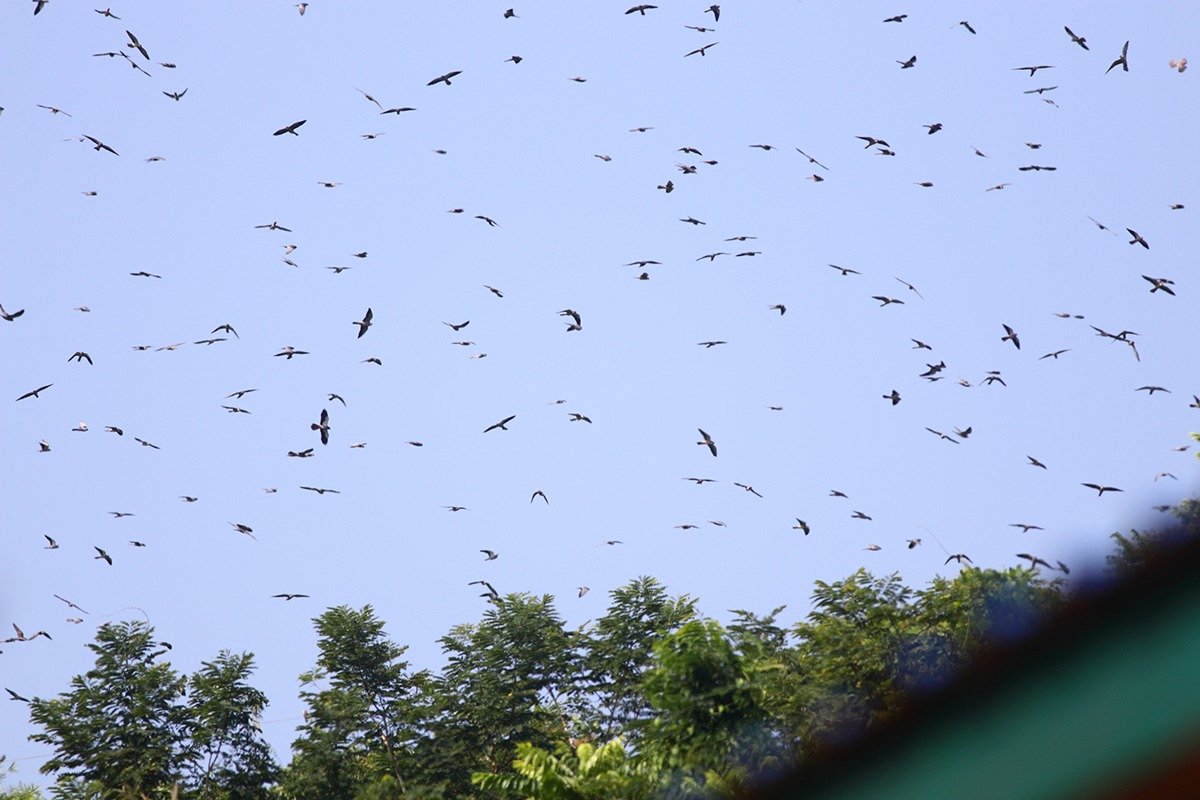
A young Amur falcon named Alang has flown about 5,700 kilometres non-stop from Manipur to Somalia in 101 hours — four days and five hours in the air, without food, water or rest. She weighs about 150 grams, roughly as much as a smartphone. Her companion Apapang had covered about 4,100 km in 95 hours and was still over the Arabian Sea at the latest ping on 21 November — his arrival unconfirmed.
Picture it: a bird small enough to fit in your hand, alone above an ocean with no land below and nothing to eat or drink, flying for four days straight — watched from space.
The flight in numbers
Both birds were fitted with satellite transmitters by Wildlife Institute of India scientists in November 2025, under the Manipur Amur Falcon Tracking Project.
| Bird | Distance flown | Time in the air | Status at 21 November |
|---|---|---|---|
| Alang, young female, about 150 g | About 5,700 km | 101 hours — 4 days, 5 hours | Reached Somalia |
| Apapang, adult male, about 150 g | About 4,100 km | 95 hours | Still over the Arabian Sea; arrival unconfirmed |
| Stopover before departure | About 25 days feeding at Chiuluan, Tamenglong, Manipur | ||
| Tracking | Transmitters fitted November 2025; updates shared by Supriya Sahu on X | ||
Alang’s average speed works out at roughly 56 km an hour, sustained without a break for more than four days and nights.
How does a 150-gram bird fly for four days without stopping?
The answer is termites — and wind. For about 25 days before departure, Alang and Apapang fed at the Chiuluan roosting site in Tamenglong, gorging on the swarming termites and other insects that erupt around the stopover sites each autumn. That feeding builds the fat reserves that power the crossing: researchers call the fat critical for the next leg, a non-stop flight of nearly 6,000 km to Somalia, about 3,000 km of it across the Arabian Sea.
The wind does the rest. Amur falcons ride the monsoon tailwinds across the ocean, and an August 2026 study in the journal Ibis found that wind patterns drive their routes and efficiency — the birds use favourable currents and even cyclonic storms. There is no other way a bird this small could stay airborne for 101 hours.
Two birds, two routes — and one date the reports disagree on
The two birds did not fly the same line. Moneycontrol’s 20 November tracking update has Apapang crossing peninsular India to the western coast near Goa, while Alang was already well out over the Arabian Sea. The Times of India reports that Alang crossed open water to reach Somalia. So the precise route each bird took is still being read from the satellite fixes, and the two tracks differ.
The reports also disagree on the day the birds left: the Deccan Herald’s 19 November report, quoting Tamenglong’s divisional forest officer, says they resumed their journey on 17 November, while a report from Imphal dates Alang’s departure from Chiuluan to 19 November. The satellite timings fit the earlier date: 101 hours in the air puts her arrival on 21 November, the day Northeast Live first reported it. The flight itself is not in dispute.
The tracking project: five years, five migrations
They were fitted with their transmitters on 11 November 2025 at Chiuluan village in Tamenglong, along with a third falcon named Ahu, in a joint project of the Wildlife Institute of India and the Manipur Forest Department. Ahu has not moved from the Horn of Africa since 18 November 2025, so she is not part of this southward movement.
The two travelling birds completed their first full migration cycle and returned to Tamenglong on 22 October 2026 — a round trip their earlier tracking put at more than 20,000 km across 23 countries. The Deccan Herald puts the full annual cycle at about 30,000 km. The project aims to follow their route for five consecutive cycles, to study how the route shifts and what climate change is doing to the birds’ habitats.
This is not their first crossing. On their previous southward journey in 2025, the three tagged birds flew different routes to different corners of Africa: Apapang covered about 6,100 km in six days and eight hours to Tanzania, Alang travelled about 5,600 km in six days and 14 hours to Kenya, and Ahu covered about 5,100 km in five days to northern Somalia. The 2026 flight is faster for Alang — 5,700 km in 101 hours, straight to Somalia.
The updates have been shared by Supriya Sahu, Additional Chief Secretary for Environment, Climate Change and Forests in Tamil Nadu, on X. Her post on 21 November read: “Unbelievable but true! Alang has made it to Somalia! 5,700 km in 101 hours of NONSTOP flying!” Amur falcons were first satellite-tagged in Tamenglong in 2018, and again in 2020, 2022, 2024 and 2025. Locally they are called Akhoipuina in the Rongmei Naga dialect.
Why Northeast India is the falcons’ fuel stop
Every year, Amur falcons breed in eastern Russia, Mongolia and north and east China, then fly to wintering grounds in southern and eastern Africa — one of the longest migrations of any raptor, across 23 countries. The Amur falcon is the world’s longest-distance migrating raptor, and its Arabian Sea crossing is the longest regular over-water passage of any raptor. In October and November the birds stop in Manipur, Nagaland, Meghalaya and Assam to roost and feed. In Tamenglong they settle in bamboo forests along the Barak and Irang rivers.
The most famous stopover is Pangti, on the Doyang reservoir in Nagaland’s Wokha district, which hosts the largest known roosting congregation of Amur falcons anywhere on Earth — the reason Nagaland calls itself the Falcon Capital of the World. At dusk the birds pour into the roost in their thousands; at dawn they lift off again to feed. It is one of India’s great wildlife spectacles, lasting only a few weeks a year.
That spectacle very nearly disappeared. In November 2012, reports of large-scale hunting near Doyang reservoir caused national and international outrage: conservationists estimated 120,000 to 140,000 birds caught in just ten days, roughly a tenth of the global adult population. The Pangti Village Council banned falcon hunting ahead of the 2013 season, and the villages that once hunted the birds became their fiercest protectors. Today the roosting site is a temporary silence zone within a 3 km radius for the whole migration season. The species is protected under Schedule I of the Wildlife (Protection) Act, 1972, and listed under Appendix II of the Convention on Migratory Species.
The season is ending — what travellers can still do
If you were planning to see the falcons this year, the window is closing. Nagaland’s Amur Falcon Conservation Week at Pangti ran from 8 to 10 November 2026 and is already over, and the birds are now departing — Alang and Apapang are the proof. The peak viewing window, late October to mid-November, has passed for 2026.
One falcon date is still on the calendar: the 12th Falcon Festival at the Umrangso Golf Field in Assam’s Dima Hasao district, scheduled for 11 to 13 December 2026, with Jasmine Sandlas, Javed Ali and Asees Kaur headlining. Assam Tourism’s calendar lists 12 to 14 December, so confirm the dates on the festival’s Instagram page before travelling. By mid-December most falcons have already left, so the festival is a celebration of the migration — music, local food and conservation workshops — rather than a guaranteed sighting.
For next season, aim for late October to mid-November. Go to the Doyang reservoir at Pangti at dawn or dusk, when the roost fills and empties, and go with a local guide who knows the roosting sites and the silence-zone rules. Keep your distance and keep quiet: the birds you are watching have just flown in from Siberia and are about to fly 5,700 km across an ocean without stopping.
Frequently asked questions
How far did the Amur falcon Alang fly?
About 5,700 kilometres non-stop, from Manipur to Somalia, in 101 hours — four days and five hours in the air, without food, water or rest. Alang is a young female weighing about 150 grams.
Has Apapang reached Africa yet?
Not that scientists have confirmed. At the latest satellite ping on 21 November 2026 he had covered about 4,100 km in 95 hours and was still over the Arabian Sea. Researchers await his next signal.
How are the falcons tracked?
With lightweight satellite transmitters fitted by Wildlife Institute of India scientists in November 2025 at Chiuluan in Tamenglong, Manipur, under the Manipur Amur Falcon Tracking Project. Updates have been shared by IAS officer Supriya Sahu on X.
Why do Amur falcons stop in Northeast India?
To feed on termites and other insects and build the fat reserves that power the roughly 3,000 km Arabian Sea crossing. Key stopovers are Tamenglong in Manipur and Pangti and the Doyang reservoir in Nagaland, with birds also roosting in Meghalaya and Assam in October and November.
When is the best time to see Amur falcons in India?
Late October to mid-November, at dawn or dusk around roosting sites such as the Doyang reservoir at Pangti. The 2026 season is now ending, so plan for next autumn.
When is the Falcon Festival in Assam?
The 12th Falcon Festival is scheduled for 11 to 13 December 2026 at the Umrangso Golf Field in Dima Hasao, Assam. Assam Tourism’s calendar lists 12 to 14 December, so confirm the dates on the festival’s Instagram page before travelling. Most falcons will already have left, so treat it as a celebration rather than a guaranteed sighting.
Planning a trip to the Northeast?
Start with our Manipur guide, our Nagaland guide and the Assam guide for Umrangso and Dima Hasao. For the festival season, read our Hornbill Festival guide and the Sangai Festival. More festival and travel news is on the News Corner.
Sources: Northeast Live, 21 November 2026; The Times of India, 22 November 2026; Deccan Herald, 19 November 2026; Moneycontrol, 20 November 2026; Wildlife Institute of India tracking updates shared by Supriya Sahu on X, 21 November 2026.