
Air India · Turnaround · News Corner
Air India’s New Boss Puts a Number on the Turnaround: ₹6,000 Crore — and Westbound Flights May Soon Leave From Mumbai

By Beauty of Bharat — India travel guide, every place, every flavour.
Guides covering all 36 States and UTs, researched from official sources and checked at publish time. Corrections welcome — see About Beauty of Bharat.
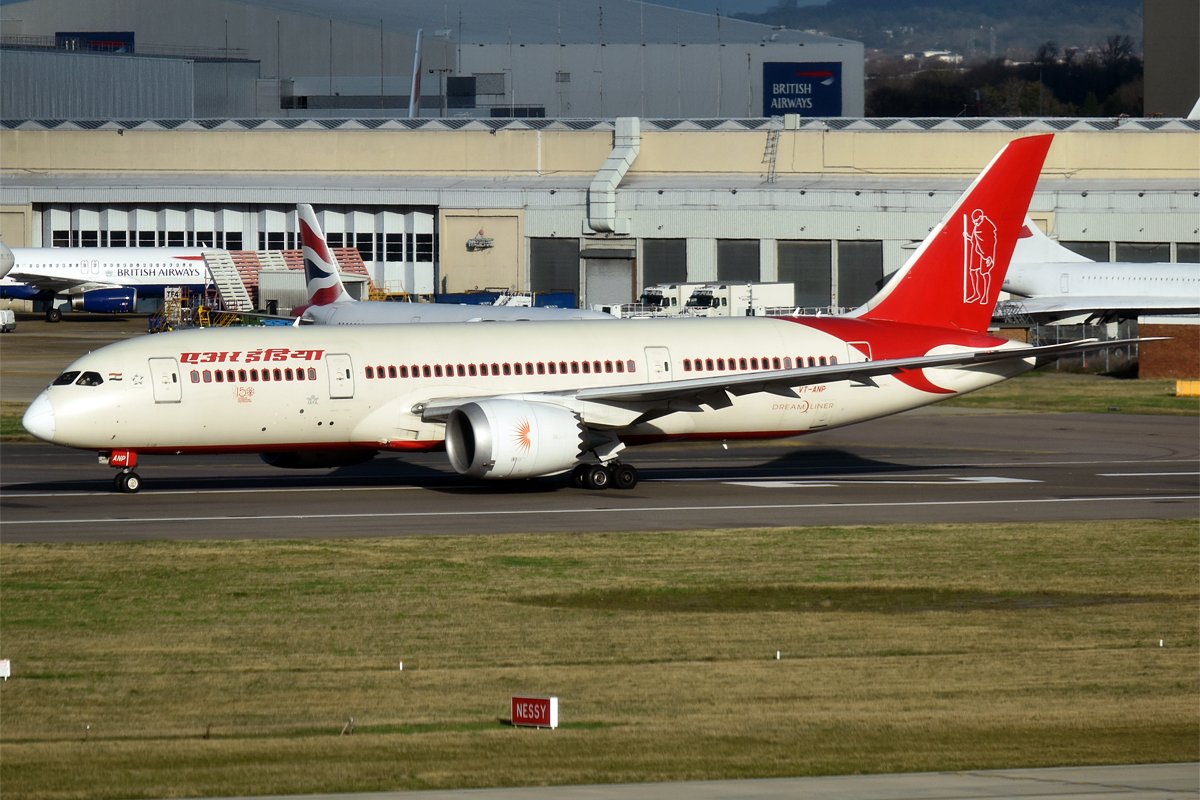
Three months after his appointment was announced, Air India’s new chief has put a number on the turnaround: ₹6,000 crore. At a townhall on Wednesday 25 November 2026, chief executive and managing director Tewolde Gebremariam told staff the airline will cut that much from its costs this financial year — and more westbound connecting flights may soon be routed through Mumbai instead of Delhi.
The townhall was reported widely on Wednesday evening by The Hindu, BusinessLine, Moneycontrol and the Telegraph (Press Trust of India). It was Gebremariam’s first big statement of intent since taking charge, and it was strikingly specific: a figure, a split between fuel and non-fuel costs, and a progress report on savings already banked. For passengers, the network plan behind the number matters just as much: it decides which city you change planes in.
The number at the centre of the townhall
The headline figure is ₹6,000 crore of cost savings targeted this financial year. It breaks into a 20% cut in non-fuel costs and a 5% cut in fuel costs. Fuel is the hardest cost to control — its price is set by world markets — so the heavier cut falls where the airline has more control: ground handling, maintenance contracts, offices, systems and suppliers.
The plan is already partway there. The airline says ₹3,500 crore have been identified and ₹1,500 crore already achieved. More than 1,500 cost suggestions have come in from employees, a sign the savings drive is being run company-wide rather than as a boardroom spreadsheet. The gap between the ₹3,500 crore identified and the ₹6,000 crore target — roughly ₹2,500 crore — is the work still to be found, agreed and delivered before the financial year ends.
One Air India Group — what changes, and what does not
The other big idea from the townhall is organisational: Air India and Air India Express will work as “One Air India Group”. In practice that means shared finance, human-resources and IT functions, so the group stops paying twice for the same back-office work. It does not mean a merger: the two airlines keep their separate brands and separate Air Operator Certificates, so a passenger booking Air India Express will still be booking Air India Express.
The Management Committee has been recast as a Management Team, and Air India Express chief executive Deepak Rajawat joins it, putting the low-cost arm at the group’s top table. Two new group roles have been created — a Group Strategy Officer and a Chief of Training Academy — the second tied to a single unified training academy. The two airlines will be run as one business behind the scenes, even while they keep flying under two names.
Mumbai for the west, Delhi for the east
The change most likely to touch travellers is the network redesign. More westbound connecting traffic — passengers flying between India and Europe, the Gulf and beyond — will be routed through Mumbai, which the airline says is less affected by the airspace closures that have complicated westbound flying. Delhi will increasingly handle eastbound flows.
Delhi has long been Air India’s main gateway, but airspace closures have made westbound routings from the capital longer, and Mumbai’s west-coast position gives westbound flights a shorter path out. Southern hubs are also being evaluated, which could matter for travellers from Bengaluru, Hyderabad and Chennai. Nothing suggested an overnight switch: network redesigns roll out route by route. But the direction is clear, and passengers booking connecting journeys through India in the coming months should check which city their itinerary routes through — it may not be the one they expect.
New money: freighters, holidays and an academy
Cutting costs is only half of a turnaround; the other half is finding new revenue, and Gebremariam set out three ideas. The first is a dedicated freighter and cargo business, turning belly space on passenger aircraft and, in time, dedicated freighters into a business in its own right. Air cargo has been a bright spot for Indian aviation, and a carrier with Air India’s international network has more to sell there.
The second is holidays. The airline plans an in-house holiday-packages business, possibly branded “Air India Vacations” or “Air India Holidays”, developed with the tourism ministry. The names are working titles, not a launch, and no packages have gone on sale — but the intent is plain: sell the whole trip, flights, hotels and experiences, rather than only the seat. An airline selling holidays directly changes who competes for the Indian traveller’s trip budget.
The third is people: a unified Air India Aviation Academy to train pilots, cabin crew, engineers and ground staff for the whole group under one roof, replacing separate training streams. Where trained staff are scarce, an academy is both a cost measure and a growth measure: it is how the group staffs the aircraft it already has on order.
What the airline says is already improving
He did not only talk about plans. Domestic on-time performance is consistently above 80% at both Air India and Air India Express — the measure passengers notice first, and the one that has hurt the airline’s reputation most. Satisfaction is moving too: the net promoter score, which asks passengers whether they would recommend the airline, is up to 38 from 35 year on year, and on domestic routes it has risen to 51 from 48.
Load factors and yields are improving in October and November, according to the townhall account. Those are the numbers that decide whether cost cuts turn into profit, and the ones to watch in the airline’s next results. The picture was of an airline that has steadied its operations and must now prove the economics work.
The scale of the job: a ₹22,238 crore loss
Air India posted a loss of ₹22,238 crore in FY26, according to The Hindu, while the Telegraph put it at more than ₹22,000 crore in 2025-26. Against a loss that size, ₹6,000 crore of savings is a serious start, not a solution on its own — roughly a quarter of one year’s loss, and only if fully delivered.
The turnaround also has cover at the top. Tata Sons chairman N. Chandrasekaran has given Gebremariam a free hand on senior-management changes, the Economic Times reported via Forbes India, citing sources — an attributed report, not a confirmed company statement, but it fits the townhall, where new roles were created and the leadership team was recast in the new chief’s image.
Who is running the turnaround
This is not appointment news. Gebremariam’s appointment was announced on 5 August 2026, and he took charge as chief executive and managing director on 1 October 2026, succeeding Campbell Wilson, who had resigned in April. The townhall on 25 November was his first major statement of strategy since taking the job.
That timing matters: it is not a first-week promise made before the new chief has seen the books, coming after nearly two months in charge and three and a half months since the appointment was announced. The test now is delivery — whether the ₹3,500 crore identified becomes ₹6,000 crore achieved, and whether the network and revenue plans follow.
What this could mean for your next trip
For now, nothing changes at the booking screen: no schedule shows the new Mumbai routings, no holiday packages are on sale, and no fares have been announced. What travellers should do is practical: when booking a connecting journey on Air India in the coming months, check the routing — a westbound trip that used to connect in Delhi may soon connect in Mumbai instead, which could change the total journey time.
Indian aviation is changing fast, and not only at Air India. We have also tracked the disruption on the ground, from the US flights ground stop and Air India’s advisory earlier this month to the string of IndiGo incidents — the hijack-threat hoax on the Bengaluru–Lucknow flight, the aborted take-off at Bengaluru and the Pune–Guwahati flight that returned with a landing-gear snag. Against that background, a chief putting a number on his turnaround is the clearest signal yet of what Air India intends to become — and ₹6,000 crore is now the yardstick he will be judged against.
Frequently asked questions
Who is Air India’s chief executive?
Tewolde Gebremariam, Air India’s chief executive and managing director. His appointment was announced on 5 August 2026 and he took charge on 1 October 2026, succeeding Campbell Wilson, who had resigned in April.
What is Air India’s ₹6,000 crore savings plan?
A cost-saving target of ₹6,000 crore for this financial year, set out by Gebremariam at a townhall on 25 November 2026: a 20% cut in non-fuel costs and a 5% cut in fuel costs. The airline says ₹3,500 crore have been identified and ₹1,500 crore already achieved.
Are Air India and Air India Express merging into one airline?
No. They will work as “One Air India Group”, sharing finance, human resources and IT, but keeping separate brands and separate Air Operator Certificates. The Management Committee has been recast as a Management Team, and Air India Express chief executive Deepak Rajawat joins it.
Why would more westbound flights leave from Mumbai instead of Delhi?
More westbound connecting traffic will be routed via Mumbai, which the airline says is less affected by airspace closures, while Delhi increasingly handles eastbound flows. Southern hubs are also being evaluated.
What are “Air India Vacations” and “Air India Holidays”?
Working names for a planned in-house holiday-packages business, developed with the tourism ministry. The names are not final and no packages have launched; the idea is to sell holidays directly rather than only seats.
How big is Air India’s loss?
Air India posted a loss of ₹22,238 crore in FY26, according to The Hindu; the Telegraph put it at more than ₹22,000 crore in 2025-26. The ₹6,000 crore savings target is the new management’s answer to that scale of loss.
Planning a trip to Mumbai or Delhi?
Start with our Mumbai guide, Maharashtra guide, Delhi guide and India travel guide. More news is on the News Corner.