
India Travel Guide · Volunteering
Volunteering in India: Types, Costs, Visas & How to Do It Right
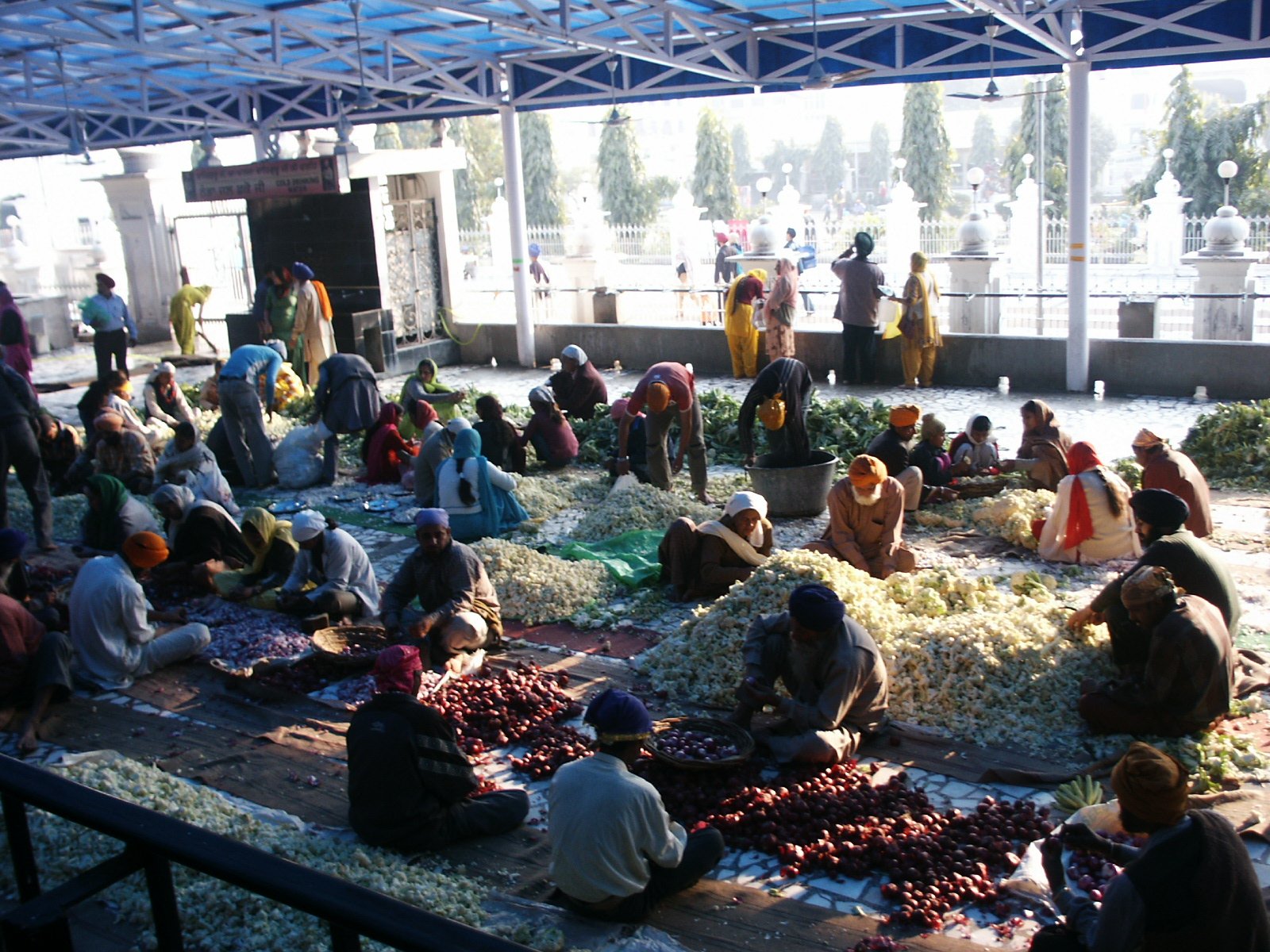
Every day, volunteers at the Golden Temple in Amritsar cook and serve free meals to tens of thousands of strangers — no booking, no fee, no questions asked. It is one of the largest community kitchens on Earth, and it runs entirely on seva, selfless service. Giving your time is an old, everyday habit in India, not a holiday invention. The question is not whether you can help — it is whether you help in a way that actually helps, on the right visa, with the right organisation, for long enough to matter. This guide answers all three, including the one kind of volunteering you should never do.
Volunteering in India at a Glance
| Visa rule | An e-Tourist visa covers unpaid voluntary work of short duration only — maximum one month, with no payment of any kind. Longer or formal NGO roles need a regular visa — see the visa section below. |
| Typical cost | Most organised programmes charge roughly US$100–$300 per week, usually including accommodation, meals, airport pickup and local support. Flights, visa, insurance and personal spending are extra. |
| How long | Most placements run 1–12 weeks; a fortnight is a realistic minimum for teaching, and some projects ask for 1–3 months. |
| Minimum age | Usually 17 or 18 for solo volunteers; family programmes in Kerala accept children from around age 5 with their parents. |
| Best months | October to March for most of India; schools follow their own calendars, so check term dates before booking. |
| Hard line | Do not volunteer in an orphanage, and do not visit one as a tourist. See the section below for why, and what to do instead. |
1. Types of Volunteering in India
Volunteering in India is not one thing. The right choice depends far more on what you can actually offer than on where you fancy going — a doctor and a gap-year student should not be doing the same placement, and a good organisation will tell you so.
Teaching English and supporting schools
This is the most common volunteering in India, and the easiest to join — usually in government or NGO-run schools, slum education projects and community learning centres in Delhi, Jaipur, Kerala and Himachal Pradesh. The work is typically a few hours a day, Monday to Friday: leading English conversation, helping local teachers, and running games, art, sports and basic computer sessions. No teaching qualification is usually required, though qualified teachers are placed differently. Two things matter: English is the skill Indian schools genuinely want, so a fluent speaker with no teaching background can be useful if patient and consistent — and consistency matters more than brilliance. A volunteer who turns up every day for three weeks helps more than a gifted teacher who stays four days.
Healthcare volunteering
Experienced healthcare volunteers — doctors, nurses, physiotherapists, dentists, midwives and medical students — are welcomed in hospitals and clinics, often working a full five-day week. Dharamshala in Himachal Pradesh and Kerala are well-known bases for medical placements. This is the one area where your professional qualification is the whole point: unqualified volunteers should not do clinical work, and any organisation that lets them is a red flag. Medical and nursing students should look for structured, supervised electives. A formal hospital placement lasting more than a month needs a regular visa rather than an e-Tourist visa — sort the visa before you book anything.
Animal rescue
India's street-animal rescue centres always need hands. The best-known example is the animal rescue sanctuary in Udaipur, Rajasthan, where volunteers work five days a week alongside local staff — cleaning bedding, feeding and walking rescued dogs, helping injured animals recover, and doing the unglamorous daily work that keeps a shelter running. No veterinary training is needed for general shelter work, though vets and vet nurses are especially valued. It suits people who want physical, practical work and are comfortable with the reality that rescue involves sick and injured animals, not just cuddly ones.
Wildlife rehabilitation
Wildlife rehabilitation is the most distinctive volunteering India offers. The classic example is the Agra Bear Rescue Centre, where rescued sloth bears — animals once forced to "dance" for entertainment — are rehabilitated; volunteers help with feeding, cleaning and construction, and the placement pairs naturally with the Taj Mahal and the Golden Triangle. In Rajasthan, conservation groups such as Tiger Watch combine wildlife protection with community outreach in villages around the tiger reserves. Be realistic: this is husbandry and manual work, not handling wild animals, and reputable centres keep volunteers away from direct contact with dangerous species. If a programme promises hands-on time with tigers or elephants, walk away — that is a tourist attraction, not conservation.

Community projects
Community volunteering covers the widest ground: women's empowerment and adult literacy, vocational training in sewing, embroidery and computer skills, school renovation, water and sanitation projects, and support for people with disabilities. Much of it happens in Delhi and Jaipur, and in rural Rajasthan and Uttarakhand, where long-established Indian NGOs work with village communities. Two examples show what a serious local organisation looks like: Seva Mandir of Udaipur has worked in rural development for more than forty years, and the Salaam Baalak Trust in Delhi supports street children with shelter, food and education. Naming them is not an endorsement — run every check below — but they show the difference between a rooted local organisation and a pop-up broker.
Family volunteering in Kerala
Kerala, and Fort Kochi in particular, is India's most established base for family volunteering. Parents support teachers in local schools while their own children join classroom activities alongside local pupils — an exchange, not a one-way visit. Programmes typically run on weekdays, with families staying together in a volunteer house in Fort Kochi, and accept children from around age five upwards. The work is teaching support, arts, sports and school renovation — not work with children in care homes, which reputable family programmes explicitly exclude. Kerala suits families because it is gentle, green and easy to travel around. Note the school calendar: Kerala schools close for summer from late April to mid-June, so family placements are best from October to March.
2. Who Volunteering in India Suits — and Who Should Skip It
Volunteering in India suits you if you have a skill a community actually needs, or the patience to be useful without one; if you can commit at least two weeks; and if you are comfortable with basic living conditions, unpredictable schedules and being the outsider who adapts. It suits gap-year students, career breakers, retired professionals, and families who want their children to see a different way of life up close.
It does not suit everyone. Skip it if you want a holiday with a little volunteering on the side — that is a tour, and you should book one. Skip it if you cannot commit more than a few days: short stays cost local staff more time in orientation than they return in help. Skip it if you are mainly looking for social media content, especially photographs with children, or if you are not prepared for heat, stomach upsets, power cuts and plans changing at short notice. And skip any placement that puts you alone in charge of children or patients when you have no qualification to be there — that is a safeguarding failure, and the clearest sign an organisation is not serious.
3. The Visa Rule: Read This Before You Book Anything
This is the most important section on the page, and the one most volunteering websites get wrong. Many still say volunteering on a tourist visa is simply not allowed. That is out of date. The Government of India's own e-Visa rules are more precise — and more generous — than that, but they come with a hard limit.
The official e-Tourist visa eligibility, published on the Government of India e-Visa portal and repeated on Indian embassy websites, permits "voluntary work of short duration (for a maximum period of one month, which do not involve any monetary payment or consideration of any kind in return)". Three conditions sit inside that sentence:
- Short duration — maximum one month. The one-month cap applies to the volunteering itself, not to your visa. A one-year or five-year e-Tourist visa does not stretch it: if your placement runs longer than a month, the e-Tourist visa is the wrong visa, even if your visa itself is still valid.
- No payment or consideration of any kind. No wages, no stipend, and nothing that functions as payment in disguise — be careful with arrangements where free accommodation or meals are tied to a set number of working hours, and get the arrangement in writing.
- A letter from the host organisation. The official guidance requires a letter from the organisation concerned, on its letterhead, for voluntary work — upload it with your e-Visa application. An organisation that cannot provide one is not a proper host.
Everything beyond that line needs a regular visa through an Indian mission, not the e-Visa portal. A formal placement with an NGO, a role lasting more than a month, or anything resembling a job all fall outside the e-Tourist visa. Indian missions have cited the Employment visa for volunteer work with an NGO, and the Entry (X) visa for other long stays — which fits depends on the role, so ask the Indian mission in your own country before you apply, and get the answer in writing. Teaching in a school as a formal teacher counts as employment even if unpaid, and is not covered by a tourist visa.
Finally, file the e-Arrival Card within 72 hours before arrival, as all foreign visitors must — it is arrival information, not a visa, and does not change your visa category. Visa rules change: the wording above was verified on the official portal and Indian embassy guidance in November 2026, but re-check indianvisaonline.gov.in and your nearest Indian mission before you apply. Our India e-Visa guide covers the application itself.
4. How to Choose and Vet an Operator
Hundreds of organisations offer volunteering in India, ranging from superb to exploitative, and price is not a reliable guide — some of the best placements charge nothing, and some of the worst charge the most. Run these checks before you pay anyone anything:
- Who actually runs the project? Prefer placements run by, or in genuine partnership with, a registered Indian NGO — not a broker that buys beds in someone else's project. Ask for the NGO's registration details and look them up.
- Where does the money go? Ask for a breakdown: how much reaches the host community, how much covers accommodation and food, and how much is the company's margin. A reputable operator answers plainly; a vague answer is an answer.
- What is the child protection policy? Any project involving children must have a written policy, require police background checks (a DBS check for UK volunteers, or your country's equivalent), and never leave a volunteer alone in charge of children. No policy, no placement.
- Who does the work when you are not there? Good projects are staffed by local professionals and continue without volunteers. If a project would collapse without a stream of foreigners, it is a business selling the appearance of helping.
- What do past volunteers say — independently? Read reviews on independent platforms, and ask the operator to put you in touch with two recent volunteers. Then actually contact them.
- Does it offer orphanage placements? If yes, stop. See the hard-line section below — no reputable operator sells these any more.
- What happens if something goes wrong? Check the refund policy and the in-country support (a named local coordinator, 24-hour contact). The fee almost never includes insurance, so buy your own.
- Can they provide the visa letter? A legitimate host provides a letter on official letterhead for your e-Visa application. If they cannot, or tell you not to mention volunteering, walk away.
A final gut check: if the sales pitch is mostly about you — your transformation, your adventure, your photographs — and very little about the community and what it asked for, the project is built backwards. The best operators talk first about the local need, the local staff and the long-term plan.
5. What Does Volunteering in India Cost?
Volunteering in India is not free, and you should be suspicious of anyone who tells you it is. The organisation housing, feeding and supervising you has real costs — the honest question is what the fee covers, not whether there is one.
Most organised programmes charge around US$100–$300 per week, according to GoAbroad's volunteer FAQ. To give that range shape: IFRE Volunteers lists programmes from US$200 a week plus a one-time US$299 registration fee, covering housing and food through a host family; Volunteering Solutions lists one-week programmes in Delhi and Jaipur from US$599 (about £468), covering accommodation, meals, airport pickup, orientation and 24-hour support. Longer stays cost less per week. Prices change, so treat these as November 2026 snapshots and check the current price before you budget.
| Usually included in the fee | Usually NOT included |
|---|---|
| Accommodation (host family, volunteer house or guesthouse) | International flights |
| Meals listed for the programme (often 2–3 a day) | Visa fees and the e-Arrival Card process |
| Airport pickup and transfer | Travel insurance (essential — buy your own) |
| Orientation and placement | Vaccinations and health costs |
| 24-hour in-country support and a local coordinator | Personal spending, local transport and weekend travel |
A fee should cover those things transparently — not mostly profit dressed up as a donation, and never a "donation" that buys you a placement. Watch for the deposit trap: some operators charge a large non-refundable deposit before confirming a placement, then cannot place you. Check refund terms in writing, and pay by card where possible.
Volunteering for free is also possible. Kerala Volunteer, a small English-teaching project at a rural school in Kerala, charges no fees at all — volunteers cover living expenses of about US$7 a day — but asks for a one-to-three-month commitment so short stays do not disrupt pupils. Free placements usually ask for more time and independence in return. If a "free" programme promises a placement in a week with no checks and no commitment, be wary — someone is paying for it, and it is usually the community.
Budget on top of the programme fee for flights, visa fees, comprehensive travel insurance (including medical evacuation), vaccinations, and roughly US$50–$75 a week in personal spending.
6. How Long Should You Go?
Longer is better, up to a point — and the point is set by the visa. For most people the sweet spot is two to four weeks: long enough to get past first-week disorientation, learn names and actually be useful, and short enough to fit the e-Tourist visa's one-month volunteering limit.
One week can work for practical projects — painting a school, helping at an animal shelter — where the work is visible on day one. One week is rarely enough for teaching: you will spend half of it learning how the classroom works and leave just as the children get used to you. That is why some teaching projects ask for a minimum of two weeks, and the Kerala project above asks for one to three months. If you are a qualified teacher or doctor, a longer stay multiplies your value, because you can train local staff — but that is exactly where you need the right regular visa, so plan the visa first and the dates second.
Whatever the length, build in a few days of ordinary travel at the end — two or three weeks volunteering followed by a week travelling works well, for instance volunteering in Fort Kochi then drifting through the Kerala backwaters. Our first-timer guide covers the practical side of that travel week.
7. The Hard Line: No Orphanage Volunteering — and No Orphanage Visits
This is the one rule on this page with no exceptions. Do not volunteer in an orphanage in India, and do not visit one as a tourist. It sounds harsh, because the instinct behind it is generous. The evidence, however, is overwhelming — and it comes from the organisations that know these children best.
UNICEF's guidance sets out the problem plainly. Most children living in orphanages are not orphans at all: UNICEF Nepal reports that up to 85% of children in orphanages in Nepal have at least one living parent, and UNICEF estimates around 80% of children in institutional care worldwide do. Children are often placed in institutions because their families are poor — and in some cases, UNICEF says, children are deliberately separated from families to attract fee-paying volunteers and donors.
The harm is not theoretical. Short-term volunteering without appropriate skills and training can contribute to a repeated sense of abandonment in already vulnerable children, as strangers arrive, bond with them and leave. Background checks are often not carried out, increasing the risk of child sexual exploitation. And by volunteering at orphanages, UNICEF says, the institutionalisation of children is inadvertently supported. UNICEF urges anyone who is not a qualified professional to reconsider. In 2018, Australia became the first country to officially recognise orphanage trafficking — recruiting children into institutions to attract volunteers and donations — as a form of modern slavery.
The same reasoning applies to visiting an orphanage as a tourist. A "visit" is a shorter version of the same encounter: strangers arriving, taking photographs, handing out sweets, and leaving. Children are not a sightseeing stop. If a tour, hotel or guide offers an orphanage visit as part of an itinerary, decline it, and tell them why — demand is what keeps these places open.
This does not mean children in India do not need help. It means the help should reach them in their families and communities, not in institutions built for visitors.
8. Alternatives That Genuinely Help
If you want to help children in India, here are the ways that do real good without the harm described above.
- Donate through vetted local charities. Money given to a well-run Indian organisation goes far further than your airfare. Support organisations working on family-based care, education and nutrition — and check their accounts and registration first. A donation from home helps more children than a week of unskilled volunteering ever will.
- Volunteer with children in the community, not in institutions. Teaching in a day school or helping at a community learning centre — where children go home to their families at the end of the day — is entirely different from a residential home. Local staff supervise and make welfare decisions; your job is to support them.
- Offer a real skill. Skills-based volunteering is where short stays genuinely help: a teacher training local teachers, a doctor running a clinic, an engineer helping with water systems. Match what you can do to a need the community has named — and be honest if the match is weak.
- Fundraise at home, then give the money away properly. A sponsored run, a small fundraiser among friends, or a month of your salary donated to a vetted Indian charity will do more measurable good than most volunteer trips. Less photogenic, far more effective.
- Support social enterprises while you travel. Buy from artisan cooperatives, eat at social-enterprise cafés, stay at community-run guesthouses, and choose operators that employ local guides at fair wages. Everyday spending, done thoughtfully, is a form of volunteering that never ends.
- Come back — or stay longer. The most useful thing a volunteer can do is return. A second visit, a longer stay or an ongoing relationship with one organisation beats a dozen one-week placements. Some of the best volunteers in India started as tourists, came back as volunteers, and now fundraise for the same project year after year.
9. Practicalities: Health, Safety, Timing and Packing
Health and insurance
Comprehensive travel insurance is not optional: make sure it covers medical treatment, emergency evacuation and the activities you will actually be doing, and carry the insurer's number in your phone. See your doctor or a travel clinic at least a month before departure — hepatitis A and typhoid vaccines are commonly recommended. Drink bottled, boiled or filtered water only, eat freshly cooked hot food, and carry oral rehydration salts.
Safety
Volunteering puts you in closer contact with everyday India than a hotel-based holiday does. Use the awareness you would use in any big city: official transport, booked travel after dark, valuables close in crowds. Women volunteers should read our solo female travel guide and our safety guide before choosing a placement — reputable operators house women volunteers securely and provide a local contact at all hours. Save the emergency number 112 in your phone.
When to go
October to March suits most of India; the Himalaya and Ladakh are best from May to September. For teaching placements, check the school calendar — many schools close for summer from late April to mid-June. Ask the host for term dates before you book flights.
What to pack and how to behave
Pack light, modest clothing — shoulders and knees covered, especially in schools and rural areas — comfortable walking shoes, a universal adapter (India is 230V, plug types C, D and M), sunscreen, sanitiser and prescription medicines in hand luggage. Learn a few words of Hindi, or Malayalam for Kerala. Remove shoes where asked, ask before photographing people, and never photograph children without explicit permission — and even then, think twice before posting it. The golden rule: you are the visitor, and the place does not exist for your benefit.
Frequently Asked Questions
Can I volunteer in India on a tourist visa?
Yes, but only within a narrow limit. The e-Tourist visa permits voluntary work of short duration — a maximum of one month — with no monetary payment or consideration of any kind in return. You need a letter from the host organisation on its letterhead. Anything longer, paid, or a formal NGO role needs a regular visa through an Indian mission. Check indianvisaonline.gov.in before you apply.
How much does it cost to volunteer in India?
Most organised programmes charge roughly US$100–$300 per week, usually including accommodation, listed meals, airport pickup, orientation and local support. As November 2026 examples, IFRE Volunteers lists programmes from US$200 a week plus a one-time US$299 registration fee, and Volunteering Solutions lists one-week Delhi and Jaipur programmes from US$599.
How long should I volunteer in India?
Two to four weeks is the sweet spot: long enough to be useful, short enough to fit the e-Tourist visa's one-month limit. One week can work for practical projects, but teaching placements usually need at least two weeks, and some ask for one to three months. Longer, skilled placements need a regular visa.
Can I volunteer in India with no experience?
Yes, for most teaching, community and animal shelter placements — no prior experience is usually required, just fluent English, patience and a minimum age of 17 or 18. Healthcare and formal teaching roles are different: they need real qualifications.
Should I volunteer in an orphanage in India?
No. UNICEF's guidance is clear: most children in orphanages have at least one living parent — up to 85% in Nepal — and short-term volunteering can add to a repeated sense of abandonment in already vulnerable children, while background checks are often not done. Some children are separated from families to attract fee-paying volunteers and donors. Support family-based care and community education instead.
What types of volunteering are there in India?
The main types are teaching English and supporting schools, healthcare, animal rescue, wildlife rehabilitation (such as the Agra bear rescue centre), community projects including women's empowerment and school renovation, family volunteering in Kerala, and seva — selfless service such as helping in a gurdwara langar.
Can I volunteer in India with my family?
Yes — Kerala, especially Fort Kochi, is the most established base for family volunteering. Parents support teachers in local schools while their children join classroom activities alongside local pupils. Programmes accept children from around age five upwards, and families stay together in a volunteer house.
Is it safe to volunteer in India?
For most people, yes, with normal precautions: use official transport, avoid travelling alone late at night, keep valuables close in crowds, and save the emergency number 112. Choose an operator that houses volunteers securely and provides a named local coordinator and 24-hour contact.
Can I volunteer in India for free?
Some grassroots projects charge no fee — for example, a small English-teaching project at a rural school in Kerala charges nothing but asks for a one-to-three-month commitment and expects volunteers to cover living costs of about US$7 a day. Free placements usually ask for more time in return. Be wary of any "free" programme promising a placement in a week with no checks.
When is the best time to volunteer in India?
October to March suits most of India. For teaching placements, check the school calendar first — many schools close for summer from late April to mid-June. Ask your host for term dates before you book flights.
Do I need vaccinations or travel insurance to volunteer in India?
Travel insurance covering medical treatment and emergency evacuation is essential — programme fees almost never include it. Hepatitis A and typhoid vaccines are commonly recommended. See your doctor or a travel clinic at least a month before departure.
What qualifications do I need to teach English in India?
For most volunteer teaching placements, none — fluent English, patience and the minimum age (usually 17 or 18) are enough. Formal teaching counts as employment even if unpaid, and is not covered by a tourist visa.
Every Place. Every Flavour.
Volunteering is one way to know India — travelling it is another. Beauty of Bharat covers all 36 states and union territories, each with its own full guide.
Explore all 36 states More travel guides