
Practical Guide · Responsible Tourism
Responsible Tourism in India: Ethical Travel Tips That Actually Help

By Beauty of Bharat — India travel guide, every place, every flavour.
Guides covering all 36 States and UTs, researched from official sources and checked at publish time. Corrections welcome — see About Beauty of Bharat.
The kindest-looking thing you do on your first day in India may be the one that does the most harm. A coin pressed into a child's hand at a traffic light, a ride on an elephant outside a fort, a photograph of a stranger's grief at a cremation ghat — each feels small, even generous, in the moment. Each has a consequence you never see. This guide is about the other side of those moments: what to do instead.
Responsible tourism in India is not a checklist of sacrifices. It is a short set of habits: pay the people who serve you fairly, ask before you point a camera at someone, skip the attractions that hurt animals or children, buy from the person who made the thing, and carry your rubbish out with you. None of it makes a trip harder. Most of it makes the trip better.
Our first-timer guide already has a short section on travelling respectfully. This page goes deeper: the why behind each rule and the exact alternative. If you only read one section, read the one about children — it is where good intentions go wrong most often.
What responsible tourism in India actually means
Strip away the jargon and it comes down to three questions. Who gets the money? Who gave consent? What is left behind? If the money reaches a local family rather than a distant operator, if the people in your photographs agreed to be in them, and if the place looks the same after you leave, you are travelling responsibly. The rest of this guide applies those three questions to the situations India actually puts in front of you.
India makes these questions sharper than most destinations, because the gap between visitor and local is so visible. A tourist's daily budget can exceed a week's wages for the person serving their food. That gap is not your fault, and feeling guilty about it helps nobody. What helps is spending deliberately: choosing the family-run guesthouse over the chain, the licensed local guide over the tout, the workshop over the export showroom.
Should I give money to children who beg in India?
No. This is the hardest answer in this guide, and the most consistent one in the research: UNICEF, the ChildSafe Movement, ECPAT International and every major child-welfare organisation working on the issue say direct giving to child beggars almost always causes more harm than good. It is not that the child in front of you does not need help — it is that the coin in your hand changes what happens to that child tomorrow.
Here is the mechanism. When begging pays better than school, children are kept out of school. When a child earns more on a tourist street than an adult earns at work, adults have a reason to send children out instead of going themselves. In organised begging, much of the cash is handed up the chain to whoever controls the group. In the worst cases, children are trafficked or deliberately kept out of school to beg, and the money funds the people exploiting them.
Indian law is firmly on the child's side here. Indian law is firmly on the child's side: under the Juvenile Justice Act 2015, anyone who uses a child for begging faces up to five years in jail and a fine of one lakh rupees, and under the Bharatiya Nyaya Sanhita (in force since July 2024) kidnapping a child to beg carries at least ten years in prison and up to life. The central government's SMILE scheme, started in 2022, funds shelters and skills training for people who beg in more than 80 cities. The law only works when someone reports what they see: the national child helpline, 1098, answers 24 hours a day.
So what do you do in the moment, when a child is tugging at your sleeve at a traffic light? Be polite, be brief, and keep walking. A smile, a shake of the head, a "no, thank you" — and do not open your wallet in the street, which marks you as an easy target and draws a crowd. Do not give to the most aggressive beggars just to make them go away; that teaches them the tactic works on the next tourist. If you are worried about a specific child — one who looks very young, sick, or controlled by an adult — note where and when you saw them and call 1098, or tell your hotel or guide, who will know the local reporting route.
Should I give sweets or pens to children in India?
No — and this surprises people more than the money answer, because sweets and pens feel harmless. They are not. Child-welfare guidance is explicit: material giving creates the same dynamics as cash. Pens and sweets train the encounter as transactional, teach children that tourists are a source of free goods, and can cause fights between children over what you handed out.
The "pens for poor children" idea is so common that it has become a small industry of its own: travellers arrive with bags of stationery, hand them out at village stops, and leave believing they helped. What the children learn is that the tourist stop is where free things appear — and the next group gets mobbed a little harder. If you want to support a child's education, donate to a registered organisation that works with children in that area, and let professionals decide whether a child needs books, fees, or a safe place to study. Ask your hotel or guide which organisations do the work properly in that city — well-established Indian organisations working with street and runaway children include Salaam Baalak Trust in Delhi, Butterflies, Railway Children India, Bal Raksha Bharat (Save the Children India) and CRY (Child Rights and You). Check any charity's registration before you give.
There is one honest exception: food. Buying food for the person in front of you — a meal from a nearby stall, eaten there — helps that person and cannot easily be passed up a chain. Buy food, not cash.
Ask before you photograph people in India
The rule is simple: ask before you photograph people, especially women and children, worshippers, and people at work. A smile and a gesture towards your camera is usually enough — you will get a clear yes or no, and a yes given freely makes a better photograph anyway. If someone says no, that is the answer. Do not offer money to change it, and do not take the photograph anyway from a distance.
There are places where the camera should stay in your bag without being asked. Funerals and cremations are the clearest: at Varanasi's cremation ghats, photographing the burning pyres or grieving families is intrusive and widely resented. The same applies inside temples during prayer, at mosques during worship, and at any ceremony that is a ritual for the people taking part rather than a performance. At the Ganga aarti in Varanasi or Rishikesh, watch quietly before raising a camera — it is a nightly ritual for locals, not a show staged for tourists.
Children deserve a stricter rule than adults. Do not photograph children without a parent's or guardian's permission, and do not post photographs of identifiable children on social media — even with first names, school names or location data attached. A photograph posted casually can be misused, and a child cannot consent to being on the internet.
Sadhus (holy men) and some performers at tourist sites expect a small payment for photographs. Agree the amount before you shoot, and walk away if the price changes after the photograph is taken.
Is slum tourism ethical in India?
It depends entirely on who runs it and who benefits. Poverty is not a sight, and a tour that treats a poor neighbourhood as a photo stop — a bus slowing down so passengers can stare, a guide pointing at people's homes like exhibits — is voyeurism, whatever the brochure calls it. Do not book it.
The alternative is real and worth doing: community-run tours, where residents lead the walk, tell their own story, and keep the income — in Delhi, for example, Salaam Baalak Trust runs city walks led by former street children. The test before you book: is the tour run with the community or merely about it? Does the money stay in the neighbourhood? Are cameras restricted unless residents invite photographs? If the operator cannot answer, choose something else.
The same test applies to village visits and "tribal tours". A visit arranged through a homestay or a local guide, where you are a guest in someone's home or workshop, is a genuine exchange. A visit where a group is bussed in, shown a dance, and bussed out is a performance — and the people performing it rarely set the price.
Elephant rides, tiger shows and snake charmers: what to skip
This is the section where the gap between the brochure and the reality is widest. Riding an elephant is still sold as a quintessential Indian experience, outside forts and in national parks. Wildlife SOS, the New Delhi-based animal welfare organisation, is blunt: riding an elephant should always be avoided. Nearly all ride elephants suffer debilitating injuries with no veterinary care, most were taken from the wild as babies, and the "rescued" label some operators use is most likely a lie. If you are paying to ride, paint or bathe an elephant, the animal is almost certainly being exploited. India has an estimated 2,700 to 3,000 captive elephants, and the Indian elephant is listed as endangered in the wild by the IUCN.
A mahout controls a ride elephant with an ankush, a sharp pointed tool, and the result is tattered ears and other injuries. Wildlife SOS has cared for more than 300 captive elephants and runs a Refuse to Ride campaign with the Responsible Tourism Society of India; its Elephant Conservation and Care Centre near Mathura takes visitors to observe rescued animals being cared for — no rides, no performances, no painting. Watching an elephant being an elephant beats sitting on one.
The same logic covers the rest of the list. Tiger shows and photo opportunities with captive wild animals — including cub-petting operations that surface from time to time — are not conservation; they are animals kept for handling. Snake charming is illegal in India under wildlife law, and Wildlife SOS advises tourists not to give money to snake charmers or other animal entertainment. Captive dolphin shows are rare in India but the principle holds everywhere: a wild animal performing tricks is an animal that was trained to do it. And do not buy souvenirs made from animals — ivory, turtle shell, coral, animal skins, feathers, or shahtoosh shawls. India's Wildlife Protection Act of 1972 is strict, and most of these items are illegal to collect, buy or carry out of the country.
What to do instead: visit a genuine rescue centre such as Wildlife SOS near Agra, or watch wild elephants from a distance in a national park — Kaziranga in Assam is one of the best places on earth to see wild Asian elephants. For tigers, take a regulated jeep safari in a tiger reserve such as Ranthambore, Kanha or Bandhavgarh, with a licensed guide and a park permit, and accept that the tiger may not appear. The rule for every animal encounter is the same: no rides, no chains, no forced performances, no handling.
Orphanage volunteering: why the kindest offer can harm
Volunteering in an orphanage is one of the most popular ideas among well-meaning travellers, and one of the most consistently criticised by the organisations that protect children. UNICEF and Save the Children are both against short-term work in orphanages.
First, most children living in orphanages are not orphans. A Save the Children estimate from 2009 found that at least four in five children in institutional care had a living parent, and ECPAT International puts the number of children in institutions worldwide at around eight million. Families are often separated by poverty and a lack of services, not by death — and in some cases children have been deliberately separated from families to attract paying volunteers and donors.
Second, a revolving door of unfamiliar short-term caregivers harms children. Repeated arrivals and departures deepen feelings of abandonment and disrupt attachment, and unvetted visitors put children at risk — including the misuse of their photographs to attract donations. That is why legitimate child-facing programmes require a criminal-record check, a written child safeguarding policy, and no unsupervised one-to-one access between a volunteer and a child.
The ChildSafe Movement puts it in one line: volunteer for children, not with children — unless you are a qualified childcare professional. Donate to a registered organisation that keeps families together, or offer professional skills an organisation can actually use. If an operator offers a week "helping orphans" with no background check and no safeguarding policy, that is not a charity — it is a business selling you a feeling.
Tipping in India: who to tip, how much, and when not to
Tipping in India is expected in tourist-facing service, but it is not the percentage game many visitors are used to. Small cash tips, given to the right person at the right moment, go a long way. Carry a stack of 10, 20, 50 and 100-rupee notes in a separate pocket, and tip in cash — it reaches the person who served you.
The ranges below are the typical figures reported across Indian travel guides — guidelines, not fixed rates, for a comfortable mid-range trip. At a five-star property, double them. If the service was poor, tip less or not at all.
| Service | Typical tip | Notes |
|---|---|---|
| Restaurant (no service charge) | 5–10% of the bill, rounded up | Check the bill first — see below |
| Restaurant (service charge already added) | Nothing extra required | A service charge of 5–10% is already a gratuity |
| Hotel porter / bellhop | ₹50–100 per bag | More for heavy bags, stairs or long walks |
| Hotel housekeeping | ₹100–200 per day | Leave it daily, clearly marked, or on the last morning |
| Hotel concierge | ₹200–500 for a real favour | Nothing for routine help |
| Private driver (full day) | ₹300–500 per day | Per vehicle, not per passenger |
| Private driver (multi-day trip) | ₹300–500 per day, as a lump sum | Pay at the end of the trip, not in advance |
| Local guide (half day) | ₹300–500 | On top of the agreed guiding fee |
| Local guide (full day) | ₹500–1,000 | More for a specialist or exceptional guide |
| Airport / station porter | ₹50–100 per bag | Agree the amount before they lift anything |
| App cab (Uber / Ola) | ₹20–50 in the app, optional | Not expected, but kind for luggage help |
Two things to check before you tip. First, the service charge: if the restaurant bill already lists one — typically 5 to 10 percent — you are not required to tip on top of it, and India's consumer authorities have said a service charge should not be added automatically or by default. GST and other taxes on the bill are not a tip. Second, the people you should not tip: street-food and chai stalls (pay the stated price), anyone who demands a tip aggressively, touts, and — always — officials, police officers or anyone in a position of authority, where a payment is not a tip at all. A licensed guide at a major monument will name a fee upfront (typically ₹600–1,500 for a private tour, depending on duration); the tip sits on top of that fee.
Dress and behaviour in sacred and rural places
India is a deeply religious country, and the dress code that feels optional in a city hotel is not optional at a temple, mosque or gurdwara. Cover shoulders and knees at religious sites — men and women both — and carry a light scarf even in the heat. Gurdwaras require everyone to cover their head, and headscarves are usually available at the entrance. Remove your shoes before entering temples, mosques and gurdwaras and leave them outside — there is usually a shoe stand, sometimes for a small fee. Inside, stand quietly for a few seconds before the main shrine with your hands folded; it is a sign of respect.
Behaviour matters as much as clothing. Keep your voice down in places of worship, do not show overt displays of affection in public, and avoid drinking in public — several states restrict alcohol, and public drunkenness is unwelcome everywhere. Use your right hand for eating and for giving or receiving money; the left hand is considered unclean in traditional settings. Do not point your feet at people, shrines or religious images, and do not touch anyone on the head. In rural areas, dress more conservatively than you would in a city.
None of this is about adopting someone else's religion. It is about the same courtesy you would show entering a church or synagogue at home, applied in a country where sacred space is part of daily life. When in doubt, watch what local people do and do the same.
Supporting local: homestays, local guides and real handicrafts
The single biggest lever you have as a visitor is who you pay. A trip built around local guides, family-run guesthouses and regional drivers keeps far more money in the communities you visit than one routed through a foreign booking platform. Choose a homestay over a chain hotel where you can, hire a licensed local guide at each monument, and favour small-group trips over large coach tours: smaller groups put less strain on narrow lanes and small temples, and let guides engage with you rather than herd you.
Shopping is where the choice matters most, because it is where the fakes are. Real Indian handicrafts — handloom saris, block-printed textiles, blue pottery, brass work, papier-mâché — are made slowly by people whose names you can learn. Machine-made copies are made quickly in factories and sold in the same markets, often at the same stalls. Buy from the workshop or cooperative itself where you can, and watch the work being done; look for government emporiums and state handicraft corporations, which sell certified work at fixed prices; check for a GI (Geographical Indication) tag, which marks products tied to a place, from Kanchipuram silk to Jaipur blue pottery; and be suspicious of a "handmade" price that undercuts every other shop on the street — real handwork has a floor price.
Bargaining is part of the market, and it is expected — but bargain with a smile and a sense of proportion. Start at around half the asking price for an unpriced item in a tourist market, meet in the middle, and remember that the difference you are arguing over may be less than the cost of your morning coffee. At fixed-price shops, emporiums and cooperatives, do not bargain at all — the price is the fair price.
Waste, plastic and water in India
India's waste infrastructure is still uneven outside major cities, so the plastic you bring in is the plastic that is hardest to deal with. India banned identified single-use plastic items nationwide from 1 July 2022 — 19 items including plastic plates, cups, cutlery and straws — and carry bags thinner than 120 microns since 31 December 2022. Some places go further: Ladakh banned single-use plastics in August 2021, Sikkim first banned plastic bags in 1998, and several hill districts stop vehicles at check posts to remove plastic bottles.
For a traveller, the kit is small: a refillable water bottle, a cloth bag for shopping, and a small bag for your own rubbish on days when bins are rare — especially in rural and mountain areas, where you should carry your waste back to your hotel rather than leaving it, even if it is biodegradable. Refill the bottle from safe sources: hotels, restaurants and railway stations increasingly have filtered water. National parks are strictly plastic-free zones, so carry the reusable bottle and leave the packaging at the hotel.
Water is a precious resource in many parts of India, and the same restraint applies to it. Reuse towels and sheets rather than asking for them to be changed daily, and keep showers short in drought-prone regions. On treks, stay on established trails: cutting corners erodes the path, disturbs wildlife and, in fragile mountain ecosystems, does damage that takes years to heal. And never buy, collect or transport products from protected wildlife or plants — ivory, turtle shell, coral, animal skins, feathers, wild orchids — even as a souvenir.
Wildlife ethics on safari in India
India's national parks run on rules that exist for the animals, not for your photographs. Keep a safe distance, never feed wildlife, and do not use flash photography. Stay inside the vehicle unless the guide says otherwise, keep noise down, and never ask a driver to go off-road or closer to an animal than the rules allow.
Book with operators that follow the park's rules and say so: a legitimate safari uses a licensed guide, a park permit, and a registered vehicle, and it does not promise a tiger sighting, because no honest operator can. Avoid any operator that baits animals, plays recorded calls to lure them, or guarantees a sighting — the guarantee is the giveaway.
The responsible traveller's checklist
Run through it before each day out:
- Small notes in a separate pocket — for tips, not for beggars.
- Refillable bottle, cloth bag, and a bag for your own rubbish.
- Scarf or shawl — temples, sun, and air-conditioning in one item.
- Ask before every photograph of a person; no photos of children without a parent's permission, none at funerals or cremations.
- Child helpline 1098 saved in your phone, alongside 112 for all emergencies.
- No elephant rides, no animal shows, no snake charmers, no wildlife souvenirs.
- Homestay or family-run guesthouse where you can; local guide at each monument.
- Buy crafts from the workshop, the cooperative or a government emporium — and bargain kindly.
- Check the bill for a service charge before tipping at a restaurant.
- Leave the place as you found it — or a little cleaner.
None of these habits asks you to enjoy India less. The opposite is true: the travellers who slow down, pay the right people, and ask before they shoot are the ones who get invited in — for chai, for a wedding, for a story that no guidebook sells. India rewards attention. Give it yours, and the trip gives it back.
Sources
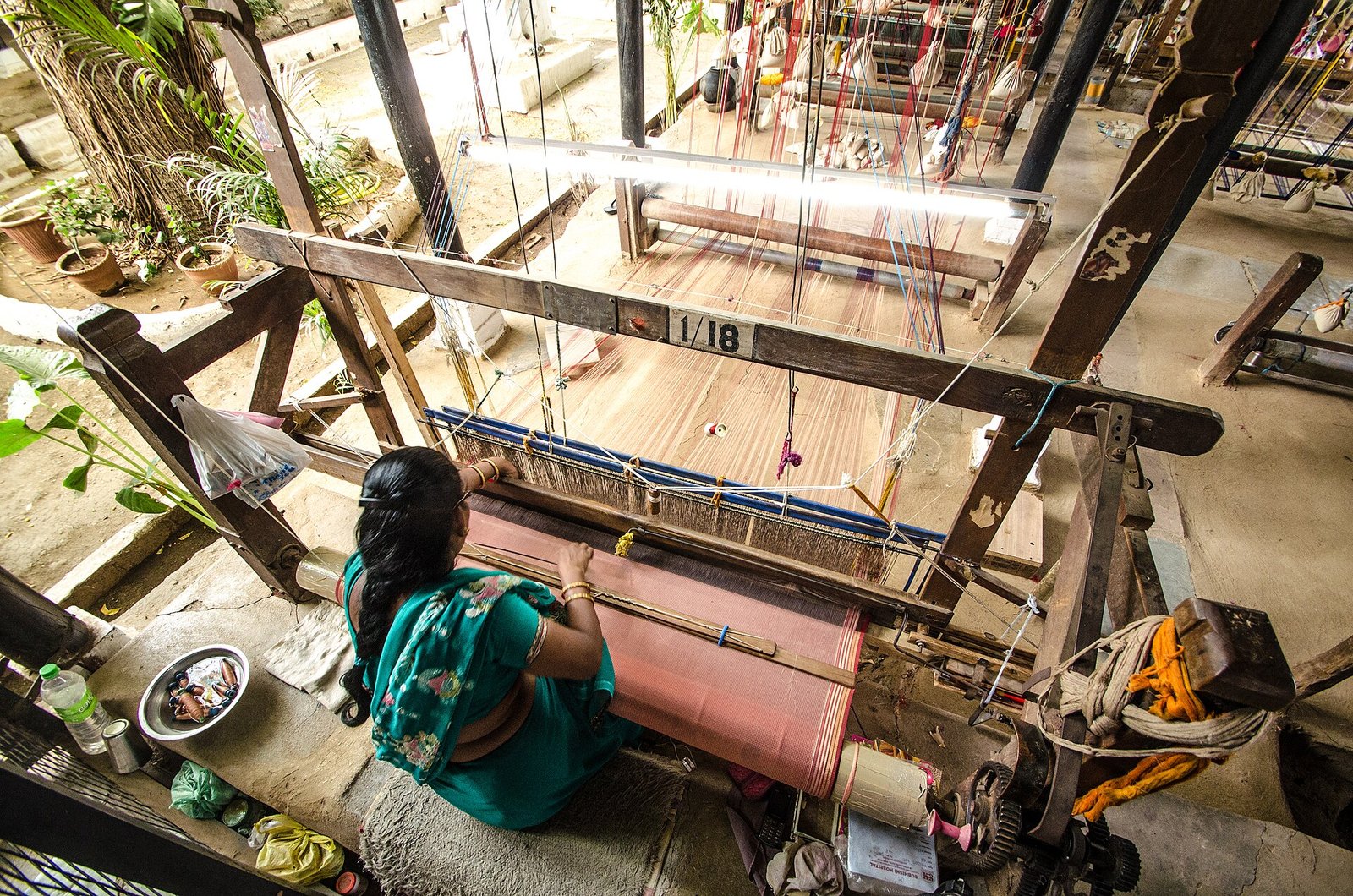
Children and begging: UNICEF, ChildSafe Movement and ECPAT International guidance as summarised by Drink Tea & Travel and Wikivoyage; Indian law, the SMILE scheme and helpline 1098 as reported by Travel India Smart. Orphanage volunteering: UNICEF, Save the Children, Lumos and ReThink Orphanages guidance as summarised by Volunteer World and INHOPE; ChildSafe Movement's "volunteer for children, not with children" guidance. Animals: Wildlife SOS and its Refuse to Ride campaign as reported by The Christian Science Monitor via MyHero (December 2025). Tipping: typical ranges as reported across Travel India Smart, How Much to Tip and India Tours Packages; amounts are guidelines, not fixed rates. Plastic: the nationwide single-use plastic ban from 1 July 2022 and the 120-micron carry-bag rule under the Plastic Waste Management (Amendment) Rules 2022, via the Ladakh tourism advisory and the Kerala High Court order of June 2025. Dress, photography and local shopping: responsible-travel guidance from Wayfarer Travel, Shanti Travel and Chalo Folks, summarised in our own words. Hero photograph: handloom weaver, Maheshwar Fort, Madhya Pradesh — Eskay001, Wikimedia Commons, CC BY-SA 4.0.
Should I give money to beggars in India?
For children, no — UNICEF, the ChildSafe Movement and ECPAT International all advise against giving directly to child beggars, because it keeps children out of school and can fund the people exploiting them. For adults, giving is a personal choice; if you give, do so discreetly and in proportion. If a child looks very young, sick or controlled by an adult, call the national child helpline 1098.
Is it OK to give sweets or pens to children in India?
No. Sweets and pens create the same problems as cash: they teach children that tourist streets pay better than classrooms, and goods are often taken by whoever controls the group. Donate to a registered local charity instead — your hotel or guide can point you to one.
Are elephant rides in India ethical?
No. Wildlife SOS advises that riding an elephant should always be avoided: nearly all ride elephants suffer injuries with no veterinary care, most were taken from the wild as babies, and "rescued" claims by ride operators are usually false. Visit a genuine rescue centre such as Wildlife SOS near Agra instead, or watch wild elephants in Kaziranga.
Can I take photos of people in India?
Ask first. A smile and a gesture towards your camera usually gets a clear yes or no — and if someone says no, that is the answer. Be strictest with children (ask a parent or guardian), worshippers, and people at funerals or cremations, where the camera should stay in your bag.
Is it OK to visit an orphanage in India?
No. UNICEF and Save the Children are against short-term orphanage volunteering: most children in institutions are not orphans, a revolving door of short-term visitors harms their attachment and stability, and demand for orphanage visits has created new institutions. Volunteer for children, not with them — donate to a registered organisation that keeps families together.
How much should I tip in India?
As a guide: 5–10% at a restaurant with no service charge (nothing extra if one is already added), ₹50–100 per bag for a porter, ₹100–200 a day for housekeeping, ₹300–500 a day for a private driver, and ₹500–1,000 a day for a full-day guide. Tip in cash, in small notes.
What should I wear when visiting temples in India?
Cover shoulders and knees, carry a light scarf, and remove your shoes before entering. Gurdwaras require everyone to cover their head. In rural areas, dress more conservatively than in a city.
How can I tell if a handicraft is genuinely handmade?
Buy from the workshop or cooperative itself and watch the work being done, use government emporiums, and look for a GI (Geographical Indication) tag. Be suspicious of a "handmade" price that undercuts every other shop on the street — real handwork has a floor price.
Is single-use plastic banned in India?
Yes — identified single-use plastic items have been banned nationwide since 1 July 2022, and carry bags thinner than 120 microns since 31 December 2022. Some places, including Ladakh and Sikkim, go further. Carry a refillable bottle and a cloth bag, and take your rubbish with you.
Is slum tourism ethical in India?
Only when it is run with the community, not merely about it. Avoid tours that treat a poor neighbourhood as a photo stop. Choose community-run walks where residents lead, tell their own story and keep the income.