
Practical Guides · LGBTQ+ Travel
LGBTQ+ Travel in India: Is India Safe for Gay Travellers?
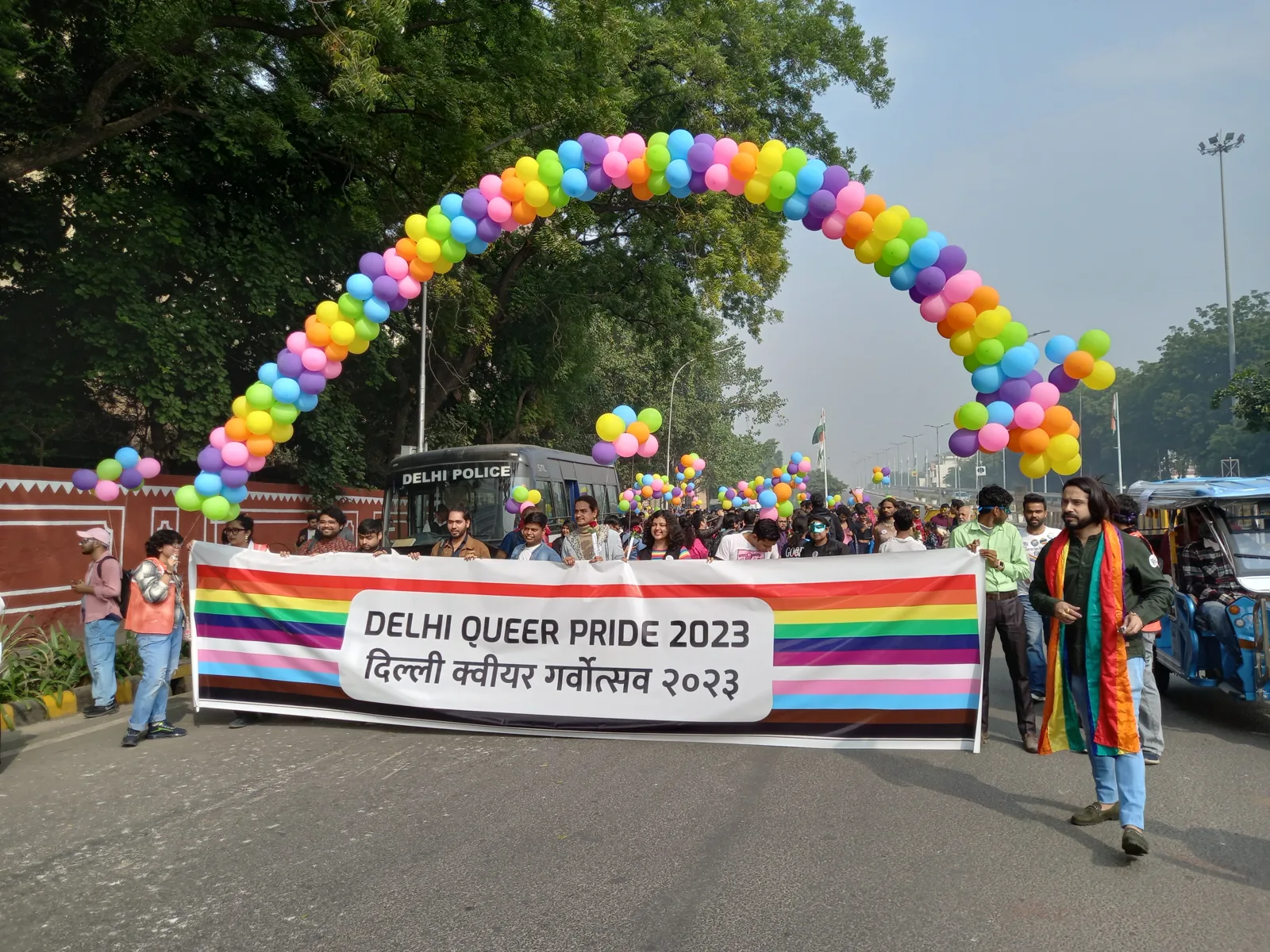
Here is the fact that surprises almost every LGBTQ+ visitor to India: two men holding hands in public is so ordinary that nobody looks twice — because straight male friends do it constantly. Walk down any Indian street and you will see it: friends, brothers, colleagues, hands linked, arms around shoulders. It is one of the most affectionate-looking countries on earth, and one of the most reserved about romance at the same time.
That contradiction is the honest starting point for this guide. Being gay in India is legal, and has been since 2018. Mumbai hosts one of Asia's great Pride marches. Goa's beaches and Kerala's backwaters are as easygoing as anywhere. And yet same-sex marriage is not recognised, there is no comprehensive anti-discrimination law, and in a small town in Uttar Pradesh or rural Rajasthan the social climate is a different country from the one you meet in Bandra or Hauz Khas. The short answer to the question in the title — is India safe for gay travellers? — is yes, mostly, with your eyes open. The rest of this guide is the detail behind that yes: the law as it actually stands, where attitudes change by city, how hotels really work for same-sex couples, and the events worth planning a trip around.
India at a Glance for LGBTQ+ Travellers
| Being LGBTQ+ | Legal — consensual same-sex relations between adults decriminalised 6 September 2018 |
| Same-sex marriage | Not recognised — Supreme Court declined in October 2023; no civil-union law either |
| Anti-discrimination law | No comprehensive law covering sexual orientation; transgender people protected by the 2019 Act |
| Third gender | Recognised since the Supreme Court's NALSA judgment, 2014; e-Visa offers a transgender option |
| Public affection | Uncommon for all couples; holding hands is normal, kissing in public is not |
| Friendliest cities | Mumbai, Delhi, Bengaluru, Kolkata, Goa — visible scenes, Pride events, community groups |
| Pride season | November to February for most marches; KASHISH film festival in early June |
| Emergency number | 112 — India's single emergency number for police, fire and ambulance |
| Best months | October to March for most of the country — see our best time to visit India guide |
1. The Law as It Stands Now: What Changed in 2018 — and What Didn't
India's LGBTQ+ law has moved in two great steps, and the gap between them is the whole story. The first step was decriminalisation. Section 377 of the Indian Penal Code, a colonial-era provision from 1860, criminalised "carnal intercourse against the order of nature" and was used for decades to threaten and harass gay men. After a long legal battle — decriminalised by the Delhi High Court in 2009, re-criminalised by the Supreme Court in 2013 — a five-judge Constitution Bench of the Supreme Court unanimously read the provision down on 6 September 2018 in Navtej Singh Johar v. Union of India, holding that criminalising consensual same-sex conduct between adults violated the constitutional rights to equality, non-discrimination, freedom of expression and life and personal liberty. One judge wrote that LGBT people were owed an apology by history. The old Section 377 has since disappeared entirely: the Bharatiya Nyaya Sanhita, the criminal code that replaced the Indian Penal Code on 1 July 2024, omits it altogether. Non-consensual acts and acts involving minors remain criminal, as they are for everyone.
The second step — recognition — has not happened. In Supriyo v. Union of India, decided 17 October 2023, a five-judge bench heard petitions seeking marriage equality and declined, by a 3:2 majority, to read same-sex couples into the Special Marriage Act or to create a civil-union right by judicial order. The court was unanimous on two things: there is no fundamental right to marry under the Constitution, for anyone, and changing marriage law is Parliament's job. All five judges agreed that queer couples have the right to form relationships and to live free from violence, coercion and discrimination. Review petitions were dismissed on 9 January 2025, which effectively exhausted the judicial route. The government had told the court it would set up a committee under the Cabinet Secretary to examine practical entitlements for same-sex couples — joint bank accounts, pension nomination, ration cards, medical decision-making — and that committee was notified in April 2024. As of November 2026, no legislation has followed and the committee's work has produced no change in the law that a traveller would notice.
What does this mean for a visitor, in practical terms? Your relationship is not illegal, and you are at no legal risk for who you are. But a same-sex marriage — including one legally performed abroad — has no clear legal standing in India: the Supreme Court did not rule on foreign marriages, and no Indian law recognises them. As a couple you have no spousal rights here: no joint adoption (the majority in Supriyo upheld the bar on joint adoption by unmarried couples), no automatic inheritance, no right to make medical decisions for a partner in hospital. Carry travel insurance that names your partner as an emergency contact and, if it matters to you, a simple signed letter authorising each other to receive medical information — it is not a legal document, but hospitals respond to clarity in a crisis. And know that India has no comprehensive anti-discrimination law covering sexual orientation: a hotel, restaurant or landlord that refuses you service is acting badly, not illegally, and your realistic remedy is to take your money elsewhere and say so in a review.
Transgender travellers have stronger statutory protection than gay and lesbian travellers, at least on paper. The Supreme Court's NALSA judgment in 2014 recognised a third gender, and the Transgender Persons (Protection of Rights) Act 2019 prohibits discrimination against transgender people in employment, education and healthcare. The Act has been criticised by activists, including for its certification process, and implementation is patchy — but the legal recognition is real, and the e-Visa application offers a transgender option alongside male and female. The UK Foreign Office's advice is the bluntest official summary: same-sex relationships are legal, same-sex marriage is not, Indian society is conservative, attitudes to LGBT+ people can be less accepting than in the UK, and there is a risk of harassment and discrimination, especially outside big cities.
2. Is India Safe for Gay Travellers? Attitudes by Place
India is not one social climate but many, and where you are matters more than almost anything else. The same country contains a Mumbai Pride march of thousands and villages where nobody has ever knowingly met an out gay person. Here is how it breaks down, honestly.
Mumbai — the easiest city in India to be queer. India's most LGBTQ+-friendly city by a clear margin. A long-established, confident community, the Humsafar Trust (founded in 1994, one of Asia's oldest LGBTQ+ organisations), the Queer Azaadi Mumbai Pride March, the KASHISH film festival, queer parties and community spaces running year-round. Bandra, Andheri West and South Mumbai are the relaxed heart of it. Two men sharing a room, holding hands on Marine Drive, a same-sex couple at dinner — none of it raises an eyebrow.
Delhi — big, visible, and more mixed. The capital has one of India's strongest queer networks — the Naz Foundation, community groups, a large annual Pride parade — and the central districts, Hauz Khas, Shahpur Jat and Connaught Place are cosmopolitan and relaxed. Delhi is also a harder, more crowded city than Mumbai, and its scale means the experience varies sharply by neighbourhood. Stick to central and south Delhi, use app-based cabs after dark, and the city is comfortable.
Goa — the most relaxed place in India, full stop. Decades of international tourism have made Goa's coastal belt genuinely easygoing. Nobody in North Goa's beach towns cares who you share a room with, and the party scene is mixed and welcoming. It is the best first stop in India for a couple who want a holiday without thinking about any of this.
Kerala — progressive on paper, gentle in practice. Kerala was the first Indian state to adopt a transgender policy, and its backwaters, Kochi and hill towns are calm, literate and used to foreign visitors. Public affection is still rare — Kerala is socially traditional in its own way — but hostility towards visitors is rarer still. It is a good choice for a quiet, private trip.
Bengaluru and Kolkata — strong scenes, different flavours. Bengaluru has a large, young, tech-city queer community and the Namma Pride march each November. Kolkata is where Indian Pride began — the first walk in 1999 — and the city remains one of the warmest, most community-feeling Prides in the country, even if the scene is smaller and more political than Mumbai's.
Chennai and Hyderabad — real scenes, lower profile. Both cities have Pride marches and community groups, but queer life is quieter and more private than in Mumbai or Delhi. Fine to visit, and the food and heritage are worth the trip — just expect less visible infrastructure.
Smaller towns and rural areas — the caution zone. This is where the honest warning belongs. In small towns, pilgrimage centres and rural districts, attitudes are traditional, exposure to openly LGBTQ+ people is low, and a same-sex couple is more visible and more likely to attract comment, staring or, occasionally, confrontation. That does not mean you cannot visit — millions of people travel these places, including LGBTQ+ Indians — but it means travelling as discreetly as any Indian couple would: separate beds are never required, but low-key behaviour is wise, and the smaller the hotel, the more thought the booking deserves. Tourist Rajasthan (Jaipur, Udaipur, Jodhpur) is an exception: heavy international tourism has made it far more relaxed than its small-town neighbours.
Two things are worth knowing wherever you go. First, public displays of affection are uncommon for everyone in India, and this is the single most useful piece of cultural context in this guide: the straight couple next to you is not kissing in public either. Second, India has a visible third-gender community — hijra people — who have been part of Indian society for centuries, appear at weddings and births, and are a familiar sight in cities. Their presence is a reminder that India is not a country without queer history; it is a country where queer life has always existed alongside conservative norms, sometimes in tension, sometimes in plain sight.
3. Hotels: Booking a Double Room as a Same-Sex Couple
This is the question almost every LGBTQ+ couple asks before booking, so here is the plain answer: yes, you can book a double room together, and in most of India it is entirely unremarkable. No Indian law forbids two adults sharing a hotel room, married or not. The practical rules are simple.
- Book for two guests, one double bed. Say so at booking — "two guests, one king bed" — and the question is settled before you arrive. There is nothing to hide and nothing to explain.
- Choose chains and established hotels. International chains (Marriott, Taj, Oberoi, ITC, Hyatt, Accor) and large Indian groups are routinely fine with same-sex couples; their staff are trained, their policies are written down, and a double room for two men is a booking like any other. Mid-range business hotels in big cities are the same. This is where almost all problems disappear.
- Be more careful with small budget hotels and guesthouses. The rare refusals happen here, and usually in smaller towns: a receptionist who insists on two single beds, or who suddenly has "no rooms". It is almost never worth an argument. Ask once for the manager; if the answer does not change, leave and book somewhere larger. Your booking apps and reviews are your leverage — a hotel that refuses a couple tends to have a trail of similar reviews.
- Use the names on your IDs. Indian hotels must record every guest's ID by law, so both of you will be asked for a passport or other ID at check-in. "Mr and Mr" on a booking is not a problem; mismatched names and evasive answers are what slow check-in down for anyone.
- Homestays need a little more thought. A family-run homestay in a village or hill town is a more personal setting than a hotel, and the family will notice a same-sex couple. Most are warm and welcoming; a few are not. Read recent reviews, message the host first if you are unsure, and prefer homestays that explicitly market themselves to international travellers.
One chain deserves a special mention. The Lalit Suri Hospitality Group is the first hotel chain in the world to receive accreditation from the International LGBTQ+ Travel Association (IGLTA), with properties in Delhi, Mumbai, Bengaluru, Goa, Jaipur and elsewhere. Its executive director, Keshav Suri, was a petitioner in the Section 377 case, and the group's nightclub brand Kitty Su is one of India's best-known inclusive nightlife spaces. If you want a stay where you do not have to think about any of this, start there. In Delhi, the small men-only boutique guesthouse Mister & Art House in Greater Kailash is another verified option, popular with gay travellers for years.
If you are refused service anywhere — a hotel, a restaurant, a taxi — stay calm, do not escalate, and walk away. There is no anti-discrimination law to invoke on the spot, and a scene helps nobody. Note the name, keep your receipt, and report it in a review and to the brand's head office if it is a chain. Chains do act on these complaints.
4. Travelling as a Couple vs Travelling Solo
As a couple: India is, in many ways, an easier country for a same-sex couple than for a solo gay traveller. Two people draw less attention than one, you have each other's company on long train journeys and in restaurants, and the double-room question is the only real friction point — covered above. The main adjustment is affection: keep it at the level Indian couples keep it in public, which is to say, low. Hold hands, share a table, enjoy the trip; save the rest for the hotel. On transport, book a private car with a driver for intercity legs rather than crowded overnight buses — it is more comfortable for every couple, and it removes the one setting (a shared sleeper berth with strangers) where privacy is thinnest. Our India safety guide covers scams, transport and health in full.
Solo: Solo LGBTQ+ travellers do India all the time, and the rules are the same ones that work for every solo traveller, with two additions. First, the social scene is real and welcoming: Pride season, community events and the queer parties in Mumbai and Delhi are easy ways to meet people, and local LGBTQ+ groups are generally glad to advise a visitor — the Humsafar Trust in Mumbai and the Naz Foundation in Delhi are the two best-known organisations. Second, be careful with dating apps. Grindr, Blued and Romeo all work across India, and they are how many local queer people meet — but meet in public places, tell someone where you are going, and treat anyone who pushes to meet in a private place, asks for money, or wants to move to an unmonitored chat immediately with suspicion. The same scams that target solo travellers generally — the "friendly stranger" who leads you to an overpriced shop, the too-good-to-be-true invitation — work the same way here.
Lesbian and bisexual women: the broad picture is the same as for gay men, with the extra layer every woman faces in India: staring, unwanted attention and, in some places, harassment. Two women travelling together are usually read as friends and draw less attention than a male couple, which is an odd kind of advantage. The habits in our solo female travel guide — app cabs after dark, central stays, a firm public "no" — are the ones that work.
Transgender travellers: allow extra time at airport security, where body scanners and pat-downs can mean additional checks, and carry ID that matches your travel documents — a mismatch between your appearance and your passport photo is the thing that slows the process down. Book hotels in big cities rather than small-town guesthouses, and if you take hormone medication, carry it in original packaging with a prescription or doctor's letter. The legal position is on your side — third-gender recognition since 2014, anti-discrimination protection since 2019 — but the practical experience varies, and the big-city rule applies more strongly than for anyone else.
Group travel: if you would rather not think about any of this, India has LGBTQ+ tour operators who handle it for you — Pink Vibgyor and Pink Escapes are the two best-known, running tailor-made trips with vetted hotels and private drivers. Travelling with a small group of other LGBTQ+ travellers is also an easy way to make the social side of the trip take care of itself.
5. LGBTQ+ Events Worth Planning Around
India's queer calendar is one of the best reasons to time a trip. Most marches happen in the cooler months, when walking a city is pleasant, and Pride season runs roughly November to February — which is also the best weather in the country. Dates change every year and are usually confirmed only a few weeks ahead, so treat the seasons below as planning guides and confirm with the organisers before booking flights.
| Event | Usual season | What to know |
|---|---|---|
| Queer Azaadi Mumbai Pride March | Late January / early February | India's largest Pride. The 2026 march was held on Saturday 31 January 2026, from August Kranti Maidan to Girgaum Chowpatty. Thousands of participants; free and open to all. |
| Delhi Queer Pride Parade | Usually last Sunday of November | Running since 2008, usually Barakhamba Road to Jantar Mantar. The 2025 edition was postponed after the November 2025 blast near the Red Fort and held on 8 February 2026. The 2026 date was not confirmed at the time of writing — check with the Delhi Queer Pride Committee. |
| Kolkata Rainbow Pride Walk | Usually a Sunday in late December | South Asia's oldest Pride march: the first walk, on 2 July 1999, had just 15 participants. The 2025 walk was held in December 2025 and drew thousands. Organised by the Kolkata Rainbow Pride Festival. |
| KASHISH Pride Film Festival, Mumbai | Early June | South Asia's biggest queer film festival, running since 2010. The 17th edition ran 3–7 June 2026 at Liberty Cinema, Alliance Française and the National Gallery of Modern Art, with 153 films from 43 countries. |
| Namma Pride, Bengaluru | November | Bengaluru's annual Pride march and queer habba, organised by the Coalition for Sex Workers and Sexual Minorities' Rights. Confirm the date with organisers. |
| Chennai Rainbow Pride March | June | Running every June since 2009, organised by the Tamil Nadu Rainbow Coalition. One of India's longest-running Pride events. |
A note on the smaller festivals: Koovagam, the Tamil festival honouring the deity Aravan, draws one of the largest gatherings of transgender people in the world to a village near Villupuram each spring — a remarkable thing to witness respectfully, as a guest, not a spectator with a camera in people's faces. Ask before photographing anyone at any queer event in India: many participants are not out to their families.
6. LGBTQ+-Friendly Stays, Spaces and Support
India has few fixed gay bars — the scene runs on parties, community events, Pride season and a handful of known venues rather than a gay district you can walk into any night. That is worth knowing so you are not disappointed looking for one. What does exist, and is verified:
- The Lalit hotels (Delhi, Mumbai, Bengaluru, Goa, Jaipur and more) — IGLTA-accredited, explicitly inclusive, with Kitty Su nightclubs in Delhi, Mumbai and Bengaluru.
- International chains — Marriott, Taj, Oberoi, ITC, Hyatt and Accor properties across India are routinely welcoming to same-sex couples.
- Mister & Art House, Delhi — a men-only boutique guesthouse and art space in Greater Kailash.
- The Humsafar Trust, Mumbai — one of Asia's oldest LGBTQ+ organisations (founded 1994); a first port of call for advice, support and community contacts.
- Naz Foundation, Delhi — long-running HIV and LGBTQ+ health and rights organisation.
- iCall — a telephone counselling helpline (9152987821) that supports LGBTQ+ callers.
For the social side, the best approach is the community one: follow the Mumbai Queer Pride and Delhi Queer Pride organisers, the Humsafar Trust and KASHISH on social media before you travel, and check what is on during your dates. Queer parties in Mumbai and Delhi are usually announced on Instagram a week or two ahead. And a word on photography: do not photograph people at Pride marches or queer events in a way that identifies them without asking. Many Indian participants are not out to their families or employers, and a photo posted casually can do real damage.
7. If Something Goes Wrong
Most trips pass without a single incident, but keep this short list in your phone anyway. The all-India emergency number is 112. If you are harassed on the street, the advice is the same as for any traveller: do not engage, move towards a busy place or a shop, and leave. If a hotel or restaurant refuses you service, stay calm, leave, and report it later — there is no anti-discrimination law to invoke on the spot, and an argument in a strange town helps nobody. If you need help and do not know where to turn, the Humsafar Trust in Mumbai (+91 22 2667 3800) can advise, and your embassy can assist if you are in real difficulty — keep its number saved. Carry travel insurance that covers medical treatment and emergency evacuation, and make sure your partner is listed as your emergency contact. And if something serious happens — a theft, an assault, a threat — report it to the police (dial 112 or go to the nearest station) and contact your embassy the same day; a written report matters for insurance and for any follow-up.
Sources, checked 15 November 2026
- Navtej Singh Johar v. Union of India (Supreme Court, 6 September 2018) — decriminalisation of consensual same-sex conduct; ILGA Asia's account of the judgment.
- Supriyo v. Union of India (Supreme Court, 17 October 2023) — no fundamental right to marry, 3:2 majority; review petitions dismissed 9 January 2025; Cabinet Secretary committee notified April 2024, no legislation since.
- Bharatiya Nyaya Sanhita 2023, in force 1 July 2024 — Section 377 omitted from the new criminal code.
- UK Foreign, Commonwealth & Development Office, India travel advice (Safety and security) — LGBT+ travellers section: relationships legal, marriage not recognised, risk of harassment and discrimination especially outside big cities.
- Mumbai Queer Pride March 2026 — official guidelines, mumbaiqueerpride.org: Saturday 31 January 2026, 3 PM, August Kranti Maidan.
- Delhi Queer Pride Parade — Wikipedia and Time Out Delhi reporting: first held 2008, usually last Sunday of November; 2025 edition postponed to 8 February 2026; 2026 date unconfirmed at time of writing.
- Kolkata Rainbow Pride Walk — first walk 2 July 1999, 15 participants; 2025 walk December 2025 (Free Press Journal, 22 December 2025).
- KASHISH Pride Film Festival — 17th edition, 3–7 June 2026, Liberty Cinema / Alliance Française / National Gallery of Modern Art; 153 films from 43 countries.
- The Lalit Suri Hospitality Group — first hotel chain globally to receive IGLTA accreditation (Travel Talk India, January 2024); Kitty Su nightclub; Keshav Suri Foundation.
- Transgender Persons (Protection of Rights) Act 2019; NALSA v. Union of India (Supreme Court, 2014) — third-gender recognition.
This guide is general travel information, not legal advice. Laws and event dates change; check the official sources above and the organisers' own announcements before you travel. If any detail here is out of date, tell us and we will correct it.
Frequently Asked Questions
Is India safe for gay travellers?
Mostly, yes — with the same honest caveat that applies to every visitor: where you are matters more than anything else. Being gay is legal in India, and the great majority of LGBTQ+ visitors travel without incident. Mumbai, Delhi, Bengaluru, Goa and Kolkata have visible queer communities and Pride events. Smaller towns and rural areas are more conservative, and public displays of affection are uncommon for couples of any orientation. The UK Foreign Office advises that attitudes to LGBT+ people can be less accepting than in the UK, with a risk of harassment and discrimination especially outside big cities.
Is being gay legal in India?
Yes. On 6 September 2018 the Supreme Court unanimously read down Section 377 of the Indian Penal Code in Navtej Singh Johar v. Union of India, decriminalising consensual same-sex relations between adults. The old Section 377 was then omitted entirely from the Bharatiya Nyaya Sanhita, the criminal code that replaced the IPC on 1 July 2024. Non-consensual acts and acts involving minors remain criminal, as they are for everyone.
Is same-sex marriage legal in India?
No. On 17 October 2023 the Supreme Court in Supriyo v. Union of India declined to recognise same-sex marriage, holding 3:2 that there is no fundamental right to marry and that changing marriage law is Parliament's job, not the courts'. Review petitions were dismissed in January 2025 and no marriage or civil-union law has followed. Same-sex couples have no spousal rights in India — no joint adoption, no automatic inheritance or hospital decision-making rights — and a marriage performed abroad has no clear legal standing here.
Can a same-sex couple book a hotel room together in India?
Yes. No Indian law forbids two adults sharing a hotel room, married or not. In practice, international chains and large Indian hotel groups are routinely fine with two men or two women sharing a double room — book for two guests and one double bed, and there is rarely a question. Small budget hotels and guesthouses in conservative towns are the places where problems occasionally arise; if you are refused, ask for the manager, and if that fails, move to a larger hotel. The Lalit group is the best-known explicitly LGBTQ+-friendly Indian chain.
Can we show affection in public in India?
Keep it low-key, as straight couples do. Public displays of affection are uncommon in India for everyone — you will rarely see any couple kissing in public. Holding hands is a different matter: male friends hold hands constantly in India, so two men holding hands draws no attention at all. A kiss or an embrace in a busy street, temple or small town is the thing that can attract stares or comment, whatever your orientation.
Which cities are the most LGBTQ+-friendly in India?
Mumbai is widely regarded as the most LGBTQ+-friendly city in India, with the oldest and largest Pride march, the KASHISH queer film festival and long-established community groups. Delhi, Bengaluru, Kolkata and Goa follow, each with its own Pride event and visible scene. Chennai and Hyderabad are more low-key but have Pride marches too. Tourist hubs such as Goa and tourist Rajasthan are generally easygoing because they are used to international visitors.
When is Pride in India?
India's Pride season runs through the cooler months, roughly November to February, plus June for Pride Month events. The Mumbai Queer Pride March is usually in late January or early February — 31 January 2026. The Delhi Queer Pride Parade is traditionally on the last Sunday of November, though the 2025 edition was postponed to 8 February 2026. The Kolkata Rainbow Pride Walk, South Asia's oldest, is usually on a Sunday in late December. The KASHISH Mumbai queer film festival runs in early June — 3 to 7 June 2026. Exact dates change every year, so confirm with the organisers before booking travel around an event.
Are there LGBTQ+-friendly hotels in India?
Yes. The Lalit Suri Hospitality Group is the standout: the first hotel chain in the world to receive accreditation from the International LGBTQ+ Travel Association (IGLTA), with properties in Delhi, Mumbai, Bengaluru and elsewhere, and its inclusive nightclub Kitty Su. International chains — Marriott, Taj, Oberoi, ITC, Hyatt — are routinely welcoming to same-sex couples. In Delhi, Mister & Art House is a small men-only boutique guesthouse. For anything else, booking a well-reviewed mid-range or upscale hotel in a big city is the safest bet.
Is India safe for lesbian travellers?
Lesbian travellers face the same broad picture as gay men — legal, generally safe in cities, more conservative outside them — plus the extra layer every woman faces in India: staring, unwanted attention and, in some places, harassment. Our companion guide to solo female travel in India covers the habits that work: app-based cabs after dark, central stays, and a firm, public 'no' to unwanted attention. Travelling as a pair, and choosing cities with visible queer scenes, makes the trip noticeably easier.
What should transgender travellers know before visiting India?
India recognised a third gender in the Supreme Court's NALSA judgment in 2014, and the Transgender Persons (Protection of Rights) Act 2019 prohibits discrimination against transgender people in employment, education and healthcare. The e-Visa application offers a transgender option alongside male and female. In practice, allow extra time at airport security, where body scanners and pat-downs can mean additional checks, and carry ID that matches your travel documents. Hotels in big cities are generally fine; the same caution about small-town guesthouses applies.
Every Place. Every Flavour.
Now you know where you stand — plan the rest of the trip. Beauty of Bharat covers all 36 states and union territories: 550+ destinations, offbeat places and regional dishes, each with its own full guide.
Explore all 36 states Read the blog