
Food Atlas · Nagaland
Galho: Nagaland's one-pot rice porridge with greens

By Beauty of Bharat — India travel guide, every place, every flavour.
Guides covering all 36 States and UTs, researched from official sources and checked at publish time. Corrections welcome — see About Beauty of Bharat.
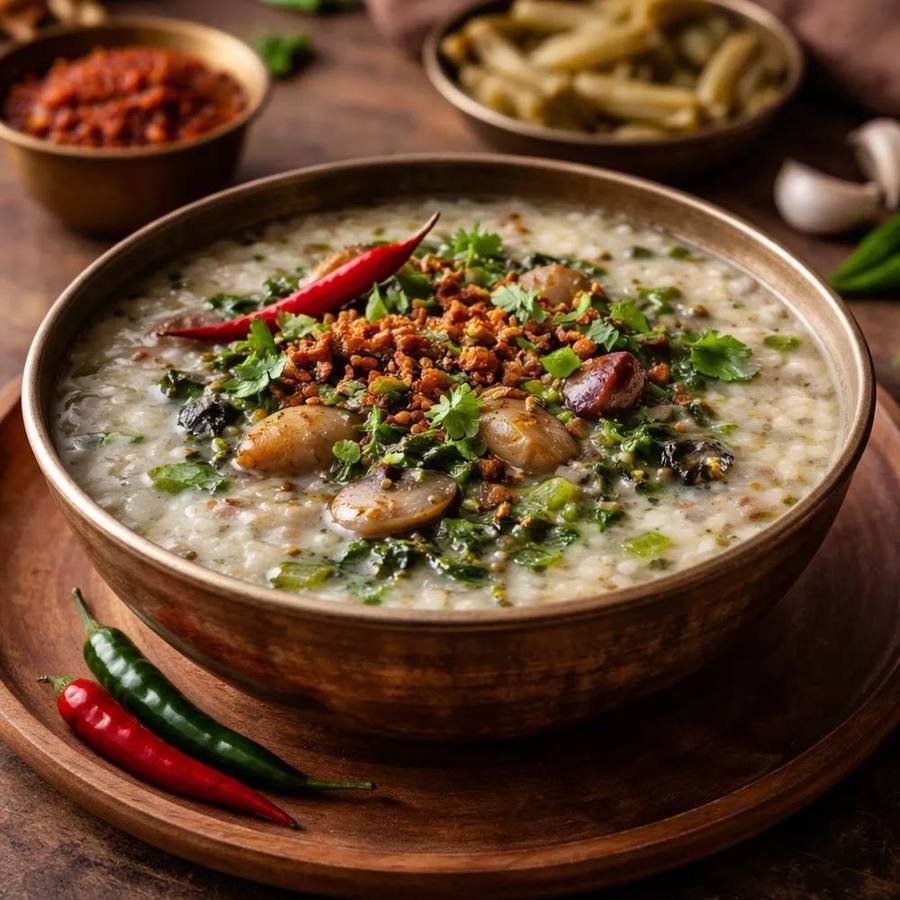
Galho gives travellers one of the clearest tastes of Nagaland — specific in flavour, rooted in place and still part of living food culture. A soft, porridge-like one-pot dish of rice cooked with vegetables, greens and meat or smoked meat, similar in spirit to khichdi.
A detail worth knowing before the first bite: galho is often described as Nagaland's answer to khichdi. Keep that in mind as you read on, because Galho rewards eaters who notice how Nagaland seasons, serves and shares its food.
Galho at a Glance
| State / UT | Nagaland |
| Capital / base | Kohima |
| What it is | A soft, porridge-like one-pot dish of rice cooked with vegetables, greens and meat or smoked meat, similar in spirit to khichdi |
| Main ingredients | rice, mixed vegetables and leafy greens, meat or smoked pork in many versions, ginger, chillies and salt |
| Taste | Mild, savoury and comforting, with greens and meat flavouring the rice gently and chilli kept moderate |
| Texture | Soft and soupy-porridge-like, the rice grains swollen and breaking down into the cooking liquid |
| Usually eaten | Served hot in bowls as a complete meal, often with a fiery chutney on the side for those who want heat |
| Occasion | Everyday home food and comfort food across Naga households |
The Story on Nagaland’s Table
Galho is a traditional Naga one-pot meal, particularly associated with the Angami community, made when rice and whatever vegetables, greens and meat are available cook together into a nourishing pot. It is home cooking at its most practical — and, like many porridge dishes, also food for the unwell and for cold hill evenings. That context is essential in Nagaland, where a plate can signal a harvest, a religious calendar, a market habit or the meeting of communities. Galho belongs in this atlas under Nagaland because this is the setting in which its ingredients, accompaniments and meaning come together.
The state guide places Galho alongside Smoked pork, Axone/akhuni dishes and Bamboo shoot preparations. Start with the Nagaland travel and food guide if you are planning where this tasting fits into a route.
Taste, Texture and Ingredients
Expect mild, savoury and comforting, with greens and meat flavouring the rice gently and chilli kept moderate. Think soft and soupy-porridge-like, the rice grains swollen and breaking down into the cooking liquid.
The ingredient list is best read as a structure rather than a shopping list: rice, mixed vegetables and leafy greens, meat or smoked pork in many versions, ginger, chillies and salt.
How Galho Is Made
Rice is simmered in generous water with chopped vegetables, greens and meat, added in stages, until everything is tender and the pot reaches a porridge consistency. Seasoning stays simple — salt, ginger and chilli. Good versions are built patiently, with each stage adding aroma, body or contrast.
When Galho is made for a gathering, that timing also becomes social — food reaches the table as part of a shared rhythm, not as an isolated plate.
When and How It Is Eaten
Served hot in bowls as a complete meal, often with a fiery chutney on the side for those who want heat. Its natural moment is everyday home food and comfort food across Naga households.
Nagaland’s broader food culture helps explain the serving style. The state is known for tribal culture, mountains and food, and its calendar includes Hornbill Festival and Moatsu.
Where to Try It in Nagaland
Look for galho in home-style Naga eateries in Kohima, where it appears as a wholesome lunch option. Do not reduce the search to the most famous address; freshness and context are better guides.
Galho pairs naturally with time in Kohima and Hornbill Festival area/Kisama, and can sit just as comfortably beside a quieter excursion to Longwa or Khonoma.
More Dishes of Nagaland
Continue through Nagaland’s other signature plates and drinks below — each has its own page, photograph and story.


Frequently Asked Questions
What is Galho?
A soft, porridge-like one-pot dish of rice cooked with vegetables, greens and meat or smoked meat, similar in spirit to khichdi. Expect mild, savoury and comforting, with greens and meat flavouring the rice gently and chilli kept moderate.
What are the main ingredients in Galho?
The defining ingredients or components are rice, mixed vegetables and leafy greens, meat or smoked pork in many versions, ginger, chillies and salt. Rice is simmered in generous water with chopped vegetables, greens and meat, added in stages, until everything is tender and the pot reaches a porridge consistency. Seasoning stays simple — salt, ginger and chilli.
What does Galho taste like?
Expect mild, savoury and comforting, with greens and meat flavouring the rice gently and chilli kept moderate. Think soft and soupy-porridge-like, the rice grains swollen and breaking down into the cooking liquid. Serving pattern: Served hot in bowls as a complete meal, often with a fiery chutney on the side for those who want heat.
When is Galho eaten in Nagaland?
Everyday home food and comfort food across Naga households. The consistency should be porridge-soft, not dry like pulao.
Where can I try Galho in Nagaland?
Look for galho in home-style Naga eateries in Kohima, where it appears as a wholesome lunch option. Pair a first tasting with Smoked pork and Axone/akhuni dishes to see how Galho sits within the wider Nagaland table.
Every Place. Every Flavour.
Galho is one of 6 dishes and drinks profiled from Nagaland — and one of 213 regional dishes across all 36 states and union territories in this atlas.
Open the Nagaland guide Read the blog