
Food Atlas · Jammu & Kashmir
Yakhni: Pale, delicate yoghurt gravy — Kashmir's gentle counterpoint

By Beauty of Bharat — India travel guide, every place, every flavour.
Guides covering all 36 States and UTs, researched from official sources and checked at publish time. Corrections welcome — see About Beauty of Bharat.

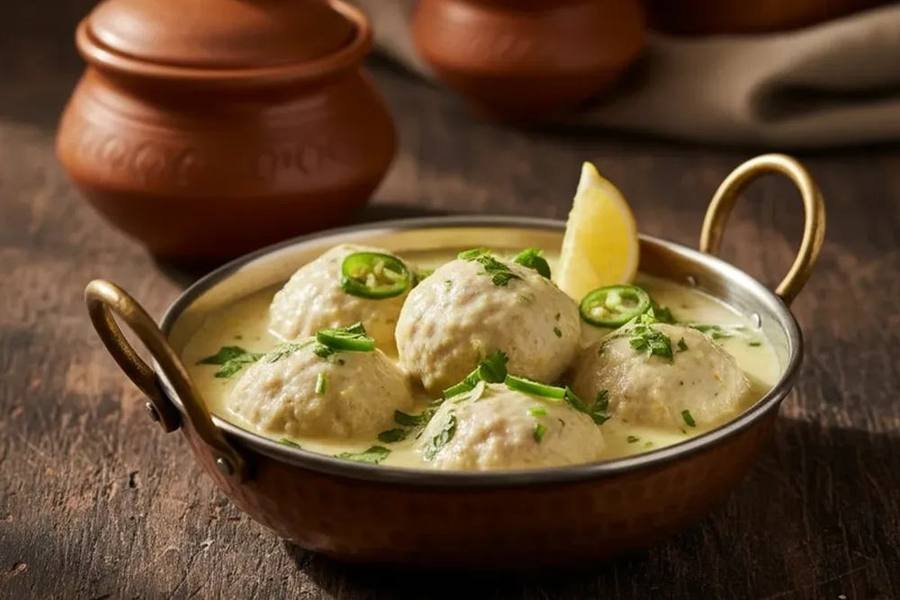
To understand the table in Jammu & Kashmir, begin with Yakhni: a dish whose flavour carries the state's ingredients and habits in miniature. Meat, or sometimes vegetables or lotus stem, simmered in a thin, spiced yoghurt gravy without turmeric or chilli colour.
A detail worth knowing before the first bite: keeping the yoghurt from curdling is the cook's main skill — constant stirring and controlled heat are essential. Keep that in mind as you read on, because Yakhni rewards eaters who notice how Jammu & Kashmir seasons, serves and shares its food.
Yakhni at a Glance
| State / UT | Jammu & Kashmir |
| Capital / base | Srinagar / Jammu |
| What it is | Meat, or sometimes vegetables or lotus stem, simmered in a thin, spiced yoghurt gravy without turmeric or chilli colour |
| Main ingredients | mutton or chicken, whisked yoghurt, fennel and dry ginger, green and black cardamom, bay leaves and ghee or oil |
| Taste | Mild, tangy and highly aromatic — fennel and cardamom lead, with yoghurt's gentle sourness instead of heat |
| Texture | A light, pourable gravy, almost broth-like, coating soft meat; it soaks into rice rather than sitting on it |
| Usually eaten | Poured over steamed rice, or served in a bowl with rice at wazwan feasts and family meals |
| Occasion | Wazwan courses, festive lunches and home cooking when a lighter meat dish is wanted |
The Story on Jammu & Kashmir’s Table
Yakhni reflects the Persian and Central Asian currents in Kashmiri cooking — the word itself relates to a meat broth or stock in Persian usage. Within the wazwan it provides deliberate contrast: a pale, cooling course among deep-red, heavily spiced dishes, showing the feast's sense of balance. That context is essential in Jammu & Kashmir, where a plate can signal a harvest, a religious calendar, a market habit or the meeting of communities. Yakhni belongs in this atlas under Jammu & Kashmir because this is the setting in which its ingredients, accompaniments and meaning come together.
The state guide places Yakhni alongside Rogan josh, Gushtaba and Dum aloo. Start with the Jammu & Kashmir travel and food guide if you are planning where this tasting fits into a route.
Taste, Texture and Ingredients
Expect mild, tangy and highly aromatic — fennel and cardamom lead, with yoghurt's gentle sourness instead of heat. Think a light, pourable gravy, almost broth-like, coating soft meat; it soaks into rice rather than sitting on it.
The ingredient list is best read as a structure rather than a shopping list: mutton or chicken, whisked yoghurt, fennel and dry ginger, green and black cardamom, bay leaves and ghee or oil.
How Yakhni Is Made
Meat is first cooked in water with whole spices to make a fragrant stock. Yoghurt is whisked smooth and stirred in carefully over gentle heat so it does not split, then simmered until the gravy and meat flavours merge. Good versions are built patiently, with each stage adding aroma, body or contrast.
When Yakhni is made for a gathering, that timing also becomes social — food reaches the table as part of a shared rhythm, not as an isolated plate.
When and How It Is Eaten
Poured over steamed rice, or served in a bowl with rice at wazwan feasts and family meals. Its natural moment is wazwan courses, festive lunches and home cooking when a lighter meat dish is wanted.
Jammu & Kashmir’s broader food culture helps explain the serving style. The state is known for lakes, mountains and gardens, and its calendar includes Tulip Festival and Baisakhi.
Where to Try It in Jammu & Kashmir
Order it as part of a wazwan spread in Srinagar rather than alone — its role is to balance richer courses like rogan josh. For a traveller, setting matters almost as much as seasoning.
Yakhni pairs naturally with time in Srinagar and Gulmarg, and can sit just as comfortably beside a quieter excursion to Gurez Valley or Doodhpathri.
More Dishes of Jammu & Kashmir
Continue through Jammu & Kashmir’s other signature plates and drinks below — each has its own page, photograph and story.



Frequently Asked Questions
What is Yakhni?
Meat, or sometimes vegetables or lotus stem, simmered in a thin, spiced yoghurt gravy without turmeric or chilli colour. Expect mild, tangy and highly aromatic — fennel and cardamom lead, with yoghurt's gentle sourness instead of heat.
What are the main ingredients in Yakhni?
The defining ingredients or components are mutton or chicken, whisked yoghurt, fennel and dry ginger, green and black cardamom, bay leaves and ghee or oil. Meat is first cooked in water with whole spices to make a fragrant stock. Yoghurt is whisked smooth and stirred in carefully over gentle heat so it does not split, then simmered until the gravy and meat flavours merge.
What does Yakhni taste like?
Expect mild, tangy and highly aromatic — fennel and cardamom lead, with yoghurt's gentle sourness instead of heat. Think a light, pourable gravy, almost broth-like, coating soft meat; it soaks into rice rather than sitting on it. Serving pattern: Poured over steamed rice, or served in a bowl with rice at wazwan feasts and family meals.
When is Yakhni eaten in Jammu & Kashmir?
Wazwan courses, festive lunches and home cooking when a lighter meat dish is wanted. Vegetable yakhni, including lotus stem (nadru) versions, follows the same gravy in many Kashmiri homes.
Where can I try Yakhni in Jammu & Kashmir?
Order it as part of a wazwan spread in Srinagar rather than alone — its role is to balance richer courses like rogan josh. Pair a first tasting with Rogan josh and Gushtaba to see how Yakhni sits within the wider Jammu & Kashmir table.
Every Place. Every Flavour.
Yakhni is one of 6 dishes and drinks profiled from Jammu & Kashmir — and one of 213 regional dishes across all 36 states and union territories in this atlas.
Open the Jammu & Kashmir guide Read the blog