
Destination Guide · West Bengal
Sundarbans Travel Guide: The Mangrove Kingdom of the Swimming Tiger

By Beauty of Bharat — India travel guide, every place, every flavour.
Guides covering all 36 States and UTs, researched from official sources and checked at publish time. Corrections welcome — see About Beauty of Bharat.
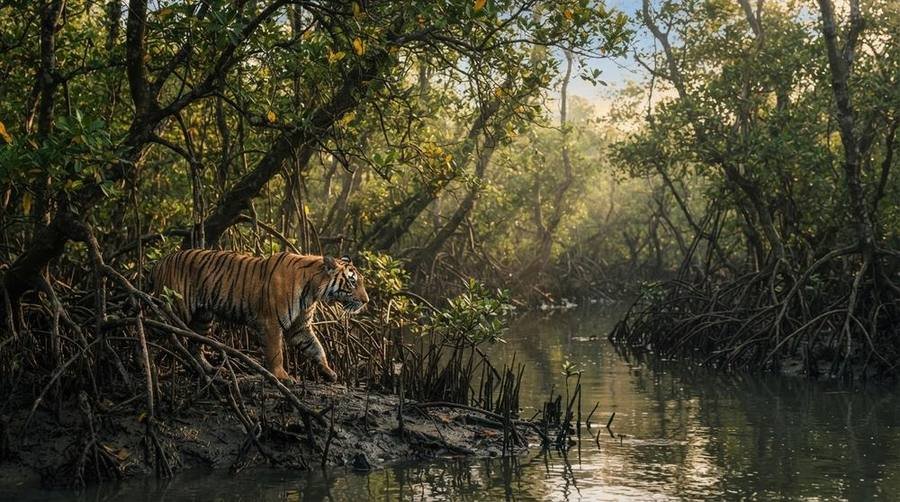
The Sundarbans is not a park you drive through; it is a water-world you float into. Where the Ganga-Brahmaputra delta dissolves into the Bay of Bengal, a hundred islands of sundari mangrove stand in tidal creeks — home to the largest tiger population on earth adapted to a semi-aquatic life, plus spotted deer, wild boar, estuarine crocodiles, Irrawaddy dolphins and a theatre of birds.
The visit is boat-bound and meditative: launches drifting the creeks past watchtowers (Sajnekhali's interpretation centre and canopy walk, the netted enclosures of Sudhanyakhali and Dobanki's canopy walkway above the mangroves), the village islands at the park's edge where honey-collectors (mowalis) and fishermen live by tiger rules, and hours of green silence broken by a kingfisher's dive. The tiger shows itself rarely and memorably; the delta shows itself always.
Sundarbans at a Glance
| State / UT | West Bengal |
| Region | East India |
| Known for | Mangroves and wildlife |
| Best time to visit | November to February for cool, comfortable boating and the best wildlife chances; the park largely closes… |
| Nearest gateway | Road from Kolkata + park boats |
| Good for | Culture, Tea, Wildlife, Food and Himalayas |
| Famous food | Macher jhol, Shorshe ilish and Kosha mangsho |
| Full state guide | West Bengal Travel Guide |
Highlights: Best Things to Do in Sundarbans
Sajnekhali watchtower & interpretation centre
The park's gateway — museum, turtle and crocodile ponds, and the first canopy glimpses.
Dobanki canopy walk
The elevated walkway through the mangrove canopy — the Sundarbans' signature experience above the roots.
Sudhanyakhali & the creek safaris
Boat the tidal creeks at dawn and dusk when the banks come alive — deer, boar, birds and, with great luck, the tiger's crossing.
Village islands (Dayapur/Pakhiralay)
Stay in a village eco-lodge — honey, mud houses, Bonbibi's shrine and the human story of the delta.
Netidhopani & the old watchtowers (as open)
The deeper creek ruins and towers of the core — permit and season permitting.
Best Time to Visit Sundarbans
November to February for cool, comfortable boating and the best wildlife chances; the park largely closes in the monsoon (typically Jul–Sep) and summer is hot and humid.
That window is when Sundarbans shows its best side. It also matches the wider season for West Bengal — the West Bengal guide sets out the state's full calendar, festivals included, so you can time Sundarbans alongside Kolkata and Darjeeling on one trip.
What Makes Sundarbans Different
The Sundarbans is not a park you drive through but a water-world you float into, and that single fact rearranges the whole grammar of a safari. Where the Ganga-Brahmaputra delta dissolves into the Bay of Bengal, a hundred islands of sundari mangrove stand in tidal creeks, and every movement, every sighting, every arrival happens by boat. The visit becomes meditative by necessity: launches drifting the creeks at dawn and dusk, hours of green silence broken by a kingfisher's dive, and the banks coming alive with deer, boar, and birds while the boat holds still. The tidal creeks dictate the timetable, since boats move with water that rises and falls through the mangrove islands with the tide.
The tiger here is also different, and the difference commands respect. This is the largest tiger population on earth adapted to a semi-aquatic life, animals that swim between islands and cross creeks, living alongside spotted deer, wild boar, estuarine crocodiles, Irrawaddy dolphins, and a theatre of birds. The tiger shows itself rarely and memorably, which is as it should be, and the delta shows itself always: watchtowers at Sajnekhali with its interpretation centre and canopy walk, the netted enclosures of Sudhanyakhali, Dobanki's canopy walkway above the mangroves, and the deeper creek ruins and old towers of Netidhopani as the season and permits allow. The watchtowers are the delta's balconies, raising visitors above the roots to read the creeks, the canopy, and the banks in a single view.
The human story at the park's edge is inseparable from the wildlife, and the Sundarbans refuses to hide it. Village islands such as Dayapur and Pakhiralay host eco-lodges where honey, mud houses, and Bonbibi's shrine tell the delta's human terms, and the honey-collectors and fishermen who live by tiger rules give the landscape its moral weight. November to February brings cool, comfortable boating and the best wildlife chances, the park largely closes in the monsoon months of July to September, and summer turns hot and humid, so the calendar, like the tide, decides what kind of delta you meet. Bonbibi's shrine gives the human story a guardian, the forest deity whose protection honey-collectors and fishermen invoke before entering tiger country.
A signature day boards a launch at first light for the creek safaris, drifting past Sajnekhali's gateway museum, turtle and crocodile ponds, and first canopy glimpses as the banks wake. Midday climbs Dobanki's elevated walkway through the mangrove canopy, the signature experience above the roots, and the afternoon returns to the creeks at dusk, when deer, boar, and birds crowd the banks and, with great luck, a tiger crosses. Evening belongs to a village island eco-lodge, where the honey, the shrine, and the stories of the delta's people close the day on land.
Going further, Kolkata is the city gateway the delta depends on, its colonial heritage, culture, and food giving the water-world its urban counterweight. Darjeeling trades mangrove creeks for Himalayan tea gardens and the toy train, the other West Bengal extreme. Macher jhol, named among the Sundarbans' famous foods, is the fish curry of Bengal's river kitchens, the taste of the delta's own waters.
How to Reach Sundarbans
From Kolkata the route runs by road to Godkhali/Sonakhali (about three hours) and then by boat — most visitors take organised packages from Kolkata that handle permits, boats and lodges.
Most travellers route into West Bengal through Kolkata or the nearest transport hub and continue by road; local taxis and shared transport cover the last stretch in season. Build in buffer time for hill and island routes, and confirm festival and permit rules for West Bengal before you set out.
Sundarbans — Transport at a Glance
| Nearest airport | Kolkata Airport (CCU), then by road to the Godkhali/Sonakhali jetties (≈ 3 hrs) and by boat |
| Nearest railway station | Kolkata's stations are the gateway; Canning is the last rail point on the classic route |
| By road | Most visitors take organised packages from Kolkata that handle permits, boats and lodges |
| Getting around | Boats are the only transport inside the delta; village islands are walked |
Where to Stay in Sundarbans
Everyone stays on the village islands: eco-lodges and resorts on Dayapur and Pakhiralay (across from the Sajnekhali gates), run as packages with boats, guides and permits bundled. Facilities are simple and solar; the creeks at dawn are the five stars. Independent stays exist in a few homestays, but the package is the practical form here. Stays here run to eco-lodges, island resorts (package-run) and homestays. The honest way to choose is live, because the season moves prices fast — the buttons below pull today's listings with photos and guest ratings from Google Maps, and live rates from Booking.com, for Sundarbans itself. Plan the base around the sights: travellers come to Sundarbans for Sajnekhali watchtower & interpretation centre, Dobanki canopy walk and Sudhanyakhali & the creek safaris — the areas above keep the first of these within easy reach, which matters most on short trips.
See live hotels & ratings — Google MapsCompare prices — Booking.com
This button opens a hotel search on Booking.com. Some travel tools on this site are provided by affiliate partners — if you book through one, we may earn a commission at no extra cost to you.
Markets & Shopping in Sundarbans
The delta's markets are fish-and-honey scale; Kolkata's bazaars are the region's shopping, 100 km north. For the full bazaar run, base it in Kolkata — there, the name to know is New Market (Hogg Market) and the Gariahat–Rashbehari belt; College Street for books. Look for Bengal handloom (tant and Baluchari), terracotta, Darjeeling tea, and mishti from the century-old sweet houses. New Market has sold everything since 1874; College Street is the world's largest second-hand book market — Kolkata shops by obsession. Before a big purchase, it is worth comparing the same craft at a state handicraft emporium or the makers' own workshop — bazaars usually win on price, emporiums and makers on assurance. Take some home on a plate, too: Sundarbans's edible signatures start with Macher jhol and Shorshe ilish and Kosha mangsho — try them at the source, and ask the food stalls what packs well for the journey. Keep small notes handy as well: bargaining is expected on craft in the bazaars, while food and emporium counters usually hold fixed prices.
A Taste of West Bengal
No stop in West Bengal is complete at the table. The state's kitchen is best met through Macher jhol, Shorshe ilish and Kosha mangsho — look for them in Sundarbans's own markets and eateries, where the cooking is at its most local. Each dish has a full page in the Food Atlas: Macher jhol · Shorshe ilish · Kosha mangsho · Luchi-aloor dom.
More Destinations in West Bengal
Sundarbans is one of 5 destinations in the West Bengal atlas. The others pair with it naturally — each has its own full guide page.
Kolkata

colonial heritage, culture and food.
Darjeeling
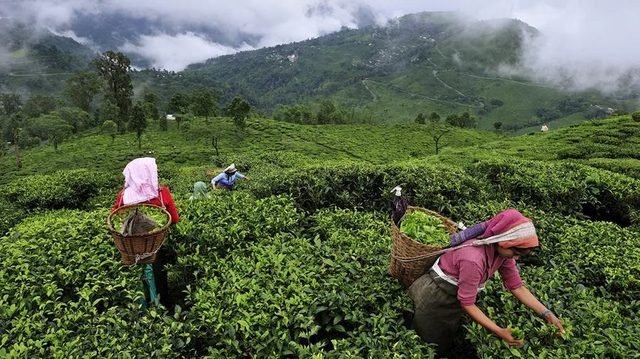
tea, toy train and Himalayan views.
Siliguri

gateway to North Bengal.
Kalimpong

hills and monasteries.
Offbeat West Bengal: Beyond Sundarbans
When the headline sights are done, West Bengal keeps a quieter register — Bishnupur · Shantiniketan · Dooars · Murshidabad are the state's lesser-known corners, profiled in the West Bengal guide. Expect fewer facilities and more of the state as its own people know it.
Frequently Asked Questions
What is Sundarbans famous for?
The Sundarbans is the world's largest mangrove delta — a UNESCO wilderness of tidal creeks where Royal Bengal tigers swim between islands, watched from boats in near-silence.
What are the best things to do in Sundarbans?
The essential experiences in Sundarbans are Sajnekhali watchtower & interpretation centre, Dobanki canopy walk, Sudhanyakhali & the creek safaris and Village islands (Dayapur/Pakhiralay). The park's gateway — museum, turtle and crocodile ponds, and the first canopy glimpses.
What is the best time to visit Sundarbans?
November to February for cool, comfortable boating and the best wildlife chances; the park largely closes in the monsoon (typically Jul–Sep) and summer is hot and humid.
How do I reach Sundarbans?
From Kolkata the route runs by road to Godkhali/Sonakhali (about three hours) and then by boat — most visitors take organised packages from Kolkata that handle permits, boats and lodges.
How many days do I need in Sundarbans?
Plan two to three days on a package — one-night trips feel rushed in Sundarbans. It pairs naturally with the other West Bengal stops in this atlas, and the West Bengal state guide links them into one route.
Every Place. Every Flavour.
Sundarbans is one of 188 destinations in this atlas — with 154 offbeat places and 213 regional dishes, each with its own full guide page.
West Bengal Travel Guide Read the blog