
Destination Guide · Meghalaya
Nongriat Travel Guide: The Double-Decker Living Root Bridge Trek

By Beauty of Bharat — India travel guide, every place, every flavour.
Guides covering all 36 States and UTs, researched from official sources and checked at publish time. Corrections welcome — see About Beauty of Bharat.
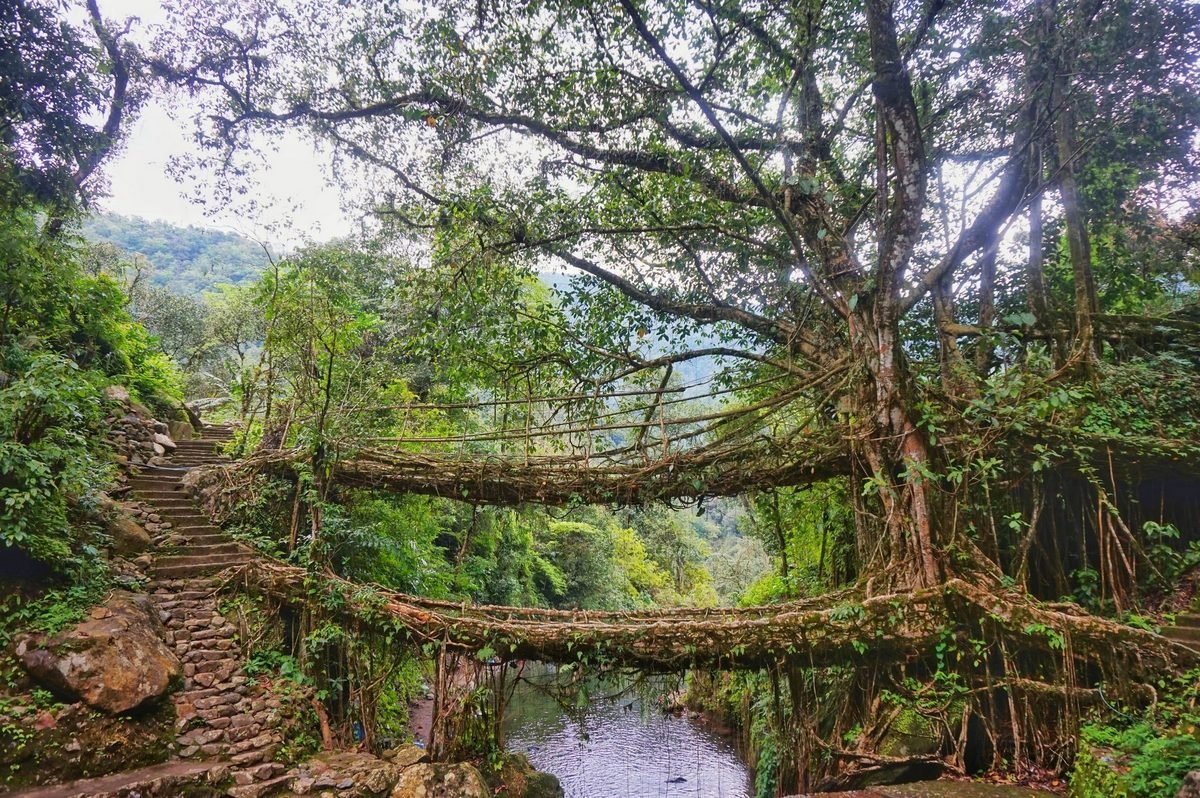
There is no road to Nongriat, and that is the point. From Tyrna village above Sohra, some 3,500 steps plunge down through banana groves and butterfly forest to a valley where the Khasi and Jaintia people have been growing bridges for centuries: guiding the aerial roots of rubber fig trees through hollowed betel-nut trunks until the roots thicken into living walkways over the streams.
The double-decker at Nongriat — two root bridges stacked one above the other, each still growing stronger — is the masterpiece, and the single-decker bridges, blue natural pools and the Rainbow Falls beyond reward those who stay the night in the village's simple guesthouses. The climb back up is the entry fee and everyone pays it gladly: this is one of India's great walks, to a bridge that is alive.
Nongriat at a Glance
| State / UT | Meghalaya |
| Region | Northeast India |
| Known for | Living root bridge trek |
| Best time to visit | October to April for firm steps and swimmable pools; the monsoon makes the bridges and falls spectacular… |
| Nearest gateway | Road to Tyrna (via Sohra); then on foot |
| Good for | Waterfalls, Caves, Rainforest, Living Root Bridges and Culture |
| Famous food | Jadoh, Dohneiihong and Tungrymbai |
| Full state guide | Meghalaya Travel Guide |
Highlights: Best Things to Do in Nongriat
The Double-Decker Root Bridge (Umshiang)
The two-storey living bridge itself — cross it, photograph it, and marvel that it is still growing.
The 3,500-step descent from Tyrna
The stairway is half the experience — forest, villages, hanging bridges and valley views all the way down.
Rainbow Falls
An hour beyond Nongriat, a powerful fall with a famous rainbow in its spray and a deep blue swimming pool.
Natural pools of Nongriat
The clear rock pools near the village — the swim your legs have earned.
Village stay
Sleep in Nongriat's homestays: rice, dal, and the sound of the river — and a head start on the climb out at dawn.
Best Time to Visit Nongriat
October to April for firm steps and swimmable pools; the monsoon makes the bridges and falls spectacular but the stairs treacherous.
That window is when Nongriat shows its best side. It also matches the wider season for Meghalaya — the Meghalaya guide sets out the state's full calendar, festivals included, so you can time Nongriat alongside Shillong and Cherrapunji/Sohra on one trip.
What Makes Nongriat Different
There is no road to Nongriat, and that single fact is the point of the place. From Tyrna village above Sohra, some 3,500 steps plunge down through banana groves and butterfly forest to a valley where the Khasi and Jaintia people have been growing bridges for centuries, guiding the aerial roots of rubber fig trees through hollowed betel-nut trunks until the roots thicken into living walkways over the streams. The journey is therefore not a transfer to a sight but half the experience itself, with forest, villages, hanging bridges, and valley views unfolding all the way down.
The double-decker bridge at Nongriat is the masterpiece of that living engineering: two root bridges stacked one above the other, each still growing stronger with every season, to be crossed, photographed, and marvelled at as a structure that is alive. Around it, the valley offers more than a single crossing, with single-decker bridges, clear rock pools near the village where a swim rewards tired legs, and Rainbow Falls an hour beyond, a powerful fall with a famous rainbow in its spray and a deep blue swimming pool below it.
Nongriat also differs in how it asks to be visited. Sleeping in the village's homestays, with rice, dal, and the sound of the river, gives a head start on the climb out at dawn and turns the visit into a stay rather than a day trip, while the seasons sharpen the choice: firm steps and swimmable pools from October to April, against a monsoon that makes the bridges and falls spectacular but the stairs treacherous. The climb back up is the entry fee, as the guide puts it, and everyone pays it gladly, which is why the valley feels earned rather than merely seen.
A signature Nongriat visit begins with the long descent from Tyrna, taking the stairway slowly through forest, villages, hanging bridges, and valley views until the valley floor opens. The double-decker root bridge itself comes first on arrival, crossed and studied as a living structure, followed by the clear natural pools near the village for the swim tired legs have earned. With a night in a village homestay, the next stretch reaches Rainbow Falls an hour beyond, with its rainbow spray and deep blue pool, before the dawn climb back out of the valley closes the stay.
To place the valley in Meghalaya, climb back toward Cherrapunji (Sohra), the rain town the Nongriat guide names as the gateway above the steps, whose cliffs and falls frame the valley from the plateau, and Shillong, the hill capital that anchors a longer state trip. The Mawphlang Sacred Forest offbeat guide profiles a grove protected by Khasi custom that extends the valley's living-tradition theme, while the jadoh guide introduces the Khasi rice-and-meat dish served in the kitchens of the hills above the valley.
How to Reach Nongriat
The trek starts at Tyrna village, about 30–40 minutes by road below Sohra (Cherrapunji), itself two hours from Shillong; guides and porters are available at the trailhead.
Most travellers route into Meghalaya through Shillong or the nearest transport hub and continue by road; local taxis and shared transport cover the last stretch in season. Build in buffer time for hill and island routes, and confirm festival and permit rules for Meghalaya before you set out.
Nongriat — Transport at a Glance
| Nearest airport | Guwahati Airport (GAU) via Shillong and Sohra |
| Nearest railway station | No rail — road to Tyrna village (≈ 30–40 mins below Sohra), then on foot |
| By road | The trek starts at Tyrna; guides and porters are available at the trailhead |
| Getting around | Everything is walked — some 3,000 steps down to the root bridges and back |
Where to Stay in Nongriat
Nongriat is reached only on foot, and its stays match: simple village guesthouses and homestays around the double-decker bridge, family-run, with meals cooked to order. Everything you need must be carried down the 3,000+ steps from Tyrna — and that inaccessibility is the entire point. Sohra, up top, is the fallback base. Stays here run to trekkers' guesthouses and homestays. The honest way to choose is live, because the season moves prices fast — the buttons below pull today's listings with photos and guest ratings from Google Maps, and live rates from Booking.com, for Nongriat itself. Plan the base around the sights: travellers come to Nongriat for The Double-Decker Root Bridge (Umshiang), The 3,500-step descent from Tyrna and Rainbow Falls — the areas above keep the first of these within easy reach, which matters most on short trips.
See live hotels & ratings — Google MapsCompare prices — Booking.com
This button opens a hotel search on Booking.com. Some travel tools on this site are provided by affiliate partners — if you book through one, we may earn a commission at no extra cost to you.
Markets & Shopping in Nongriat
Nongriat is beyond commerce; Sohra's bazaar up top (spices, honey) is the shopping. For the full bazaar run, base it in Cherrapunji/Sohra — there, the name to know is Sohra's main bazaar. Look for Khasi honey, black pepper and bay leaf (the wet hills' spices), local oranges in winter. Sohra's spices and honey are the buy — this corner of Meghalaya grows flavour in the rain. Before a big purchase, it is worth comparing the same craft at a state handicraft emporium or the makers' own workshop — bazaars usually win on price, emporiums and makers on assurance. Take some home on a plate, too: Nongriat's edible signatures start with Jadoh and Dohneiihong and Tungrymbai — try them at the source, and ask the food stalls what packs well for the journey. Keep small notes handy as well: bargaining is expected on craft in the bazaars, while food and emporium counters usually hold fixed prices.
A Taste of Meghalaya
No stop in Meghalaya is complete at the table. The state's kitchen is best met through Jadoh, Dohneiihong and Tungrymbai — look for them in Nongriat's own markets and eateries, where the cooking is at its most local. Each dish has a full page in the Food Atlas: Jadoh · Dohneiihong · Tungrymbai · Pukhlein.
More Destinations in Meghalaya
Nongriat is one of 5 destinations in the Meghalaya atlas. The others pair with it naturally — each has its own full guide page.
Shillong
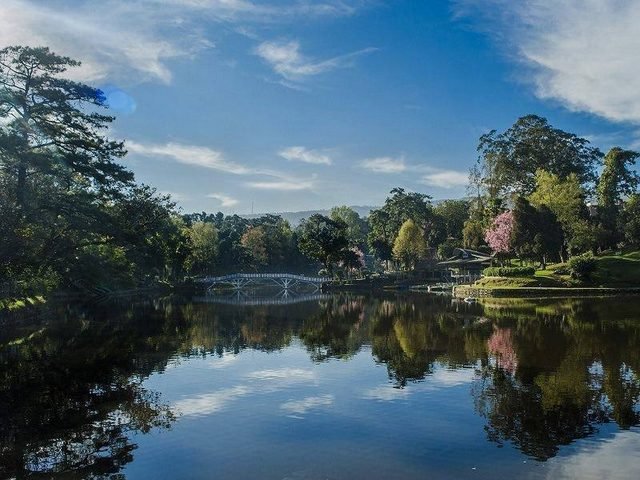
hill city and cultural gateway.
Cherrapunji/Sohra
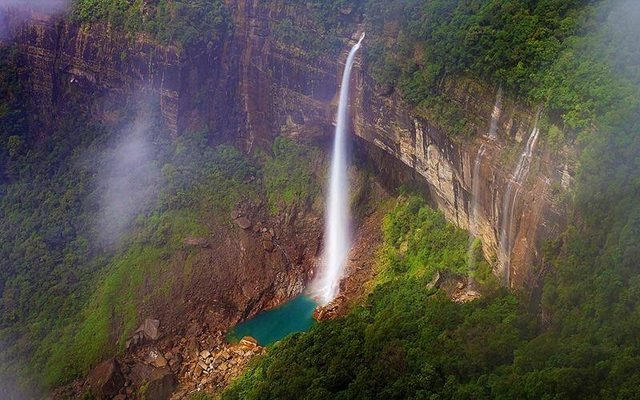
waterfalls and caves.
Mawlynnong

village and nature tourism.
Dawki

river and border landscape.
Offbeat Meghalaya: Beyond Nongriat
When the headline sights are done, Meghalaya keeps a quieter register — Mawphlang Sacred Forest · Laitlum Canyon · Mawsynram · Nongkhnum Island are the state's lesser-known corners, profiled in the Meghalaya guide. Expect fewer facilities and more of the state as its own people know it.
Frequently Asked Questions
What is Nongriat famous for?
Nongriat is the jungle village reached only on foot, home to Meghalaya's wonder — the double-decker living root bridge, grown from rubber fig roots across a gorge over generations.
What are the best things to do in Nongriat?
The essential experiences in Nongriat are The Double-Decker Root Bridge (Umshiang), The 3,500-step descent from Tyrna, Rainbow Falls and Natural pools of Nongriat. The two-storey living bridge itself — cross it, photograph it, and marvel that it is still growing.
What is the best time to visit Nongriat?
October to April for firm steps and swimmable pools; the monsoon makes the bridges and falls spectacular but the stairs treacherous.
How do I reach Nongriat?
The trek starts at Tyrna village, about 30–40 minutes by road below Sohra (Cherrapunji), itself two hours from Shillong; guides and porters are available at the trailhead.
How many days do I need in Nongriat?
Plan two days — descend and stay the night; one very long day is possible but punishing in Nongriat. It pairs naturally with the other Meghalaya stops in this atlas, and the Meghalaya state guide links them into one route.
Every Place. Every Flavour.
Nongriat is one of 188 destinations in this atlas — with 154 offbeat places and 213 regional dishes, each with its own full guide page.
Meghalaya Travel Guide Read the blog