
Destination Guide · Ladakh
Leh Travel Guide: Ladakh's Capital — Palace, Stupas & the High Bazaar

By Beauty of Bharat — India travel guide, every place, every flavour.
Guides covering all 36 States and UTs, researched from official sources and checked at publish time. Corrections welcome — see About Beauty of Bharat.

Leh sits at 3,500 metres in the Indus valley, and everything about it counsels slowness: the thin air first (give yourself two quiet days to acclimatise — the town is the altitude classroom for all of Ladakh), then the town itself, a warren of mud-brick lanes beneath the ruined royal palace. The Leh Palace, a 17th-century miniature of Lhasa's Potala, watches over bazaars selling pashmina, turquoise, thangkas and dried apricots, while cafes serve ginger tea to travellers from everywhere on earth.
From Leh the whole region radiates, and its near sights fill the rest days: Shanti Stupa's sunset panorama, the monasteries of Thiksey, Hemis and Stok across the Indus, rafting on the Indus and Zanskar, and the high roads to Nubra and Pangong. Leh is both destination and base camp — treat it gently, hydrate, and let the mountains set the pace.
Leh at a Glance
| State / UT | Ladakh |
| Region | North India |
| Known for | Monasteries, markets and mountain culture |
| Best time to visit | May to September; winter (Nov–Feb) is the Chadar and snow-leopard season for the hardy — Leh is bitterly… |
| Nearest gateway | Leh airport; summer roads from Srinagar/Manali |
| Good for | High Altitude, Monasteries, Lakes, Road Trips and Adventure |
| Famous food | Thukpa, Momos and Skyu |
| Full state guide | Ladakh Travel Guide |
Highlights: Best Things to Do in Leh
Leh Palace & the old town lanes
Climb through the old city's lanes to the palace terraces — the whole valley and Stok range in one panorama.
Shanti Stupa at sunset
The Japanese-built white stupa on the Changspa hill — Leh's beloved evening, with the town lighting up below.
Thiksey Monastery
The great gelug monastery across the Indus — a hill-city of temples with a 15-metre Maitreya and dawn prayers.
Main Bazaar & the market lanes
Pashmina, apricots, prayer flags and the cafes of the pedestrianised bazaar — Leh at leisure.
Hemis Monastery (excursion)
Ladakh's richest monastery — its summer festival of masked dances (Jun/Jul) is the region's great spectacle.
Best Time to Visit Leh
May to September; winter (Nov–Feb) is the Chadar and snow-leopard season for the hardy — Leh is bitterly cold but alive. Acclimatise two days before any high excursion.
That window is when Leh shows its best side. It also matches the wider season for Ladakh — the Ladakh guide sets out the state's full calendar, festivals included, so you can time Leh alongside Pangong Lake and Nubra Valley on one trip.
What Makes Leh Different
Leh counsels slowness before it offers anything else. At 3,500 metres in the Indus valley, the thin air comes first, and the town is the altitude classroom for all of Ladakh, asking for two quiet days of acclimatisation before any high excursion. Below the ruined royal palace, a warren of mud-brick lanes holds bazaars selling pashmina, turquoise and thangkas, while the 17th-century Leh Palace, a miniature of Lhasa's Potala, watches over the whole valley and the Stok range from its terraces.
Spiritual life gives the town its second rhythm. The Japanese-built white Shanti Stupa on Changspa hill is Leh's beloved evening, with the town lighting up below; across the Indus, Thiksey Monastery rises as a hill-city of temples with a 15-metre Maitreya and dawn prayers; and Hemis, Ladakh's richest monastery, holds a summer festival of masked dances in June and July that this guide calls the region's great spectacle.
A signature day climbs through the old city's lanes to the palace terraces for the valley panorama, wanders the pedestrianised main bazaar, and ends at Shanti Stupa at sunset, with Thiksey's dawn prayers kept for the following morning.
Going further, Pangong Lake is the high lake this guide pairs with Leh once acclimatisation is done. The Hemis Festival covers the masked dances at Ladakh's richest monastery. The Ladakh guide sets out the wider calendar, so Leh can be timed alongside Pangong Lake and Nubra Valley.
How to Reach Leh
Leh's Kushok Bakula Rimpochee Airport flies daily from Delhi (weather permitting); the roads from Srinagar and Manali open in summer. Rest on arrival — altitude is real here.
Most travellers route into Ladakh through Leh or the nearest transport hub and continue by road; local taxis and shared transport cover the last stretch in season. Build in buffer time for hill and island routes, and confirm festival and permit rules for Ladakh before you set out.
Leh — Transport at a Glance
| Nearest airport | Kushok Bakula Rimpochee Airport, Leh (IXL) — daily flights from Delhi, weather permitting |
| Nearest railway station | No railway — the roads from Srinagar and Manali open in summer; rest a full day on arrival, the altitude is real |
| By road | Two summer highways (Srinagar–Kargil and Manali–Atal Tunnel sides) converge on Leh |
| Getting around | Taxis and rental bikes (for the acclimatised); the bazaar and old town are walked |
Where to Stay in Leh
Leh's stays cluster around the main bazaar and the Changspa–Fort Road lanes: family guesthouses and boutique hotels among the apricot trees (Changspa is the traveller quarter), mid-range hotels in town, and a luxury pocket towards Shankar side. The old town's homestays put you inside the mud-brick lanes. Rule one: wherever you stay, rest the first day — the altitude is the itinerary's first fact. Stays here run to guesthouses, boutique hotels, homestays and mid-range properties. The honest way to choose is live, because the season moves prices fast — the buttons below pull today's listings with photos and guest ratings from Google Maps, and live rates from Booking.com, for Leh itself. Plan the base around the sights: travellers come to Leh for Leh Palace & the old town lanes, Shanti Stupa at sunset and Thiksey Monastery — the areas above keep the first of these within easy reach, which matters most on short trips.
See live hotels & ratings — Google MapsCompare prices — Booking.com
This button opens a hotel search on Booking.com. Some travel tools on this site are provided by affiliate partners — if you book through one, we may earn a commission at no extra cost to you.
Markets & Shopping in Leh
The shopping heart of Leh is Leh's main bazaar and the Tibetan market (Old Leh Road side). The buys: Pashmina, Ladakhi turquoise and coral jewellery, thangkas, apricot products and seabuckthorn. The bazaar is a kilometre of Himalayan trade in one street — the women's association (LEDeG-side) outlets sell apricot and craft with fair-trade honesty. Take some home on a plate, too: Leh's edible signatures start with Thukpa and Momos and Skyu — try them at the source, and ask the food stalls what packs well for the journey.
Trending Now in Leh
- Rent a scooty, do the loop: the standard Leh creator day runs Hall of Fame, Magnetic Hill, the Sangam confluence and Pathar Sahib on a hired two-wheeler — Maggi stop mandatory.
- Shanti Stupa at sunset closes every Leh montage; Thiksey's morning prayers are the monastery pick over the bigger names.
- Main Market after dark is the town's living room — prayer-flag lanes, cafes, and pashmina-and-dried-apricot shopping.
- Stays stay small: family-run guesthouses in the Changspa and old-town lanes get the creator recommendations, not the big hotels.
Curated from traveller and creator posts · Oct 2026 — trends move fast; the guides above are the steady layer.
A Taste of Ladakh
No stop in Ladakh is complete at the table. The state's kitchen is best met through Thukpa, Momos and Skyu — look for them in Leh's own markets and eateries, where the cooking is at its most local. Each dish has a full page in the Food Atlas: Thukpa · Momos · Skyu · Tingmo.
More Destinations in Ladakh
Leh is one of 5 destinations in the Ladakh atlas. The others pair with it naturally — each has its own full guide page.
Pangong Lake

high-altitude lake.
Nubra Valley
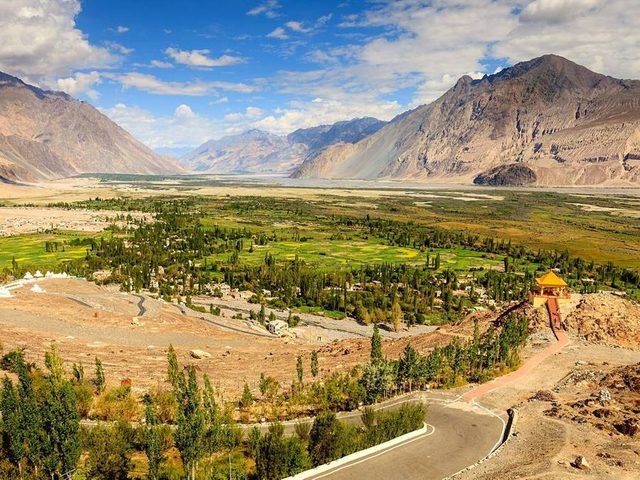
dunes and monasteries.
Khardung La region

high mountain pass.
Tso Moriri
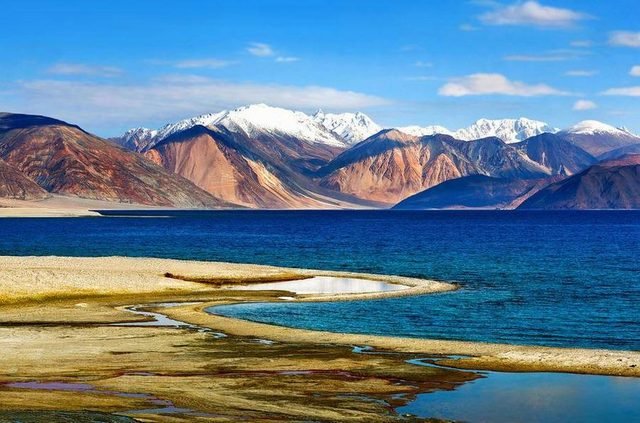
remote high-altitude lake.
Offbeat Ladakh: Beyond Leh
When the headline sights are done, Ladakh keeps a quieter register — Hanle · Lamayuru · Suru Valley · Sham Valley villages are the state's lesser-known corners, profiled in the Ladakh guide. Expect fewer facilities and more of the state as its own people know it.
Frequently Asked Questions
What is Leh famous for?
Leh is Ladakh's capital and acclimatisation town — the nine-storey Leh Palace above a bazaar of pashmina and apricots, the Shanti Stupa on its hill, and monasteries in every direction.
What are the best things to do in Leh?
The essential experiences in Leh are Leh Palace & the old town lanes, Shanti Stupa at sunset, Thiksey Monastery and Main Bazaar & the market lanes. Climb through the old city's lanes to the palace terraces — the whole valley and Stok range in one panorama.
What is the best time to visit Leh?
May to September; winter (Nov–Feb) is the Chadar and snow-leopard season for the hardy — Leh is bitterly cold but alive. Acclimatise two days before any high excursion.
How do I reach Leh?
Leh's Kushok Bakula Rimpochee Airport flies daily from Delhi (weather permitting); the roads from Srinagar and Manali open in summer. Rest on arrival — altitude is real here.
How many days do I need in Leh?
Plan four days minimum — two to acclimatise and explore, more as the base in Leh. It pairs naturally with the other Ladakh stops in this atlas, and the Ladakh state guide links them into one route.
Every Place. Every Flavour.
Leh is one of 188 destinations in this atlas — with 154 offbeat places and 213 regional dishes, each with its own full guide page.
Ladakh Travel Guide Read the blog