
Travel Guide · November 2026
Rishikesh and Haridwar are two towns on the same river, 25 km apart — and November 2026 is the month to do them together. The rafting season is open, the Ganga runs clear and blue in the winter light, the evening aartis fall at a comfortable hour, and almost everything about getting around changed in 2026: Ram Jhula is closed, two new bridges carry the foot traffic, and the Delhi–Dehradun Expressway has cut the drive from Delhi to about three and a half hours.
November is the “pink cold” — crisp mornings, warm afternoons, and evenings cold enough for a jacket at the ghats. It is also the last calm month before Haridwar turns its full attention to the Ardh Kumbh of 2027. This guide covers what’s new, the aarti timings, a simple 3-day plan, rafting, and the Kumbh dates to keep in mind.
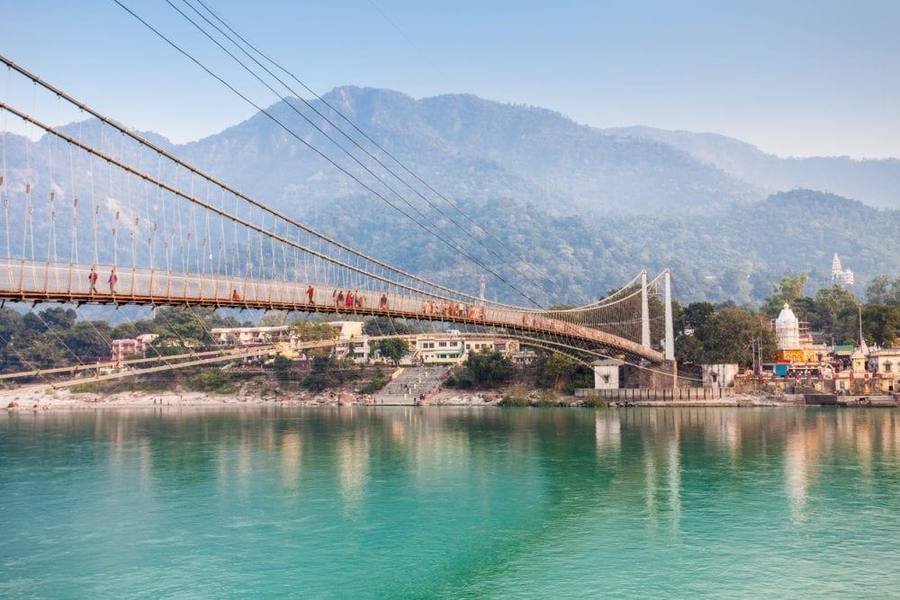
Ram Jhula is closed till December 2026. The suspension bridge most visitors used to cross between the ashram quarters is shut for repairs, so plan your crossings on Janki Setu and Bajrang Setu, the two newer bridges that now carry the foot traffic. Laxman Jhula, the other old bridge, has been closed since July 2019 — the two new bridges are the way across the Ganga in town.
The Delhi–Dehradun Expressway opened in April 2026. The drive from Delhi to Haridwar and Rishikesh is now about 3.5 to 4 hours by road, which makes the two towns a genuine long-weekend trip rather than a slog.
Ganga Corridor works are under way in Haridwar. With the Ardh Kumbh of 2027 coming, the ghats and main roads are being reworked — expect diversions and construction around Har Ki Pauri and the approach roads.
Rafting season opened on 23 September 2026 and runs through the winter; October and November are the best window, with good water and cool air.
The annual Ganga canal closure was scheduled to end on 8 November. The closure lowers water levels at Har Ki Pauri while the canal is cleaned. If a snan is the point of your visit, confirm water levels on the day — the flow can take a day to settle after the gates reopen.
Both aartis follow sunset, so the exact start shifts through the month and published timings disagree by a few minutes. Treat these as “around sunset, roughly” times — and reach 30 to 45 minutes early for a place to sit, especially on weekends and festival days.
| Aarti | Where | Winter timing (November) |
|---|---|---|
| Ganga Aarti, Rishikesh | Triveni Ghat | Around 5:30–6:30 PM |
| Ganga Aarti, Haridwar | Har Ki Pauri (Brahmakund) | Around 6:30 PM |
In Rishikesh, Triveni Ghat holds the big public aarti; Parmarth Niketan holds its own aarti on its ghat the same evening. In Haridwar, the aarti at Har Ki Pauri is the one to plan your day around — the ghat fills up well before it starts.
Three days is the right length: one for Haridwar, two for Rishikesh. The towns are 25 km apart — about 45 to 60 minutes by road — so base yourself in one and day-trip to the other, or move after the first night.
Day 1 — Haridwar. Start with a dawn bath at Brahmakund, then Har Ki Pauri and the ghats. Take the ropeway to Mansa Devi — check udankhatola.com for current fares, as they change; temple entry itself is free — and on to Chandi Devi. Walk Kankhal and Daksha Mahadev in the afternoon, and be back at Har Ki Pauri for the evening aarti.
Day 2 — Rishikesh, on foot. Cross to the ashram side on Janki Setu, walk the ghats and ashrams, and visit the Beatles Ashram (Chaurasi Kutia). End the day at the Triveni Ghat aarti.
Day 3 — Rishikesh, on the river. A morning of rafting — the Brahmpuri or Shivpuri stretch for a first run — then Neelkanth Mahadev and the waterfalls in the afternoon, and the cafés and markets in the evening.
October and November are the best months to raft the Ganga at Rishikesh — the season opened on 23 September 2026, the water is good and the air is cool. The four standard stretches run from Brahmpuri down to Kaudiyala:
| Stretch | Distance |
|---|---|
| Brahmpuri | 9 km |
| Shivpuri | 16 km |
| Marine Drive | 26 km |
| Kaudiyala | 35 km |
Brahmpuri is the shortest run and the usual first-timer pick; Kaudiyala is the longest. Prices vary by operator and by stretch, so compare operators on the day rather than trusting any single quoted price — and book with a licensed operator, checking what is included (transport to the put-in, safety gear and a guide).
By road: the Delhi–Dehradun Expressway, opened in April 2026, has cut the Delhi drive to about 3.5 to 4 hours.
By train: Haridwar is the main railhead — most trains from Delhi stop there. From Haridwar, Rishikesh is 25 km, about 45 to 60 minutes by road.
By air: the nearest airport is Jolly Grant, Dehradun, about 45 minutes from Rishikesh.
Between the two towns: 25 km, 45 to 60 minutes by road — an easy day trip in either direction.
The two towns are all over travel YouTube this month, and the videos pulling the most views mix the aarti and temples with the adventure side — bungy and rafting in Rishikesh, a tight 2-day plan in Haridwar. Two worth watching before you go:
For scale: MS Vlogger’s Haridwar Travel Guide (September 2023) has 3.13M views and is still the most-watched Haridwar guide on YouTube.
Haridwar hosts the Ardh Kumbh from 14 January to 20 April 2027. The Amrit Snans — the big bathing days — are listed as 6 March, 8 March and 14 April 2027, but treat the schedule as provisional: dates can shift, and the final programme comes from the mela administration. If you are planning a trip in those months, book early, expect crowds on snan days, and check the official announcements closer to the time. November 2026 is the calm before it — the ghats are being readied, which is also why you will see Ganga Corridor work around Haridwar now.
Kartik Purnima falls on 24 November 2026, and with it Dev Deepawali — the full-moon night when the ghats are lit with lamps. If your dates are flexible, 24 November is the night to be on the ghats; if not, the regular evening aarti is the same ritual on a smaller scale.
Food and drink: Rishikesh is vegetarian and alcohol-free in the central town — plan accordingly.
Evenings are cold: November brings the “pink cold” — crisp mornings, warm afternoons, and evenings cold enough for a jacket at the ghats.
The river runs blue: in winter the Ganga runs clear and blue; the best light for photographs is early morning.
Crossing the river: use Janki Setu or Bajrang Setu while Ram Jhula is closed (till December 2026).
Ropeway fares: Mansa Devi and Chandi Devi ropeway fares change — check udankhatola.com for current fares; temple entry itself is free.
In winter, the Ganga Aarti at Triveni Ghat is around 5:30 to 6:30 PM. The aarti follows sunset, so the exact start shifts through the month and published timings disagree by a few minutes — reach 30 to 45 minutes early for a place to sit. Parmarth Niketan holds its own aarti on its ghat the same evening.
Around 6:30 PM in winter. The aarti at Har Ki Pauri is the centre of the Haridwar evening, and the ghat fills up well before it starts — arrive 30 to 45 minutes early, and earlier on weekends and festival days.
No. Ram Jhula is closed till December 2026 for repairs. Cross the Ganga on Janki Setu or Bajrang Setu instead. Laxman Jhula has been closed since July 2019, so the two new bridges are the way across the river in town.
Yes. The rafting season opened on 23 September 2026, and October–November is the best window. The four stretches are Brahmpuri (9 km), Shivpuri (16 km), Marine Drive (26 km) and Kaudiyala (35 km). Prices vary by operator and stretch, so compare operators on the day.
Three days: one for Haridwar and two for Rishikesh. The towns are 25 km apart — 45 to 60 minutes by road — so you can base yourself in one and day-trip to the other.
By road on the Delhi–Dehradun Expressway, about 3.5 to 4 hours from Delhi. By train, Haridwar is the main railhead — Rishikesh is 25 km beyond it, 45 to 60 minutes by road. The nearest airport is Jolly Grant, Dehradun, about 45 minutes from Rishikesh.
The Ardh Kumbh runs from 14 January to 20 April 2027, with the Amrit Snans listed as 6 March, 8 March and 14 April 2027. Treat the schedule as provisional — dates can shift, and the final programme comes from the mela administration.
Two towns, one river — and now one easy trip from Delhi.
Rishikesh guide → Haridwar guide →