
Ooty · Tamil Nadu
Best Places to Visit in Ooty: The Complete Guide

By Beauty of Bharat — India travel guide, every place, every flavour.
Guides covering all 36 States and UTs, researched from official sources and checked at publish time. Corrections welcome — see About Beauty of Bharat.
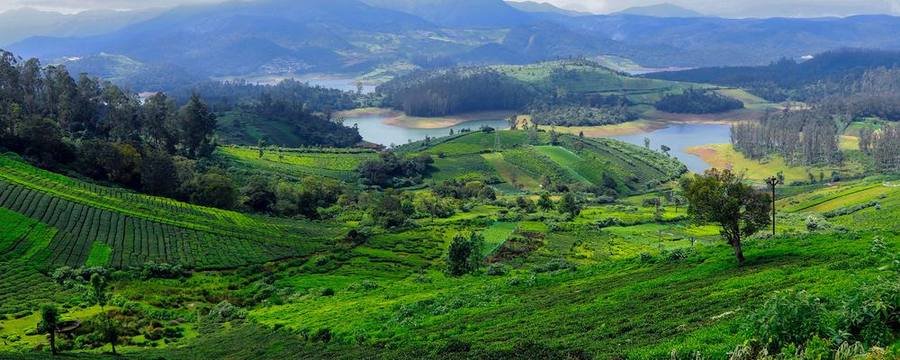
Ooty’s toy train climbs almost 1,900 metres on a toothed rail — the only rack railway in India — and that slow, blue, steam-hauled climb is the best possible introduction to the town it serves. The best places to visit in Ooty are the Nilgiri Mountain Railway, the Government Botanical Garden, Doddabetta Peak, Ooty Lake, the Government Rose Garden, Pykara Lake and Falls, and a day in Coonoor: seven stops that run from a UNESCO-listed railway to a 20-million-year-old fossil tree. Ooty — officially Udhagamandalam — sits at about 2,240 metres in the Nilgiri Hills of Tamil Nadu, a hill station built around tea, eucalyptus and mist. This guide takes the seven in the order that works best, with the honest distinctions: which stops suit families, which need a clear morning, and what December actually feels like. Only the hero photograph above is a verified Ooty image from our library; the places below run text-only rather than borrowing another place’s photo.
| Place | Best for | Time needed |
| 1. Nilgiri Mountain Railway | The ride itself, heritage | Half a day |
| 2. Government Botanical Garden | Gardens, families | 1–2 hours |
| 3. Doddabetta Peak | Views, sunrise | About 1 hour |
| 4. Ooty Lake | Boating, families | 1–2 hours |
| 5. Government Rose Garden | Flowers, photos | About 1 hour |
| 6. Pykara Lake & Falls | Day trip, scenery | Half a day |
| 7. Coonoor | Tea estates, viewpoints | Full day |
Distances and times are planning estimates: sources quote about 10 km to Doddabetta, about 19 km to Coonoor and about 20 km to Pykara. Check routes, timings and ticket availability before you leave.
1. The Nilgiri Mountain Railway: the toy train that climbs a toothed rail
Book the train before anything else. The Nilgiri Mountain Railway was first proposed in 1854, the Mettupalayam–Coonoor section opened on 15 June 1899, and the line reached Ooty on 15 October 1908. Over 46 km it climbs from 326 metres on the plains to 2,203 metres in the hills, through 16 tunnels, 257 bridges and 209 curves, using a rack-and-pinion system — a toothed centre rail that grips the locomotive on the steepest grades — the only rack railway in India. In July 2005 UNESCO added it to the World Heritage list as part of the Mountain Railways of India. The blue-and-cream coaches still climb at a walking pace through tea estates and shola forest, and the song Chaiyya Chaiyya was filmed on its roof. Ride it at least one way, ideally the full Mettupalayam–Coonoor climb, and book through IRCTC well ahead: seats sell out fast in season, and the morning departure from Mettupalayam is the one to aim for.
2. Government Botanical Garden: Ooty’s 1848 garden
Laid out in 1848 on the lower slopes of Doddabetta, the Government Botanical Garden is the town’s green centrepiece: about 55 acres of terraced lawns, rare trees and flower beds, holding more than 650 plant species and a fossil tree trunk said to be around 20 million years old. The annual flower show in May is the garden at its most crowded and most spectacular. Go early, before 10 am, when the tour groups have not yet arrived and the light is soft on the beds; allow one and a half to two hours, and pair it with the Rose Garden on the same morning. See our Ooty destination guide for the town in brief.
3. Doddabetta Peak: the highest point in the Nilgiris
At about 2,623 metres, Doddabetta is the highest peak in the Nilgiris and the tallest point in Tamil Nadu, roughly 10 km from the town. A telescope house at the summit looks out over the Nilgiri hills, the plains below and, on a clear day, the tea estates folding away in every direction. The catch is the word clear: Doddabetta is a morning stop, and a misty morning hides everything. Go first thing, before the clouds build, and treat a clear sunrise here as the trip’s best photograph. In December, expect mist more often than not — that is the season, not a disappointment, and the drive up through the shola forest is worth it either way.
4. Ooty Lake and the Boat House
Ooty Lake is not natural at all: it is an artificial lake built in 1824 by John Sullivan, the Collector of Coimbatore who is often called Ooty’s founder, by damming a stream between the hills. It covers about 65 acres at the edge of town, and the Boat House hires out pedal, row and motor boats — the classic Ooty afternoon, best after the gardens, when the light softens over the water. Weekends and school holidays pack the lakeside, so come on a weekday if you can, and keep an hour or two for the ride and a walk along the bank under the eucalyptus trees.
5. Government Rose Garden
A short drive from the Botanical Garden, on the slopes of Elk Hill, the Government Rose Garden — also called the Centenary Rose Park — holds more than 20,000 rose varieties across five terraces, and has been recognised with a Garden of Excellence award by the World Federation of Rose Societies. It is at its best in bloom season, through spring and early summer, when the terraces run in bands of colour; out of season it is a quieter, greener walk. Allow about an hour, and come in the morning light for photographs.
6. Pykara Lake and Falls: the day trip that earns its drive
Pykara, about 20 km from Ooty on the Mysore road, is where the standard circuit ends and the wider Nilgiris begin. The lake sits in a broad, open valley with pine forest on the drive in, and a short walk from the boating point brings you to Pykara Falls, which runs best from August to December. Boating on the lake is the main draw, and the falls are the payoff for the walk. Give it half a day, go in the morning for the calmest water, and note that boating can be suspended in heavy rain — check locally before you set out.
7. Coonoor in a day: Sim’s Park, Dolphin’s Nose and the tea estates
Coonoor, 19 km from Ooty, is what many visitors wish Ooty still was: smaller, quieter and ringed by tea estates. Sim’s Park is its answer to the Botanical Garden, a 12-hectare garden laid out in a deep ravine with rare tree species and an annual fruit and vegetable show in May. Above the town, Dolphin’s Nose and Lamb’s Rock look out over the tea estates and the Catherine Falls in the distance. The short toy-train hop between Ooty and Coonoor makes a good half-day by itself; the full day adds the estates, a tea factory visit and a slow drive back through the hills.
Best time to visit Ooty
October to June is the broad window. April to June is peak season — the clearest weather, the May flower show, and the biggest crowds and highest prices, so book stays well ahead. September to November brings post-monsoon green and thinner crowds. December to February is cold and misty: daytime temperatures run roughly 7–19°C, nights can touch single figures, and frost can silver the grass at dawn. It is not peak season, which is exactly the point for a quiet trip — but do not promise yourself clear views, and do not expect snowfall: Ooty gets frost, not snow. The monsoon, July to September, is lush and cheap, but rain and mist can close viewpoints and slow the hill roads. For the wider state in the same month, see our Tamil Nadu in December guide.
How to reach Ooty
Fly to Coimbatore, about 85–90 km away and roughly three hours by road, then drive up the ghat road. By rail, come to Mettupalayam, 46 km from Ooty, and take the toy train up — or drive from Coimbatore Junction. By road from Bangalore it is about 270 km via Mysore, which is about 125 km from Ooty, roughly six to seven hours. Once in the hills, hire a car with a driver who knows the ghat roads: the distances are short, but the roads are slow and the best places sit at the end of lanes that reward local knowledge. One rule to check before you leave: vehicles entering the Nilgiris have needed an e-pass, issued online through the Tamil Nadu portal, and the rules have been extended and changed more than once — verify the current position on the official portal before you travel.
Best places to visit in Ooty in 2 days
Two days cover the town well if you keep it tight. Day one: ride the toy train in from Mettupalayam in the morning, then the Botanical Garden and the Rose Garden in the afternoon, with Ooty Lake at dusk. Day two: Doddabetta at first light, then Pykara Lake and Falls for the morning, and Coonoor — Sim’s Park and Dolphin’s Nose — in the afternoon. With a third day, add Avalanche Lake or Emerald Lake, both quieter and wilder than the town circuit, and take the slow road back through the tea estates. For the state beyond the hills, see our best places to visit in Tamil Nadu guide.
What to eat in Ooty
Eat like the hills eat. Nilgiri tea is the obvious souvenir — buy it at an estate or factory shop rather than a tourist stall — and Ooty’s homemade chocolates and varkey, the town’s crisp savoury biscuit, are the snacks to carry home. Mornings run on filter coffee and hot idli-sambar from the town’s small restaurants; evenings on hot tea and something fried as the mist comes down. For the full Tamil Nadu table beyond the hills, see our famous food of Tamil Nadu and what to eat in Tamil Nadu guides.
Watch & Feel the Place: Ooty on Film
Videos are by their respective creators.
Best places to visit in Ooty FAQs
What is the best time to visit Ooty?
October to June is the broad window. April to June is peak season, with the May flower show in the Botanical Garden, but also the biggest crowds and highest prices. December to February is cold and misty, with daytime temperatures roughly 7–19°C and frost possible at dawn — atmospheric, but not the season for guaranteed clear views. The monsoon, July to September, is green and quiet, though rain and mist can hide the viewpoints.
How many days are enough for Ooty?
Two to three days cover a first trip comfortably. Two days handle the town — the toy train, Botanical Garden, Doddabetta Peak and Ooty Lake — plus Pykara or Coonoor. A third day adds Avalanche Lake, Emerald Lake or a slower Coonoor circuit. One day is possible but rushed: you would have to choose between the train and the viewpoints.
What is Ooty famous for?
The Nilgiri Mountain Railway — the blue toy train and India’s only rack railway, a UNESCO World Heritage Site since 2005 — plus tea gardens, the 1848 Botanical Garden, Doddabetta Peak, Ooty Lake, the Rose Garden and its cool, misty climate. Ooty is also known for Nilgiri tea, homemade chocolates and varkey, the town’s crisp savoury biscuit.
How do I reach Ooty from Bangalore?
By road from Bangalore, about 270 km via Mysore, which is about 125 km from Ooty — roughly six to seven hours by car or bus. The nearest airport is Coimbatore, about 85–90 km away, around three hours by road. By rail, come to Mettupalayam, 46 km away, and ride the toy train up — book through IRCTC well ahead, as seats sell out fast.
Is December a good time to visit Ooty?
Yes, if you want cold, misty hill weather and thinner crowds — December is not peak season, so stays are easier to find and cheaper than in April to June. Pack warm layers for mornings and evenings, expect mist that can hide the viewpoints, and do not expect snowfall: Ooty gets frost, not snow. For the clearest views, aim for April to June instead.
What are the best places to visit in Ooty?
Start with the Nilgiri Mountain Railway, the Government Botanical Garden, Doddabetta Peak, Ooty Lake and the Government Rose Garden, then add Pykara Lake and Falls and a day in Coonoor for Sim’s Park, Dolphin’s Nose and the tea estates. Two days cover the town; three days cover the wider Nilgiris without rushing.
The train is the doorway; the gardens, the peak and the lakes are the rooms beyond it. Ride in on the rack railway, give Doddabetta a clear morning, and let Coonoor set the pace after that. Next, read our Tamil Nadu in December guide for the season, and best places to visit in India and the state-by-state guide to plan the trip beyond Ooty. See also our Tamil Nadu state guide.
Plan your Ooty trip
Toy train, gardens, a peak and a lake — in the Queen of the Nilgiris.
Tamil Nadu state guide →