
Karnataka · January Guide
Karnataka in January: Hampi, Coorg & the Coast in the Cool Season
By Beauty of Bharat — India travel guide, every place, every flavour.
Guides covering all 36 States and UTs, researched from official sources and checked at publish time. Corrections welcome — see About Beauty of Bharat.
January is the one month when Karnataka's coffee pickers are at their busiest, Hampi's stones are cool enough to touch at noon, and the Arabian Sea is at its calmest. Karnataka in January is the state's coolest, driest month: Hampi averages about 24°C with almost no rain, Coorg sits between 10°C and 25°C in the middle of the coffee harvest, and Gokarna's beaches are calm and uncrowded.
This guide covers the January circuit that works: two days in Hampi, two in Coorg's coffee hills, a day in Mysuru, and two on the coast at Gokarna and Murudeshwar — with Chikmagalur, Badami and Jog Falls. Start in Bengaluru, end on the coast, and fly home from Mangaluru. For the year-round picture, see our Karnataka guide and the best places to visit in India.
Karnataka in January at a glance
| Best month to visit | January — coolest, driest month |
| Hampi in January | About 24°C on average, highs near 30°C, almost no rain |
| Coorg in January | 10°C to 25°C; coldest month, peak coffee harvest |
| The coast in January | Warm, dry and calm |
| Don't miss | Coffee harvest and Hampi at sunrise |
| Start here | Bengaluru — the gateway; see the Karnataka state guide |
Why January works in Karnataka
The payoff to the opening claim is simple: January is the only month that puts all three Karnatakas — the Deccan ruins, the Western Ghats hills and the coast — at their best at once. The monsoon is months behind, so the hills are still green but the paths are dry, the coffee estates are mid-harvest, and the coast has shaken off the monsoon swell. Hampi, which bakes above 40°C in summer, is walkable all day, and Coorg's misty mornings are at their coldest. It is the month the state stops being separate trips and becomes one journey — ruins, hills and coast in a single cool week. The trade-off: it is peak season, so book early — and Jog Falls is past its thunderous best.
1. Hampi — the ruined empire
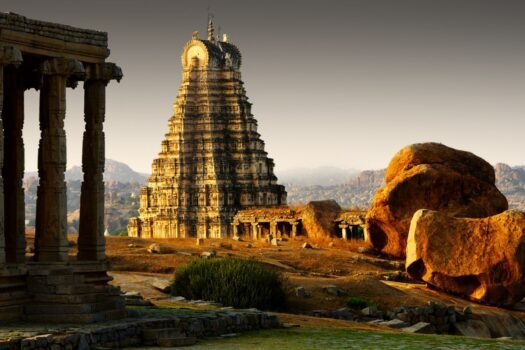
Hampi was the capital of the Vijayanagara Empire, and its ruins — inscribed by UNESCO in 1986 — sprawl across boulders on the Tungabhadra River, about 350 kilometres from Bengaluru. In January you can walk them all day: the average is about 24°C, highs near 30°C, almost no rain. Start at the Virupaksha Temple, still in worship after centuries, then cross to the Vittala Temple for the Stone Chariot and the musical pillars. Climb Hemakuta Hill for sunset, and take a coracle ride on the Tungabhadra. Two days is the minimum; three adds the elephant stables and the Lotus Mahal. January brings the Go Heritage Run — the 9th edition, over the weekend of 23–24 January 2027, with 5K, 10K and 21K routes past the ruins — and Makara Sankranti falls on 15 January 2027. Hampi Utsav, by contrast, is a November festival, held on 2, 3 and 4 November each year, so January visitors get the ruins without the crowds. See the Hampi guide.
2. Coorg — the coffee harvest
Coorg, or Kodagu, is Karnataka's coffee country — the state grows about 70% of India's coffee, and Coorg is its largest coffee district. January is mid-harvest: Arabica picking runs into January and Robusta follows, so estate walks pass pickers hand-picking ripe red cherries. It is also Coorg's coldest month, 10°C to 25°C, with nights that can dip towards 5°C — pack a warm layer. Base yourself in Madikeri, at about 1,150 metres: Abbey Falls — a 70-foot cascade about 8 kilometres from town, reached by some 200 steps through coffee and cardamom estates — Raja's Seat at sunset, the Dubare elephant camp, and the climb to Tadiandamol, Coorg's highest peak. See the Coorg guide.
3. Mysuru — the royal city in mild winter
Mysuru in January is the gentle stop between the hills and the coast: mild days, clear skies, a city built for slow mornings. The Mysore Palace is the centrepiece — arrive for the evening illumination if your dates line up — and Chamundi Hills gives the classic view back over the city. Brindavan Gardens is at its best in the cool season, and the Devaraja Market serves hot masala dosa and Mysuru pak. One day is enough; two adds Srirangapatna, the old island capital nearby. See the Mysuru guide.

4. Gokarna and Murudeshwar
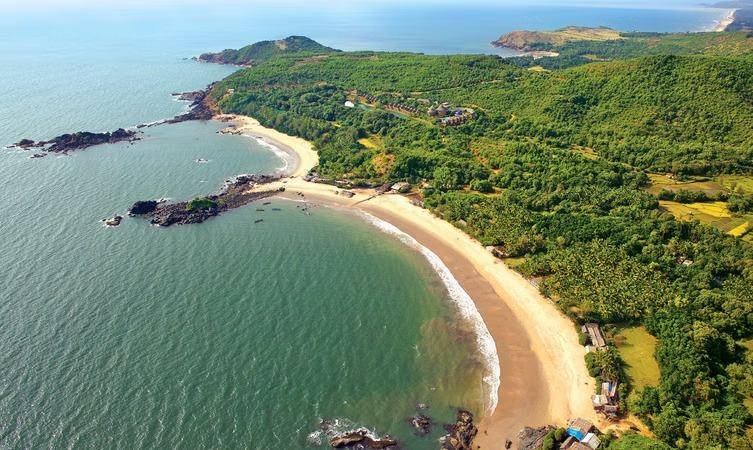
January is Gokarna's best beach weather: warm, dry and calm, the Arabian Sea at its gentlest, the crowds still thin. The town's heart is the Mahabaleshwara Temple, one of South India's most sacred Shiva shrines. Om Beach, named for its Om shape, is the classic, Kudle the sunset beach, and the cliff-top trail from Om through Kudle, Half Moon and Paradise is the coast's best half-day walk. About 78 kilometres south stands Murudeshwar, where a 123-foot statue of Shiva, among the tallest in the world, rises from Kanduka Hill with the sea on three sides. Legend says a piece of Ravana's Atma Linga fell here; behind the statue, the Raja Gopuram rises 20 storeys, about 249 feet. See the Gokarna guide.
5. Chikmagalur — coffee country
Chikmagalur is Coorg's quieter coffee cousin, and January suits it just as well: cool, dry and green, the estates in harvest. Its headline is Mullayanagiri, at 1,930 metres the highest point in Karnataka — drive most of the way, then climb the temple steps for a summit above a sea of ridges. The Baba Budangiri range, where Hindu and Muslim devotion share the cave shrines, is the other classic walk. Come for a night en route to Coorg. See the Chikmagalur guide.

6. Badami and Pattadakal — the Chalukya caves
Badami is the history stop most January itineraries skip — and shouldn't. Its 6th-century cave temples, carved by the Chalukyas into red sandstone cliffs above Agastya Lake, are among India's oldest rock-cut temples, and January's cool light suits them best. Nearby Pattadakal, a UNESCO World Heritage Site, holds a field of 7th- and 8th-century temples where northern and southern Indian styles meet. Badami pairs naturally with Hampi on the same northern circuit — do Hampi first, then Badami.

7. Jog Falls — the honest verdict
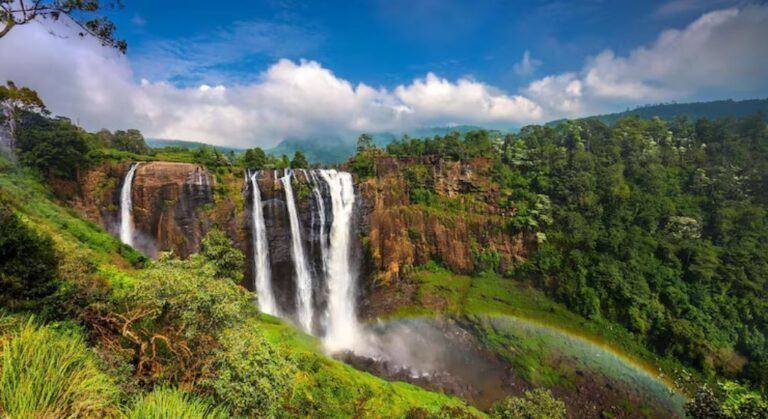
Jog Falls deserves an honest line: January is not its best month. The Sharavathi River drops 253 metres here in four streams — Raja, Rani, Roarer and Rocket — but the Linganamakki Dam upstream, built in 1964, holds back much of the water outside the monsoon, so by January the flow is moderate and the falls are quieter. The official guidance calls winter "peaceful; ideal for photography": clear viewpoints, almost no crowds, and the base steps at their safest — though they are often restricted, so check on arrival. If the thunder is the point, come between August and December; passing through the Malnad hills, January's Jog is a calm, photogenic stop.
A suggested 7-day January route
Days 1–2 — Hampi. From Bengaluru, head to Hospet: two days among the ruins, sunrise at Hemakuta Hill, a coracle ride on the Tungabhadra.
Day 3 — Badami and Pattadakal. Badami's caves in the morning, Pattadakal after lunch.
Days 4–5 — Coorg. Drive south to Madikeri via Chikmagalur: estate walks, Abbey Falls and Tadiandamol.
Day 6 — Mysuru. Palace, Chamundi Hills and the Devaraja Market.
Day 7 — Gokarna and Murudeshwar. Temples in the morning, the Om-to-Paradise beach walk in the afternoon, out via Mangaluru or Goa.
What to eat in Karnataka in January
January is a good eating month: the harvest puts fresh coffee on every estate table, and the cool weather suits the state's richest food. In Coorg, order pandi curry — the Kodava pork curry, dark and peppery — with kadambuttu rice dumplings; in Mysuru, masala dosa and Mysuru pak; on the coast, the day's catch at a Gokarna beach shack. End the day with a South Indian filter coffee. Our famous food of Karnataka guide covers the full list.
Karnataka in January travel tips
Pack a warm layer for Coorg — nights can dip towards 5°C — and sun protection for Hampi's midday. Book Coorg homestays and Hampi guesthouses early: January is peak season. Check Jog Falls before a special trip. Bengaluru is the main gateway, Hospet the railhead for Hampi, Mangaluru airport the sensible exit after the coast. Carry cash in the hills.
Watch & feel the place
See Hampi and Coorg on film:
Videos are by their respective creators.
Karnataka in January FAQs
Is January a good time to visit Karnataka?
Yes — the coolest, driest month across the state. Hampi averages about 24°C, Coorg sits between 10°C and 25°C, and the coast is warm, dry and calm.
Is Hampi Utsav held in January?
No — it is a November festival, held on 2, 3 and 4 November each year. January visitors get the ruins without the crowds, and the Go Heritage Run takes place in Hampi over the weekend of 23–24 January 2027.
Can you see the coffee harvest in Coorg in January?
Yes. The harvest runs from November to February, and January is right in the middle: Arabica picking runs into January, Robusta follows. Karnataka grows about 70% of India's coffee.
Is Jog Falls worth visiting in January?
The flow is moderate in January — the Linganamakki Dam holds back water outside the monsoon — so it is quieter and best for photography. For full power, visit between August and December.
How many days do you need for Karnataka in January?
Seven days: two in Hampi, one in Badami and Pattadakal, two in Coorg, one in Mysuru and one on the coast. With three or four days, pick Hampi plus Coorg, or Coorg plus the coast.
Karnataka in January answers its own question: one state, three landscapes, all at their best in the same month. Start with Hampi and end on the coast — more month guides live on the blog. If this guide has you planning the coast, read our Goa in December or Kerala in December guides next — or start wider with India in January.
Plan your Karnataka trip
Hampi's ruins, Coorg's coffee harvest, Gokarna's calm beaches.
Karnataka state guide →