
Jammu & Kashmir · Tourist Attraction Guide
Gurez Valley Guide: Kashmir's Hidden Valley — Complete Guide

By Beauty of Bharat — India travel guide, every place, every flavour.
Guides covering all 36 States and UTs, researched from official sources and checked at publish time. Corrections welcome — see About Beauty of Bharat.
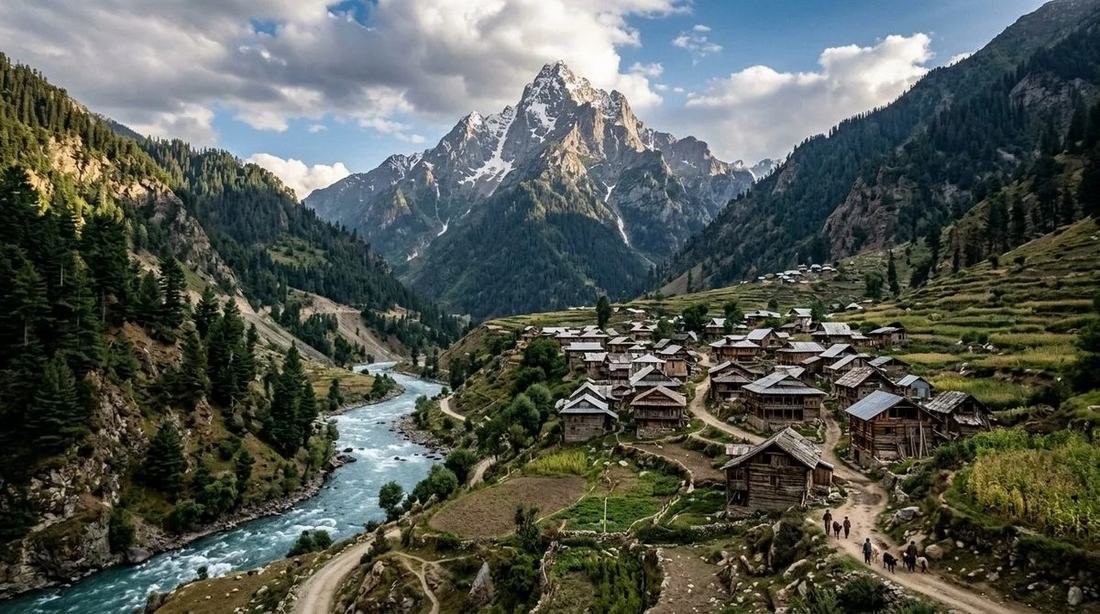
For about six months of the year, there is no road into Gurez Valley at all. Snow closes Razdan Pass, the only way in, and the valley — a green bowl of log-wood villages on the Kishanganga river, a few kilometres from the Line of Control — waits out the winter on its own. That isolation is the whole point of going. Gurez, in Bandipora district about 123 km north of Srinagar, is Kashmir as it was before the crowds: Dard-Shin villages, a pyramid-shaped peak named for a poet-queen, trout rivers and meadows that see a fraction of the visitors Gulmarg does. This guide covers the lot — where it is, when the road opens, how to reach it from Srinagar, the permit rules, where to stay and how many days to give it. Go between June and September, give it three days, and cross Razdan Pass in daylight.
Gurez was closed to outsiders for most of living memory and opened to tourists only in 2007. The valley sits on the old Silk Route between Kashmir and Gilgit, and Dawar, its main town, was the ancient capital of Dardistan, the land of the Dard people. The Dard-Shin still live here, speaking Shina, building in log wood, and keeping customs distinct from the Kashmir valley below — a place the modern world reached late, which is exactly why travellers who make the drive remember it.
Gurez Valley at a Glance
| Detail | Gurez Valley |
| Where | Bandipora district, Jammu & Kashmir, on the Kishanganga river near the Line of Control |
| Main village | Dawar, at about 2,400 m |
| Distance from Srinagar | About 123–140 km, 5–7 hours by road via Bandipora and Razdan Pass |
| Best time to visit | June to September |
| Road open | Usually late May or June to October; closed under snow roughly November to April or May |
| Stay | Guesthouses, homestays and JKTDC huts in Dawar; camps in summer |
| Nearest airport / railway | Srinagar airport; nearest railway station Sopore, about 115 km from Dawar |
Distances, altitudes and opening windows are as reported at publish time; the pass and the permit rules change with the snow and the season, so check both before you travel.
Dawar: the Heart of Gurez
Everything in Gurez runs through Dawar, the valley’s main town and administrative centre, sitting at about 2,400 m on the Kishanganga. It is a small place — a bazaar, a handful of guesthouses and homestays, the JKTDC huts, and streets of log-wood houses that look the way they have for generations. Dawar was named Best Tourism Village (gold) in 2023, and it is the natural base: sleep here, eat here, and make every day trip from here.
Two short walks are worth your first morning. The Habba Khatoon spring sits at the foot of the peak, a clear pool the valley treats as sacred, and the Khandyal viewpoint above the town gives a full 360-degree look at Dawar, the river and the ring of snow peaks. Dawar is also where the valley’s practical life happens — the drivers who know the Tulail road, the checkpost, the only reliable mobile signal — so sort your plans here before heading further up the valley. See our Gurez Valley offbeat guide.
Habba Khatoon Peak and the Kishanganga River
The first thing you see on reaching Dawar is the peak: a sharp, dark pyramid rising straight above the town. It is Habba Khatoon, named for the 16th-century Kashmiri poet — Zoon, the “moon”, who became Habba Khatoon after a hard first marriage and went on to marry the emperor Yousuf Shah Chak. The story goes that she wandered near the peak looking for her lost love, and the mountain still carries her name and her legend.
Below the peak runs the Kishanganga, the river that makes the valley. It flows in from the north, cold and turquoise, and continues along the Line of Control — across the border it is called the Neelum. The riverbanks are where Gurez is at its quietest: wooden footbridges, riverside meadows, and long, slow walks with nobody else on the path. The Kishanganga is also famous for trout — brown and rainbow — but fishing needs a permit, so arrange that through your stay or a local operator before you cast a line. Do not fly drones anywhere in the valley, and do not photograph security installations: this is a border zone, and the rules are enforced.
Tulail Valley: the Valley Beyond the Valley
If Gurez feels remote, Tulail feels like the end of the map. The sub-valley runs 30–40 km beyond Dawar, a full day’s drive out and back, through villages like Burnai, Badugam and Sheikhpora to meadows that locals call a “mini Ladakh” for their dry, high-altitude look. The road is rougher, the villages smaller, and the sense of being far from anywhere stronger. Kanzalwan, about 30 km east of Dawar in the other direction, is one of the valley’s old archaeological sites, and the shrine of Peer Baba sits near the road to Razdan Pass.
Tulail is not a place to improvise. The road and the permissions vary with the season and the security situation, and villages nearer the Line of Control, like Chakwali and Bagtore, are visited only when the local authorities allow it. Ask in Dawar on the day, go with a local driver, and treat a “not today” as final.
Best Time to Visit Gurez Valley
June to September is the window, and the honest answer inside it depends on what you want. June is the fresh start: the pass has just opened, snow still sits on the peaks, the meadows are turning green and the valley is at its quietest. July and August are the peak — warmest days, wildflowers at their best, the river at its clearest — so book stays ahead. September is the photographer’s month: clear skies, golden autumn colours, crisp air and fewer people. A Gurez Festival is usually held in mid-summer, around July or August, with folk dance and music.
October is a gamble: the colours are superb, but the first heavy snow can close Razdan Pass at any point, and the camps start shutting. From roughly November to April or May the valley is cut off by snow, with no road access at all — Gurez is a four-to-five-month destination, and every plan starts with the pass. Check the road status with the Bandipora district control room or your stay before you set out, and again the morning you drive.
How to Reach Gurez Valley from Srinagar
There is only one way in by road, and it is half the experience. From Srinagar, drive north to Bandipora, about 55 km, past Wular Lake — one of Asia’s largest freshwater lakes — and on through Tragbal’s meadows to Razdan Pass, about 3,300 m. The climb is a series of hairpins with the whole Kashmir valley falling away behind you; the descent drops through pine forest into Gurez, and the Kishanganga opens out below the pyramid of Habba Khatoon. Allow 5–7 hours for the 123–140 km, leave Srinagar early, and cross the pass in daylight. Hire a local driver with a sturdy vehicle rather than driving yourself — the road is narrow, partly unpaved in places, and the driver knows the checkpoints.
There is no railway to Gurez; the nearest station is Sopore, about 115 km from Dawar. The nearest airport is Srinagar, so most travellers fly in and drive from there. A limited helicopter service from Srinagar to Dawar has operated in season, cutting the journey to about twenty minutes, but seats are few and availability varies — check with the Tourism Reception Centre in Srinagar before counting on it. In winter, when the road is closed, the helicopter is the only link the valley has with the outside world.
Do I Need a Permit to Visit Gurez Valley?
Yes — in some form, and the exact form is the one thing about Gurez that sources disagree on, so check the current rules before you go rather than relying on any single guide, including this one. Indian travellers should carry original photo ID and expect to register at the checkpoints at Tragbal, Razdan and Dawar. Some sources say an Inner Line Permit, obtained from the Deputy Commissioner’s office in Bandipora, is required; others say ID and checkpoint registration is enough for Dawar, with local permission needed for Tulail, Chakwali and the villages nearer the Line of Control. Foreign nationals were long kept out altogether; the valley opened to foreign tourists in 2025, with prior clearance from the Deputy Commissioner, Bandipora, applied for several days ahead — again, confirm the current process before you book, because border rules change.
Whatever your nationality, carry your ID and any permit with you at all times, keep photocopies, and follow the instructions at each checkpost without argument. The checkpoints are routine for tourists with their papers in order, and a local driver or stay can usually tell you what is being asked for on the day you travel.
Where to Stay in Gurez Valley
Stay in Dawar. The town has the valley’s guesthouses, family homestays and JKTDC huts, plus a few riverside camps that run in summer. Tulail has a few homestays and camps of its own if you want a night further up the valley. Book ahead in July and August, the busiest months, and expect simple rooms, not luxury: hot water, heating and phone charging are all things to ask about when you book, not assume.
Come prepared for a valley with thin infrastructure. Reports say only BSNL mobile signal reaches Gurez, there are no ATMs and card payment is rare, so carry enough cash for the whole trip. Pack warm layers even in July — nights at 2,400 m are cold — and bring sun protection for the high, clear days.
How Many Days Are Enough for Gurez Valley?
Three days is the honest minimum, and four is better. Day one is the drive: Srinagar to Dawar over Razdan Pass, arriving by late afternoon, with an evening walk along the Kishanganga. Day two is Dawar itself — the Habba Khatoon spring and viewpoint in the morning, the bazaar and the river in the afternoon, sunset on the peak. Day three is the Tulail drive, out and back, or a slow morning in Dawar and the drive back to Srinagar if the pass weather is turning. Add a fourth day and you get a second Tulail morning, a trout-fishing session, or simply a day with nothing planned — which in Gurez is a plan in itself. Do not try to do Gurez in a day from Srinagar: the drive alone is 5–7 hours each way, and a valley that is cut off for half the year deserves more than a drive-through.
Watch & Feel the Place: Gurez Valley on Film
Videos are by their respective creators.
Gurez Valley Guide FAQs
What is the best time to visit Gurez Valley?
June to September. July and August are the warmest and greenest, with wildflowers at their best; September brings clear skies, golden autumn colours and fewer visitors. The road usually opens in late May or June and closes with the first heavy snow, roughly in November, so the valley is cut off for about half the year.
How far is Gurez Valley from Srinagar?
About 123–140 km by road, a 5–7 hour drive via Bandipora, Tragbal and Razdan Pass (about 3,300 m). Leave Srinagar early, cross the pass in daylight, and hire a local driver — the road is narrow and partly unpaved in places.
Is Gurez Valley open for tourists?
Yes, in the summer season — roughly late May or June to October. The valley opened to Indian tourists in 2007 and to foreign tourists in 2025, with permits and checkpoint registration. In winter Razdan Pass closes under snow and there is no road access, so check the road status before you travel.
Do I need a permit to visit Gurez Valley?
Carry original photo ID and expect to register at the checkpoints at Tragbal, Razdan and Dawar. Some sources say an Inner Line Permit from the Deputy Commissioner’s office in Bandipora is required; foreign nationals need prior clearance from the same office. Rules change, so confirm the current requirements before you book.
How many days are enough for Gurez Valley?
Three days: one for the drive in from Srinagar, one for Dawar, Habba Khatoon peak and the Kishanganga, and one for the Tulail valley day trip. Four days is better, adding a slow day by the river or a second morning in Tulail. Two nights in Dawar is the minimum.
Gurez rewards the traveller who plans around a mountain pass, not a timetable — a valley that is shut for half the year, open for a few green months, and still itself when you arrive. Cross Razdan in daylight, sleep in Dawar, walk the river at dusk, and let the peak do the talking. Next, read our Kashmir in winter guide and our Jammu & Kashmir state guide.
Plan your Gurez trip
A valley cut off for half the year, a poet’s pyramid peak and a trout river on the Line of Control — Gurez is Kashmir’s hidden valley, and June to September is the time to see it.
Jammu & Kashmir state guide →