
Diwali 2026 · Ahmedabad
Ahmedabad After the Lamps: Diwali, Chopda Pujan and the Gujarati New Year
By Beauty of Bharat — India travel guide, every place, every flavour.
Guides covering all 36 States and UTs, researched from official sources and checked at publish time. Corrections welcome — see About Beauty of Bharat.
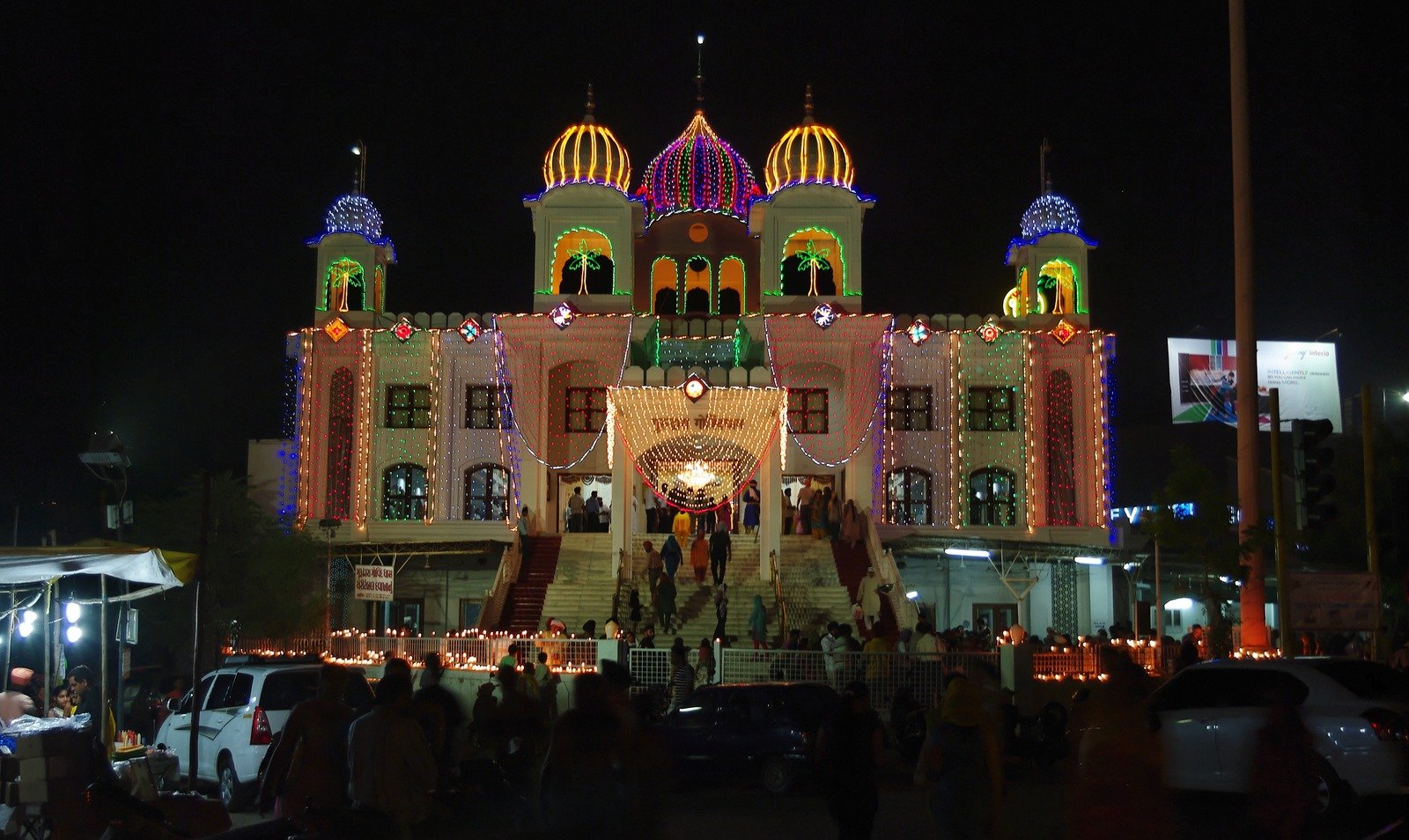
Why does Ahmedabad close its year on Diwali night, yet wait until Tuesday for its New Year? The answer is written in the moon, not on a wall calendar — and it shapes everything from the worship of account books to the first greetings of the Gujarati New Year.
Why does Ahmedabad close its year on Diwali night, yet wait until Tuesday for its New Year? The answer is written in the moon, not on a wall calendar — and it shapes everything from the worship of account books to the first greetings of the Gujarati New Year. In most years Bestu Varas follows Diwali almost immediately, so visitors assume the two are one long celebration. In 2026 the lunar calendar stretches the turn: Diwali falls on Sunday 8 November, and Bestu Varas on Tuesday 10 November, opening Vikram Samvat 2083. That pause is not a gap in the festivities; it is the point of them. Ahmedabad uses it to finish one year properly — closing accounts, blessing new ledgers — and only then steps into the next year with visits, sweets, and “Saal Mubarak”.
For a traveller, that sequence matters more than any single night of lamps. Diwali in Ahmedabad is not only a spectacle; it is a working city marking the end of its traditional business year. The old city, with its gated pols — close-knit neighbourhood lanes — is where this feels most tangible: behind carved facades, households prepare for Lakshmi Puja while traders prepare a fresh account book. Follow both, from lamp at doorway to ledger on desk.
The 2026 twist: a New Year that does not follow Diwali by a day
Bestu Varas is the Gujarati New Year, observed on Kartak Sud Ekam — the first day of the bright half of Kartak, in the Vikram Samvat calendar. It is often described as “the day after Diwali”, because Diwali night is the new-moon night closing the old year. In 2026 that shorthand breaks down. Diwali is Sunday 8 November 2026. The Pratipada tithi, the lunar day of Bestu Varas, begins during Monday 9 November and continues into the afternoon of Tuesday 10 November. Because Amavasya is still prevailing at sunrise on 9 November, the New Year is observed on 10 November, when Pratipada is present at sunrise.
Hence the 2026 dates for Gujarat: Diwali and Chopda Pujan on 8 November, Bestu Varas on Tuesday 10 November, Bhai Bij on Wednesday 11 November, Labh Pancham on Saturday 14 November. The Gujarat government's holiday list likewise marks Tuesday 10 November 2026 as Vikram Samvat New Year (Bestu Varas). Local panchangs can differ on neighbouring observances, so check the calendar followed locally. The point is not the technicality, but what it reveals: in Ahmedabad, the New Year is not declared by the Gregorian calendar. It arrives when the lunar day arrives, and the city waits for it.
Monday 9 November sits between the festival's two poles — after the old year's closing, before the new year's opening. Treat it as part of the season: a slow old-city walk, revisiting a pol in daylight after seeing it lit at night.
Diwali night in the old city: lamps, Lakshmi Puja, and a year closing
On Diwali night, the old city glows in a way the newer west bank does not quite reproduce. The pols are residential lanes, not open squares, so light comes from doorways, courtyards, and small shrines rather than one grand display. Diyas are lit, rangoli drawn at thresholds, and families gather for Lakshmi Puja — Lakshmi, goddess of wealth and prosperity, alongside Ganesha, worshipped before auspicious beginnings. The mood is domestic and deliberate: this is the last night of the old Vikram Samvat year, and the prayers carry the weight of a closing as well as a celebration.
After dark, visitors often head to Manek Chowk, the old-city square that the Ahmedabad guide describes as a jewellery market by day and a celebrated open-air food court after dark — a crowded counterpoint to the quieter pols. Go on foot where the lanes narrow; the old city's heritage walk, starting around the Swaminarayan Temple at Kalupur, is the best way to learn the layout before the festival crowds arrive. Ahmedabad is India's first UNESCO World Heritage City, and Diwali shows why that designation is about living neighbourhoods, not only monuments. The festival does not empty the pols for tourists; it fills them with the people who live there.
Chopda Pujan: when an account book is worshipped
Chopda Pujan is the ritual at the heart of Ahmedabad's Diwali, and its name explains it: a chopda is an account book, pujan is worship. On Diwali evening, business owners place new account books before the deities, offer prayers, and mark another year of trade. Beforehand, businesses typically close the previous year's accounts, collect outstanding dues, and prepare fresh ledgers. During the puja, books sit alongside pens, coins, flowers, and other offerings, with prayers to Lakshmi and Ganesha; some families also honour Saraswati, as Sharda, and the ritual is also known as Sharda Pujan or Vahi Pujan.
The first page carries particular significance. Traders commonly write “Shubh” (auspiciousness) and “Labh” (gain), sometimes alongside “Shri” and a swastik drawn in vermilion. These are not decorations; they are the year's first entries, written as hopes that it will be prosperous, well-judged, and honestly earned. The ceremony is not a prayer for profit alone. It reflects a belief that the tools of one's livelihood deserve reverence, and that a new business year should begin with gratitude and good intentions, not only a wish for gain.
In Ahmedabad's walled city, the chopdas themselves are part of the story. Red-bound ledgers have long been a familiar sight before Diwali, and traditional account-book making continues there, where Muslim artisans have long crafted the ledgers used by Hindu traders for Chopda Pujan — a reminder that the ledger passes through many hands before it is worshipped: artisan, trader, and family. As accounting software has replaced handwritten records, the ledger has become symbolic for some businesses, some placing a laptop alongside the chopda, but many continue the puja, preserving a craft that connects the city's commercial life with its festive traditions.
One clarification is essential. Chopda Pujan opens a cultural and religious business year; it does not replace India's official financial year, which runs from April to March, nor statutory accounting — tax records and company accounts must still follow the applicable rules. The ritual is a devotional start to a new cycle of work. Its power lies in that distinction: the ledger is blessed before a single transaction is written in it, while the year is still blank.
Bestu Varas: the morning Ahmedabad says “Saal Mubarak”
Bestu Varas, on Tuesday 10 November 2026, is the day the blank year begins to be lived — “bestu” for new, “varas” for year. Families visit temples, meet relatives, exchange sweets, and offer “Saal Mubarak” or “Nutan Varshabhinandan”. The visiting is the celebration. Where Diwali night centres on home and shop, Bestu Varas turns outward: calls on elders for blessings, rounds of relatives and business associates, the slow social work of starting a year in good standing with the people it will be spent among.
Temple visits are central, and Annakut — the “mountain of food” offered to the deity — is closely associated with this part of the season, particularly in Swaminarayan and Pushtimarg temples, where large offerings are arranged for darshan. It recalls Krishna's lifting of Govardhan Hill: abundance displayed, then shared. Annakut dates differ by calendar in 2026, so check a temple's own schedule. The day's shape is clear: prayer, temple visiting, sweets exchanged, greetings repeated house to house until the new year feels socially real.
For a visitor, Bestu Varas is the most approachable day, if approached with respect. A polite “Saal Mubarak” is welcome, but the heart of the day — family visits, home-shrine prayers, first openings of the worshipped ledgers — is private. Walk the pols, visit a temple for darshan, share sweets if offered, and let the day's rhythm set the pace.
Labh Pancham: when the shutters go up again
The festive business calendar does not end with Bestu Varas. It continues until Labh Pancham, on Saturday 14 November 2026, considered an auspicious day to resume work. Traditionally, many Gujarat businesses remain closed through the Diwali days and reopen on Labh Pancham, often after a puja at the shop or office, with a first order dispatched on an auspicious note. Past Ahmedabad reports describe traders opening the lock personally at the chosen muhurat — a small ceremony mirroring Chopda Pujan at the season's other end. Some resume earlier, on Saatam or another day, so the pattern is a tradition, not a uniform rule.
The season has an arc only a trading city could produce. Diwali closes the books. Bestu Varas opens the year. Labh Pancham opens the shops. The ledger blessed on Diwali night is the book Labh Pancham puts to work: arrive only for Diwali night and you see the blessing; stay through Labh Pancham and you see it become a working year.
Experiencing it as a visitor: a short, respectful route through the season
Start in the old city, on foot, before the festival peaks. A daytime walk through the pols — gated lanes, carved havelis, chabutras (bird-feeders), secret passages — gives you the geography Diwali night then lights up. Return after dark for Manek Chowk and the pols at lamp-lighting time. At temples, follow local customs and accept long darshan queues as part of the season.
On Bestu Varas, let greetings lead: returning “Saal Mubarak” is the simplest way to take part. Do not photograph a puja or gathering without permission. All week, check local schedules: panchang dates, temple timings, and market reopenings vary.
Ahmedabad's Diwali is not a single night to tick off, but a sequence — closing, blessing, greeting, reopening — from Sunday 8 November to Saturday 14 November. Come for the lights. Stay for the ledger, and the Tuesday morning a trading city wishes itself a new year.
Watch Ahmedabad light up
Watch Ahmedabad lit up for Diwali, as News18 Gujarati reported it:
This video is embedded from News18 Gujarati's channel for viewing; check official updates for this year's Diwali and New Year arrangements before travelling.
When is Bestu Varas, the Gujarati New Year, in 2026?
Tuesday 10 November 2026, opening Vikram Samvat 2083, on Kartak Sud Ekam, the first day of Kartak's bright half. Diwali itself is Sunday 8 November 2026.
Why is Bestu Varas not on 9 November 2026, the day after Diwali?
Because the lunar calendar decides the date. Pratipada begins during 9 November and continues into the afternoon of 10 November, but Amavasya still prevails at sunrise on 9 November, so the New Year is observed on 10 November, when Pratipada is present at sunrise. Local panchangs can differ, so check the calendar followed locally.
What is Chopda Pujan?
Chopda Pujan is the worship of new account books, observed on Diwali evening by Gujarat's trading communities. Owners close the previous year's accounts, prepare fresh ledgers, place them before the deities with offerings, and pray to Lakshmi and Ganesha — in some families also Saraswati, as Sharda — for a prosperous, well-judged year. Traders commonly write “Shubh” (auspiciousness) and “Labh” (gain) on the first page.
Is Chopda Pujan the start of India's financial year?
No. It opens a cultural and religious business year in the Vikram Samvat calendar. India's official financial year runs April to March, and statutory accounts must still follow applicable rules. Chopda Pujan is a devotional start to a new work cycle, not a replacement for formal bookkeeping.
What is Labh Pancham, and why does it matter in Ahmedabad?
Labh Pancham, on Saturday 14 November 2026, is the auspicious day many businesses traditionally resume work after Diwali, often after a shop or office puja and a first order dispatched. It completes the arc: Diwali closes the books, Bestu Varas opens the year, Labh Pancham opens the shops. Some resume on other days, so market hours vary.
What should a visitor say, and do, on Bestu Varas in Ahmedabad?
“Saal Mubarak” — or “Nutan Varshabhinandan” — is the customary greeting. Visit temples for darshan, walk the old-city pols, enjoy Manek Chowk after dark, and accept sweets if offered. Do not photograph private pujas or gatherings without permission, and check temple and market schedules, since timings vary.
If this leaves you wanting the wider picture, start with our Ahmedabad destination guide — the pols, heritage walk and riverfront in one place.