
Food & Culture · Christmas in India
Christmas Food of India: Kuswar, Plum Cake, Bebinca & the Dishes That Make December

By Beauty of Bharat — India travel guide, every place, every flavour.
Guides covering all 36 States and UTs, researched from official sources and checked at publish time. Corrections welcome — see About Beauty of Bharat.
There is no single Indian Christmas dinner, and that is the whole point. Ask what India eats at Christmas and you get a different answer in every state: a tray of handmade sweets in Goa, appam and stew at dawn in Kerala, a rich fruit cake queued for in Kolkata, and a petha-and-ghee cake in Prayagraj that exists nowhere else. The short answer: Christmas food in India is a set of regional feasts — Goa's kuswar sweets and sorpotel, Kerala's appam with stew and dark plum cake, Kolkata's heritage bakery cakes, and the Allahabadi cake — all tied together by plum cake and food shared with neighbours of every faith. This guide takes each tradition in turn.
| Dish | Where | What it is |
| Kuswar | Goa & the Konkan coast | Tray of homemade Christmas sweets, shared with neighbours |
| Bebinca | Goa | Layered coconut-milk pudding, 7 to 16 layers |
| Plum cake | Kerala, Kolkata, all over India | Dark, dense fruit cake with rum-soaked dried fruit |
| Appam & stew | Kerala | Lacy rice pancakes with coconut-milk chicken or mutton stew |
| Sorpotel & sannas | Goa | Spicy, vinegary pork curry with steamed rice cakes |
| Allahabadi cake | Prayagraj (Allahabad) | Christmas cake with petha, ghee, murabba and fennel |
What Do People Eat for Christmas in India?
It varies by region, because many different communities celebrate Christmas in India, each with its own food history. Goan Catholic families prepare kuswar sweets like neureos and dodol. Keralites serve duck roast, appam with stew, and dark plum cake. In the Northeast, smoked pork with bamboo shoot curry is typical of community feasts. In Kolkata, Anglo-Indian families serve roast turkey or chicken alongside rum-soaked fruit cake, a legacy of British colonial influence. What the feasts share is timing: the cooking starts weeks before 25 December — fruit is soaked, sweets are fried in batches, cakes are baked to give away — and the food is made to be shared beyond the family, with neighbours, colleagues and friends of every faith.
What Is Kuswar? Goa's Christmas Sweet Tray
Kuswar, also spelled kuswad, is a set of festive sweets and snacks made and exchanged by Christians of the Konkan region — the Goan Catholic community of Goa and the Mangalorean Catholic community of Karnataka — for the Christmas season. The word is usually traced to the Portuguese consoada, the Christmas Eve supper, and the tradition is borrowed from the Portuguese and remade with local ingredients: coconut, jaggery, rice flour, semolina, cashews and ghee. A kuswar tray can hold ten to twenty different sweets, and the Goan version is often said to contain as many as 22 traditional recipes. Making them is a family job that starts days before Christmas, and giving them away is the point: plates travel between neighbours, friends and relatives, whatever their faith.
What is on the tray varies from house to house, but the regulars are easy to recognise. Neureos (also called nevris) are crescent-shaped pastries stuffed with coconut, cashew nuts, raisins and cardamom, then deep-fried. Kulkuls (kidyo) are little curls of sweet dough, rolled on a fork, fried and glazed with sugar. Dodol is a dense, chewy sweet made from coconut milk and jaggery. Perad, or guava cheese, is a firm confection made from green guavas and sugar. Doce de grão is a fudge of chana dal, coconut and sugar, and bolinhos are small coconut cookies made with grated coconut, sugar, semolina, egg yolks and butter. There are also rose cookies, crisp rice-flour and coconut-milk cookies pressed in a rose-shaped mould; marzipan, often shaped into little fruits; milk cream, a cashew-and-milk fudge; and baath, a moist coconut-semolina cake. For the full Goan table beyond the sweets, see our what to eat in Goa guide.
Bebinca: The Queen of Goan Desserts
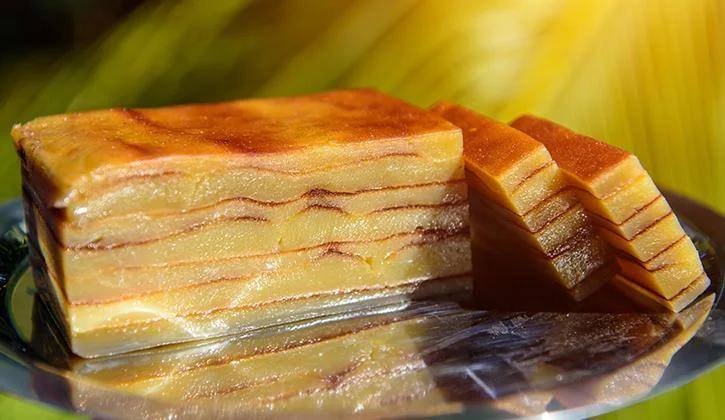
Bebinca is the centrepiece of the kuswar and the most famous Goan dessert of all — a rich, layered pudding of coconut milk, egg yolks, sugar, flour and ghee, baked one thin layer at a time until the slice shows its stripes. Traditionally seven layers, though versions run to sixteen, each baked separately over hours. Its origin is a legend rather than a settled fact: the story goes that a nun named Bebiana at the Santa Monica Convent in Old Goa created the pudding from leftover egg yolks — egg whites were used to starch clothes — making seven layers to symbolise the seven hills of Old Goa and Lisbon, and that the priests who tasted it asked for more layers. The dessert is named for her. Whatever the truth of the tale, bebinca is unmistakably Goan, made for Christmas, Easter and weddings. Read more in our bebinca guide.
Plum Cake: India's Christmas Cake, from Thalassery 1883
If one dish belongs to Christmas across the whole of India, it is plum cake: a dark, dense fruit cake of dried fruit soaked in rum or brandy, caramelised sugar, cashews, raisins and warm spices, baked weeks in advance and sliced thin. India's first Christmas cake is generally credited to Thalassery, in Kerala, where the baker Mambally Bapu of Mambally's Royal Biscuit Factory baked a cake on 20 December 1883 for the British planter Murdoch Brown, who had brought a sample from England. Kerala's plum cake remains the benchmark — darker and denser than most, with caramel syrup and local spices, the fruit soaked for weeks. Kolkata's bakeries are the other famous source, and across India it is the one Christmas food that crosses every community. For Kerala's wider table, see our what to eat in Kerala guide.
Appam and Stew: Kerala's Christmas Breakfast
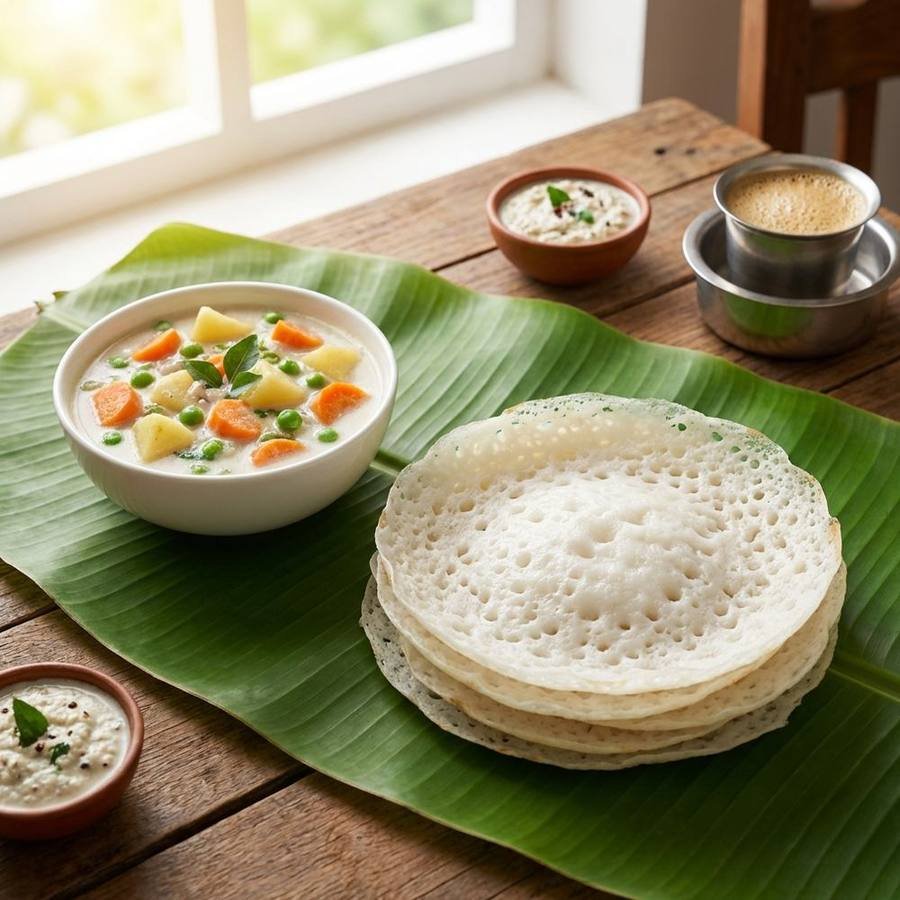
Christmas in Kerala begins at the table in the small hours. After midnight Mass, families sit down to appam with stew: appam are lacy, fermented rice pancakes, crisp at the edges and soft in the centre, served with a mild coconut-milk stew of chicken or mutton, with potatoes, carrots, ginger and green chillies. It is the most traditional meal of the Kerala Christmas. Christmas lunch — the theenmura feast — follows with duck roast in coconut-milk gravy, beef fry, fish moilee, ghee rice and more appam, finished with plum cake. The snack tins come out all week: achappam (rose cookies), kuzhalappam and cheeda, made in bulk for every visitor, alongside homemade grape wine. Its roots run through Syrian Christian and Latin Catholic tradition, Portuguese influence and coastal abundance. See our appam and stew guide for the dish itself.
Sorpotel and Sannas: The Goan Christmas Feast
The sweet tray is only half of a Goan Christmas. The feast table centres on pork: sorpotel, pork vindaloo, sannas and a roast. Sorpotel is a spicy, vinegary pork curry of Portuguese origin — from the sarapatel of Portugal's Alentejo region, carried to Goa by the Portuguese in the 16th century and remade by Goan cooks with toddy vinegar, dried red chillies and spices. It is traditionally made with pork and offal, and it was originally intended to be made for Christmas, though it now appears at weddings and feasts through the year. It improves after resting a day or three, so it is cooked ahead of the feast, and classically eaten with sannas, lightly sweet steamed rice cakes. Christmas Day lunch often features pork vindaloo and sorpotel with sannas, eaten with extended family around long tables. Pork vindaloo, the tangy stew with Portuguese roots, and a roast pig coated with masalas and vinegar complete the grandest tables.
Kolkata's Christmas Cakes: Nahoum's and Flurys
Kolkata's Christmas is inseparable from its bakeries, and two names dominate December. Nahoum & Sons, in New Market, is the city's last surviving Jewish bakery, started by the Baghdadi Jew Nahoum Israel Mordecai — the business began in 1902 and found its permanent shop, F-20 New Market, in 1916. Its rich fruit cake is synonymous with Kolkata's Christmas, and the story goes that the Archbishop of Canterbury, Geoffrey Fisher, tasted it and declared it the best fruit cake he had ever had. In December, queues form for the rich plum cake, mince pies, Christmas pudding and marzipan. Flurys, the Swiss patisserie on Park Street, has been an icon since 1927, when it was founded by a Swiss couple; at Christmas its plum cakes and rum cakes are stocked floor to ceiling, and its cake-mixing ceremony has become a December ritual of its own. A Jewish bakery and a Swiss tearoom, both older than independence, selling the same dark cake to a city that queues for it every year. For where the season happens in the city, see our where to celebrate Christmas in India guide.
Allahabadi Cake: Petha, Ghee and Fennel
The most distinctive regional Christmas cake in India may be the one almost nobody outside its city has heard of. The Allahabadi cake comes from Prayagraj, formerly Allahabad, and it is a Christmas cake with a desi heart: rum-soaked dried fruit and nuts like an English Christmas cake, but made with desi ghee instead of butter, and flavoured with petha (candied ash gourd), local marmalades and spices including cinnamon, nutmeg, mace, ginger and fennel seeds. It was created by the Anglo-Indian community of Allahabad, which grew around the railways, and the first Allahabadi cake is credited to Bushy Bakery in Civil Lines, run by Mohammad Aslam, in 1963 — made at the request of an Anglo-Indian woman from the railway colony, Miss Barnett, who brought petha and murabba (sweet fruit preserve) and asked for a cake built around them. A Christian festival, an English cake, a Muslim baker, and ingredients from a North Indian sweet shop, all in one slice.
Beyond the Big Three: Mumbai, the Northeast and the Anglo-Indian Table
Goa, Kerala and Kolkata are the famous three, but they are not the whole map. In Mumbai, the East Indian Catholic community — often described as the city's original inhabitants, shaped by 16th-century Portuguese influence and Marathi cooking — centres Christmas lunch on indyal, pork vindaloo made with the community's signature bottle masala, served with crusty kadak pav, alongside duck moilee, chicken curry and a bowl of country chicken soup after midnight Mass; the morning begins with fugias, soft deep-fried bread. In Nagaland, Christmas feasts centre on pork: roast pig, pork stew and smoked pork with bamboo shoot and axone (fermented soya bean), with doughnuts a favourite of the Ao community. In Anglo-Indian homes, from Kolkata to McCluskieganj in Jharkhand, preparations start months ahead — fruit soaked, kala jamun wine bottled, cake mixture handed to the local baker weeks early. There is no one Indian Christmas dinner. There are many, and each one is a history you can eat.
Watch & Feel the Place: Christmas Food of India on Film
Videos are by their respective creators.
Christmas Food of India FAQs
What is kuswar?
Kuswar is the platter of homemade sweets that Christian families of the Konkan coast — Goan and Mangalorean Catholics — make at Christmas and share with neighbours, relatives and friends. It typically includes neureos, kulkuls, bebinca, dodol, doce, perad (guava cheese), marzipan and rose cookies. The word is usually traced to the Portuguese consoada, the Christmas Eve supper.
What do people eat for Christmas in India?
It varies by region. Goan families prepare kuswar sweets, sorpotel and pork vindaloo with sannas. Keralites serve appam with stew, duck roast and dark plum cake. Kolkata's Christmas means rich fruit cake from heritage bakeries like Nahoum's and Flurys. Across urban India, plum cake and Christmas cookies are the most common holiday treats.
What is bebinca made of?
Bebinca is made of coconut milk, egg yolks, sugar, flour and ghee, flavoured with nutmeg. It is baked one thin layer at a time, traditionally seven layers, though versions run to sixteen. It is Goa's most famous dessert and a centrepiece of the Christmas kuswar.
Where was India's first Christmas cake baked?
In Thalassery (then Tellicherry), Kerala, where the baker Mambally Bapu of Mambally's Royal Biscuit Factory baked a cake on 20 December 1883 for the British planter Murdoch Brown, who had brought a sample from England. Kerala plum cake remains one of the best-loved parts of an Indian Christmas.
What is Allahabadi cake?
Allahabadi cake is Prayagraj's Christmas cake, created by the city's Anglo-Indian community. It is a fruit cake of rum-soaked dried fruit and nuts, made with desi ghee instead of butter and flavoured with petha (candied ash gourd), murabba and spices such as fennel, cinnamon, nutmeg, mace and ginger. The first one is credited to Bushy Bakery in Civil Lines in 1963.
What is served with sorpotel at Christmas?
Sannas — lightly sweet steamed rice cakes — are the classic partner for sorpotel at a Goan Christmas feast, with steamed rice as the everyday alternative. Sorpotel, a spicy, vinegary pork curry of Portuguese origin, is traditionally cooked a day or more ahead, as it improves with resting.
The sweets are fried, the fruit is soaked, the cake is queued for, and the neighbours get a plate whether or not they celebrate the feast — that is Christmas food in India. Next, read our where to celebrate Christmas in India guide to plan the trip around the table, and our what to eat in Goa and what to eat in Kerala guides for the two great Christmas kitchens in full, and our Christmas in Goa 2026 and Christmas in Kolkata: Park Street guides for where the season happens.
Plan your Christmas food trip
One festival, many tables — kuswar in Goa, appam and stew in Kerala, heritage cakes in Kolkata.
Where to celebrate Christmas in India →