
Odisha · 3-Day Itinerary
Bhubaneswar, Puri & Konark in 3 Days: The Golden Triangle of Odisha

By Beauty of Bharat — India travel guide, every place, every flavour.
Guides covering all 36 States and UTs, researched from official sources and checked at publish time. Corrections welcome — see About Beauty of Bharat.
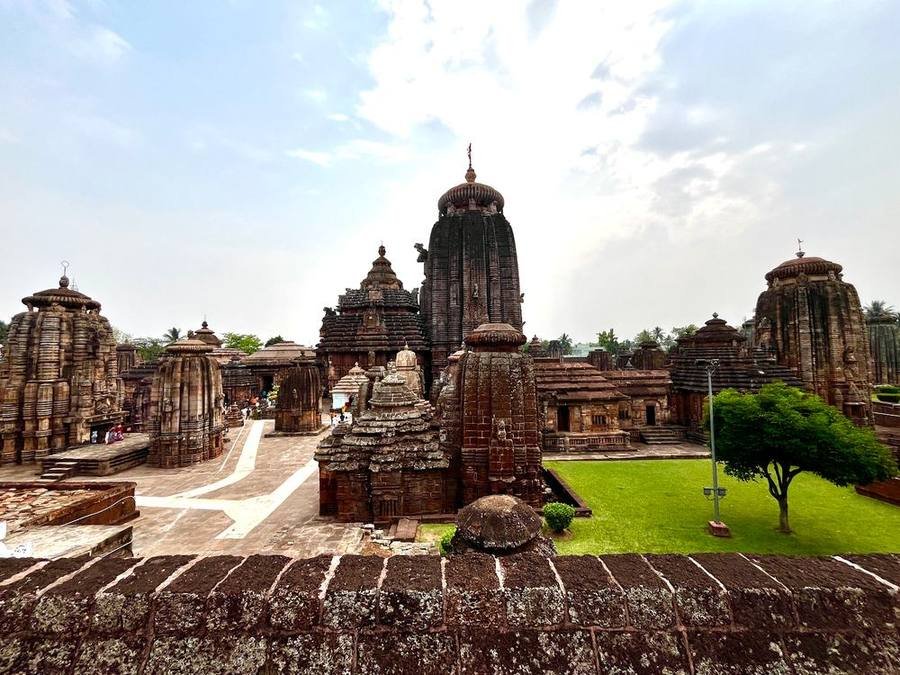
There is a temple in India that is also a calendar. At Konark, the Sun Temple was built in the 13th century as a colossal stone chariot: 24 carved wheels for the months of the year, drawn by seven horses for the days of the week. Bhubaneswar, Puri and Konark sit within about 65 km of each other on Odisha’s coast: in three days, a 2,000-year-old Jain cave, a living temple city, a beach town built around one of Hinduism’s holiest shrines, and a World Heritage monument that doubles as a sundial. The order that wastes the least driving: Bhubaneswar, Puri, then Konark and Raghurajpur on the way home — two nights, two bases, no backtracking. For the short day-by-day version, see our 3-day Bhubaneswar–Puri–Konark itinerary.
The 3-Day Golden Triangle at a Glance
| Day | Route | Highlights | Overnight |
| Day 1 | Bhubaneswar | Lingaraj, Mukteswar, Rajarani; Udayagiri–Khandagiri caves; Dhauli | Bhubaneswar |
| Day 2 | Bhubaneswar → Puri (about 60 km) | Pipli appliqué village, Jagannath darshan, Gundicha Temple, Puri Beach | Puri |
| Day 3 | Puri → Konark (about 35 km) → Bhubaneswar | Chandrabhaga Beach, Konark Sun Temple, Raghurajpur | Depart Bhubaneswar |
Distances and timings as reported at publish time; confirm temple timings and entry rules locally.
Day 1: Bhubaneswar — Temples and Caves
The day starts at the greatest of the Temple City’s shrines. Lingaraj Temple, raised in the 11th century and dedicated to Shiva as Harihara — a form that is both Shiva and Vishnu — is the grandest temple in the city, its tower rising about 55 metres over the sanctum. One rule shapes the visit: only Hindus may enter. Everyone else uses the raised viewing platform outside the northern wall, built for Lord Curzon’s visit, which looks over the tower and courtyard. Hours run broadly 6 am–12:30 pm and 3:30–9 pm; confirm on the day. Leave phones, cameras and leather at the gate, dress modestly, and give through the temple hundi. See our Bhubaneswar guide.
From Lingaraj, walk the old town: Mukteswar, a 10th-century temple with the city’s finest carved gateway, a stone torana covered in figures; Rajarani, built of red and gold sandstone, glowing at golden hour; and Bindusagar, the sacred tank between them. None carries Lingaraj’s entry rule.
After lunch, drive to the twin hills on the city’s western edge: Udayagiri and Khandagiri. Thirty-three rock-cut caves survive here, 18 on Udayagiri and 15 on Khandagiri, cut in the 2nd and 1st centuries BCE as shelters for Jain monks under King Kharavela of Kalinga. The finest are the Hathigumpha, or Elephant Cave, whose 17-line Brahmi inscription is the main record of Kharavela’s reign, and the double-storeyed Rani Gumpha, carved with hunts and court life. Climb Khandagiri for the day’s best sunset.
If the light holds, finish at Dhauli, about 8 km south on the Puri road, where the Kalinga War was fought in 261 BCE and Ashoka turned from conquest to dharma: his Brahmi rock edicts still stand at the hill’s foot, and the white Shanti Stupa above was built in 1971–72 by the Kalinga Nippon Buddha Sangha. Overnight in Bhubaneswar.
Day 2: Puri — Jagannath Darshan and the Beach
Leave Bhubaneswar early for the 60 km drive to Puri on NH-316, about an hour and a half to two hours. Halfway down, Pipli is worth a half-hour stop: the whole village works in appliqué, and you can watch the makers at work and buy direct.
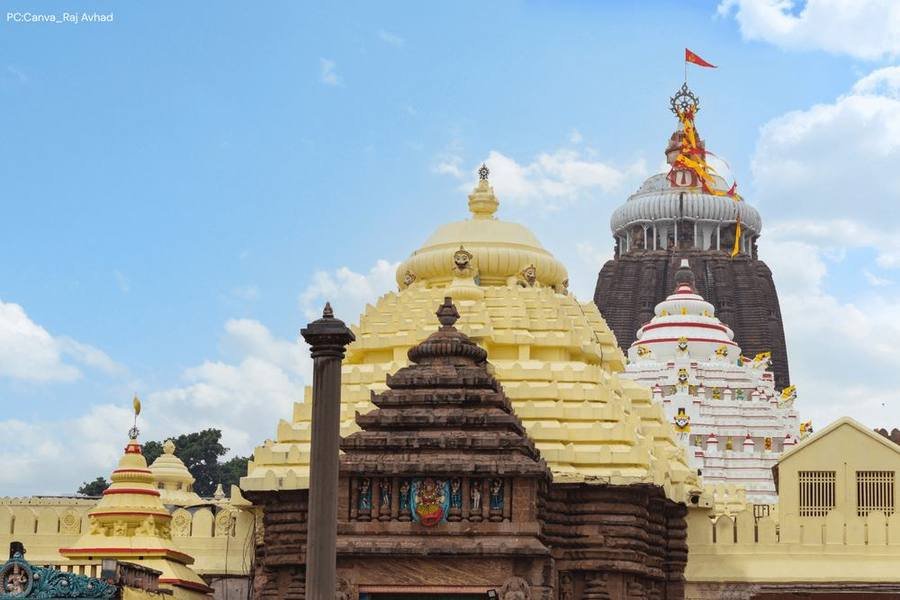
Puri’s heart is the Shree Jagannath Temple on Grand Road, one of the four Char Dham sites and the home of Lord Jagannath with his brother Balabhadra and sister Subhadra. Darshan runs roughly 5:30 am to 9 pm, with closures for rituals; the early morning, just after the Mangala Aarti, is quietest. The entry rule is strict: only Hindus may enter the temple. Non-Hindu visitors can see the 214-foot spire and the Nilachakra disc from the Raghunandan Library rooftop, across Grand Road. Since 1 January 2024 a dress code is enforced — no shorts, torn jeans, skirts or sleeveless clothes — and phones, cameras, shoes and leather items must be left outside at the cloakrooms. Entry is free. Afterwards, taste Mahaprasad, the temple’s consecrated food at Ananda Bazaar. See our Puri guide.
The afternoon belongs to the town. Walk Grand Road to Gundicha Temple, where the deities rest during the Rath Yatra, then down to Puri Beach — Golden Beach, the Blue Flag stretch — for the evening. The beach market comes alive at dusk: shell craft, sand art, fried snacks and the long promenade of families. That is why the overnight stay matters: the town is best after the day-trippers leave. Overnight in Puri. For what to eat, see our what to eat in Odisha guide.
Day 3: Konark and Raghurajpur — the Sun Temple and the Painters’ Village
Day three starts early on the Puri–Konark Marine Drive: about 35 km of coast road, roughly an hour, with Chandrabhaga Beach on the way. Stop at sunrise if you can — every February it fills for the Chandrabhaga Mela. Then on to Konark itself. See our Konark guide.

The Sun Temple is the payoff for the whole trip — and for the hook this guide opened with. Built in the 13th century by King Narasimhadeva I, it was conceived as the chariot of Surya, the Sun God: 12 pairs of carved wheels, 24 in all, drawn by seven horses. The wheels are popularly read as sundials: 24 for the months, seven horses for the days of the week — a calendar you can walk around. UNESCO inscribed it in 1984 under criteria (i), (iii) and (vi); it remains Odisha’s only World Heritage monument. One honest note: the great tower that once crowned the sanctum was lost in the 19th century, so what stands is the audience hall and the chariot base. Give it two hours, not twenty minutes; Konark is ASI-ticketed, so check timings and fees first. In early December the Konark Dance Festival — 1 to 5 December in 2026 — fills the auditorium beside the temple with classical dance each evening; see our Konark Dance Festival 2026 guide.
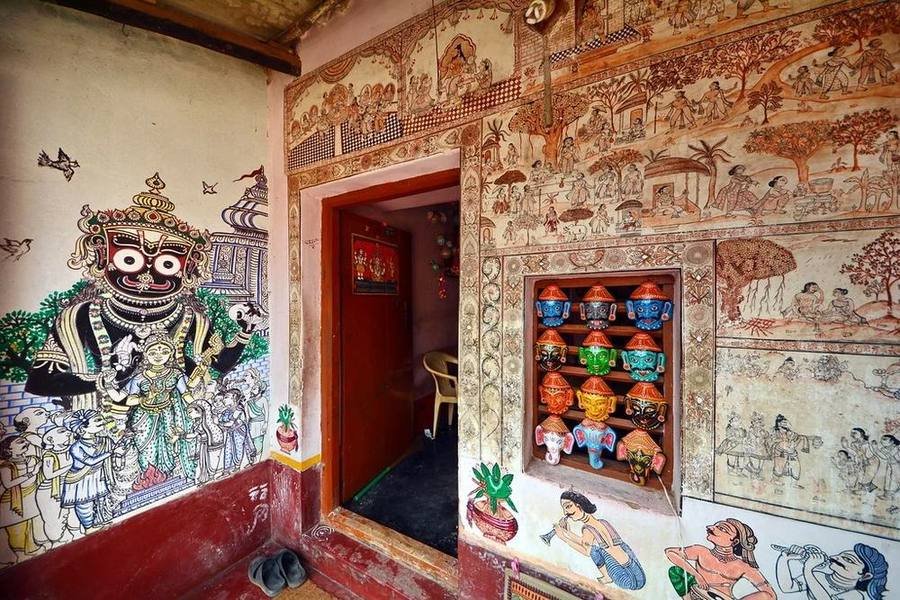
From Konark, the road back passes the triangle’s last stop, and the one most visitors skip. Raghurajpur sits about 14 km from Puri, a short turn off NH-316 at Chandanpur. Declared India’s first heritage crafts village by INTACH in 2000, it is home to Pattachitra painters whose tradition also supplies the painted cloths for Lord Jagannath’s throne and the Rath Yatra chariots. Every house is a studio: walk the two lanes, watch the artists paint mythological scenes, and buy a scroll from the painter. Allow an hour to ninety minutes, and carry cash. Then drive on to Bhubaneswar, about 65 km from Konark, in time for an evening flight or train. See our Raghurajpur guide.
Why Raghurajpur, not Chilika, on day three?
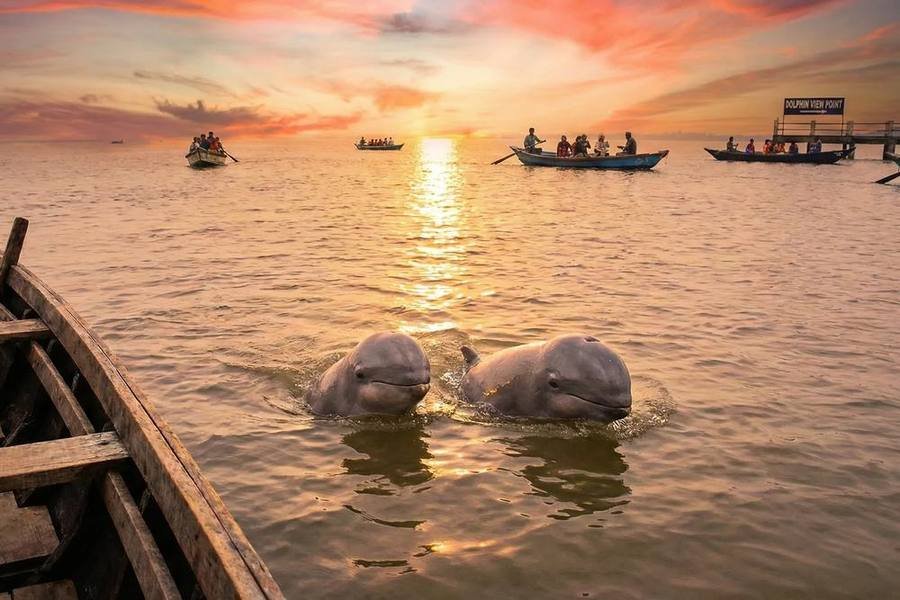
Chilika Lake is the trip most people ask about, and the one addition that breaks this itinerary. Satapada, the dolphin jetty, is about 50 km south of Puri — roughly an hour and a half each way — and the boat ride runs 1.5 to 3 hours. The lake holds around 150 endangered Irrawaddy dolphins, but they are wild animals in a lagoon of more than 1,100 sq km, and a sighting is never guaranteed — some mornings they simply do not show. Konark and Chilika in one day means rushing both. The honest choice is to swap Raghurajpur for a dawn run to Satapada — leave by 6:30 or 7 am — or add a fourth day and give Chilika the morning it deserves.
Best Time to Visit Puri and Konark
October to March is the window, and November to February is the best of it: warm days, a sea breeze and the clearest light on the temples. December adds the Konark Dance Festival, 1 to 5 December 2026. The date to plan around is Rath Yatra, when the deities ride three great chariots down Grand Road: in 2026 it falls on 16 July, so book months ahead. For the fortnight before it, the Anavasara, the deities are not shown at all. The June–September monsoon brings heavy rain; April and May are hot and sticky. If you can only pick one month, pick November or December. See our Rath Yatra in Puri page.
Bhubaneswar to Puri Distance and Getting Between the Three Cities
A private car with a driver is the sensible way to do this triangle: the distances are short, the roads are good, and a car lets you stop at Pipli, Dhauli and Raghurajpur, none of which is easy by bus. Bhubaneswar to Puri is about 60 km on NH-316, roughly an hour and a half to two hours; Puri to Konark about 35 km on the Marine Drive, roughly an hour; Konark back to Bhubaneswar about 65 km, roughly an hour and a half. Hire the car for all three days from Bhubaneswar and get quotes from two or three operators, since prices move with the season.
Trains and buses cover the main legs if you would rather not drive: regular trains connect Bhubaneswar and Puri, and buses — Mo Bus and state services — run the Bhubaneswar–Puri road through the day. Between Puri and Konark, buses are infrequent, and the Marine Drive is far better in a car you control. Fly into Biju Patnaik International Airport in Bhubaneswar, and check bus timings and fares locally — they change with the season.
Where to Stay on the Golden Triangle
Two nights, two bases: choose what you want to be near. In Bhubaneswar, stay near the airport and railway station for easy arrival and departure, or in the Old Town to wake up beside the temples. In Puri, choose between the temple area around Grand Road, by the Lion Gate before the crowds, and the beachfront along Marine Drive, quieter at night. Book well ahead for Rath Yatra week and the first week of December. No hotels are named here and no ratings given: pick the area, then choose on location, reviews and budget.
How Much Does the Bhubaneswar–Puri–Konark Trip Cost?
Rough planning figures for two sharing — estimates, not quotes: a modest trip, with simple stays, local food and a hired car, typically works out around &rupee;3,000–&rupee;6,000 per person per day; a comfortable trip, with better stays and a private car throughout, more like &rupee;7,000–&rupee;12,000. Flights or trains into Bhubaneswar are on top. Entry to Lingaraj and the Jagannath Temple is free, the caves and Konark are ASI-ticketed at modest rates, and the biggest variable is the car — get competing quotes. Chilika boats are charged per boat, not per person.
Watch & Feel the Place
Videos are by their respective creators.
Bhubaneswar, Puri & Konark FAQs
How many days are enough for Bhubaneswar, Puri and Konark?
Three days covers the triangle: a day in Bhubaneswar, a day in Puri, and a morning at Konark with Raghurajpur on the way back. Two days is possible but rushed — you would drop the caves or Raghurajpur. Four days adds Chilika properly, with a dawn boat from Satapada.
What is the best time to visit Puri and Konark?
October to March, with November to February the best of it: warm days, a sea breeze and the clearest light. December adds the Konark Dance Festival, 1 to 5 December in 2026. Avoid Rath Yatra week unless the festival is the reason for your trip, and expect heavy rain in the June to September monsoon.
Can non-Hindus enter the Jagannath Temple in Puri?
No. Only Hindus may enter. Non-Hindu visitors can see the 214-foot spire and the Nilachakra disc from the Raghunandan Library rooftop, across Grand Road. During the Rath Yatra, everyone can see the deities on the chariots.
How far is Puri from Konark?
About 35 km, roughly an hour on the Puri–Konark Marine Drive, with Chandrabhaga Beach on the way. The same road continues to Bhubaneswar, about 65 km from Konark.
How far is Chilika Lake from Puri?
Satapada, the dolphin jetty, is about 50 km south of Puri, roughly an hour and a half by road. Boats run 1.5 to 3 hours; dolphin sightings are never guaranteed — go early, when the water is calmest.
Three days, three cities, one story in stone, paint and prayer: a temple that is a calendar, a shrine that stops a town, a village of painted walls. Start with the temples, let the sea slow you down in Puri, and leave an hour free. Next, read our best places to visit in Odisha and our Odisha state guide.
Plan your Odisha Golden Triangle
A calendar in stone at Konark, a living shrine at Puri and a thousand temples in Bhubaneswar — three days is all it takes, and November is the month to go.
Odisha state guide →