
Telangana · State Guide
Best Places to Visit in Telangana: Hyderabad, Warangal & More

By Beauty of Bharat — India travel guide, every place, every flavour.
Guides covering all 36 States and UTs, researched from official sources and checked at publish time. Corrections welcome — see About Beauty of Bharat.
Telangana’s most famous temple is named after neither a god nor a king. It is named after Ramappa, the sculptor who built it — and its tower is made of bricks so light they float on water. That is the kind of state this is: India’s youngest, formed on 2 June 2014, holding some of its oldest surprises. The best places to visit in Telangana are Hyderabad, Warangal, Ramappa Temple, Nagarjuna Sagar Dam, Ananthagiri Hills, Yadagirigutta, Bhongir Fort, Pochampally, Medak and Kuntala Falls. This guide takes them one by one.
| Place | Area | Famous for | Best for |
| 1. Hyderabad | Central Telangana | Charminar, Golconda Fort, pearls, biryani | First-timers, heritage, food |
| 2. Warangal | East Telangana, ~140 km from Hyderabad | Kakatiya capital, Thousand Pillar Temple | History, temple architecture |
| 3. Ramappa Temple | Palampet, Mulugu district | UNESCO site, floating bricks | Architecture, photography |
| 4. Nagarjuna Sagar | Krishna River, Nalgonda district | World’s largest masonry dam | Dams, Buddhist heritage, boating |
| 5. Ananthagiri Hills | Vikarabad, ~75 km from Hyderabad | Forested hills, treks, coffee estates | Weekend escape, nature |
| 6. Yadagirigutta | Yadadri Bhuvanagiri district | Lakshmi Narasimha Swamy Temple | Pilgrimage, hilltop views |
| 7. Bhongir Fort | ~50 km from Hyderabad | 12th-century fort on a monolithic rock | Fort climbs, viewpoints |
| 8. Pochampally | ~45 km from Hyderabad | GI-tagged ikat weaving | Handloom, craft shopping |
| 9. Medak | ~100 km north of Hyderabad | Medak Cathedral, Medak Fort | Colonial heritage, day trip |
| 10. Kuntala Falls | Adilabad district | Tallest waterfall in Telangana | Waterfalls, monsoon trips |
Distances vary slightly by route. Timings, fees and boat services change with the season — check before you go.
1. Hyderabad — Charminar, Golconda and the Old City

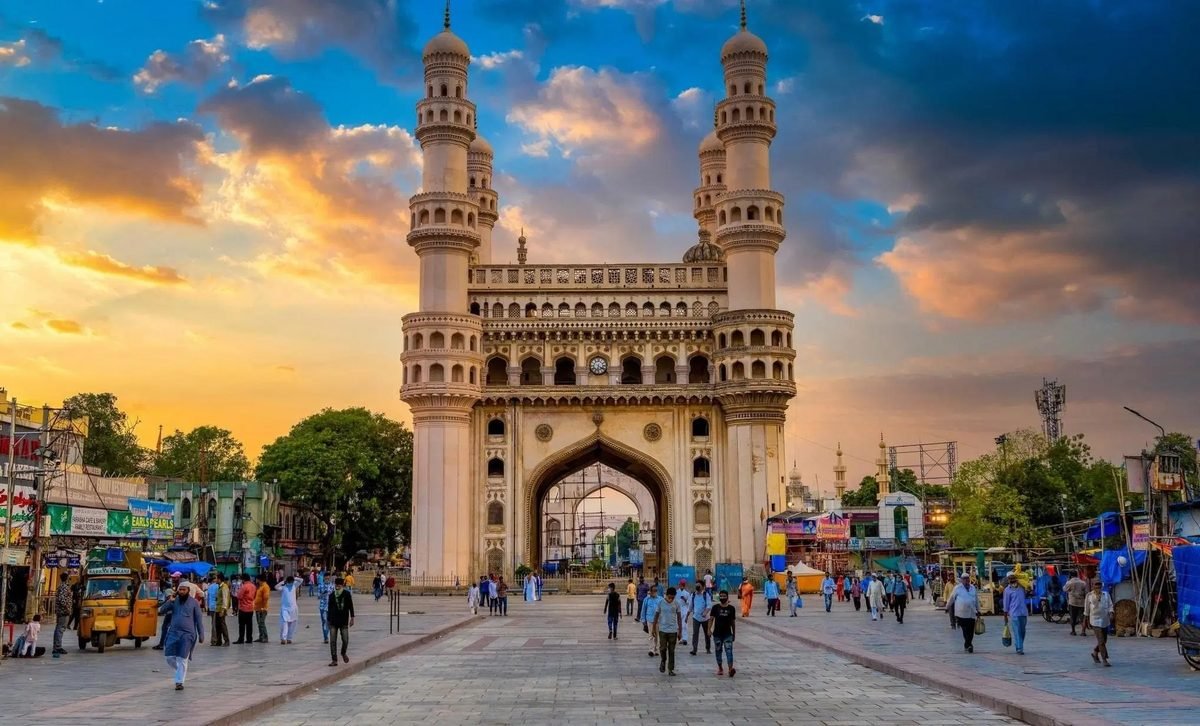
Hyderabad was founded in 1591 by Muhammad Quli Qutb Shah, and Charminar — built the same year — is still the city’s centre of gravity. Start there in the evening, when the monument is lit and Laad Bazaar fills with bangle shops, then cross to Golconda Fort, the Qutb Shahi citadel famous for its acoustic trick: a clap at the Fateh Darwaza gate is said to carry all the way to the Bala Hissar pavilion at the top. Between them sit the domed Qutb Shahi Tombs, the Salar Jung Museum and Hussain Sagar lake, with its giant Buddha statue on an island in the middle. Allow two full days for the city. For the markets, see our best shopping markets in Hyderabad guide, and for the food, our famous food of Telangana guide.
2. Warangal — the Kakatiya capital
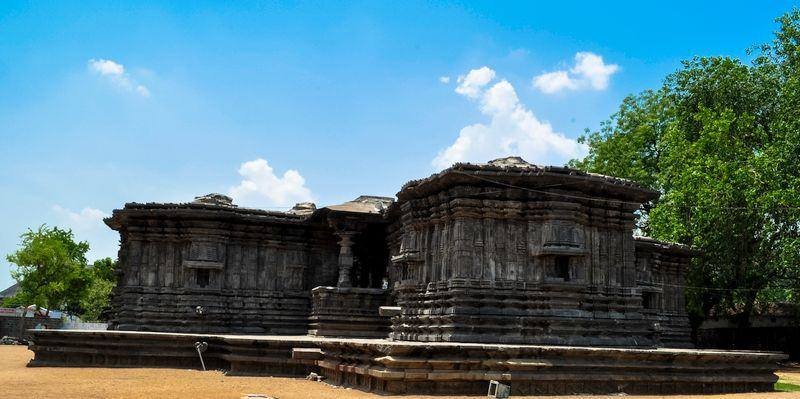
Warangal, about 140 km from Hyderabad, was Orugallu, the capital of the Kakatiya dynasty that ruled the eastern Deccan from the 12th to the 14th centuries. Its great sight is the Thousand Pillar Temple at Hanamkonda, built in 1163 by King Rudra Deva and dedicated to three deities at once — Shiva, Vishnu and Surya — in a triple-shrine plan, with perforated stone screens and carved elephants and Nandi bulls. The ruined Warangal Fort still shows the dynasty’s great stone gateways, the Kakatiya kala toranam, and Bhadrakali Temple sits by its lake on the edge of town. Warangal deserves a full day. See our Warangal destination guide.
3. Ramappa Temple — the UNESCO temple named after its sculptor

Ramappa Temple at Palampet, 66 km from Warangal and 209 km from Hyderabad, is the single most extraordinary sight in Telangana. Construction began in 1213 under the Kakatiya general Recharla Rudra, in the reign of King Ganapati Deva, and the temple is named not after its deity Shiva, nor its patron, but after Ramappa, its master sculptor — said to be the only temple in India named after its maker. Its tower is built of porous bricks so light they float on water, set on a sandbox foundation that has helped it stand for 800 years, and its eaves carry black-stone bracket figures of dancers up to six feet tall. UNESCO inscribed it as a World Heritage Site on 25 July 2021. Go in the morning light and pair it with Laknavaram Lake nearby.
4. Nagarjuna Sagar — the dam that drowned a Buddhist city
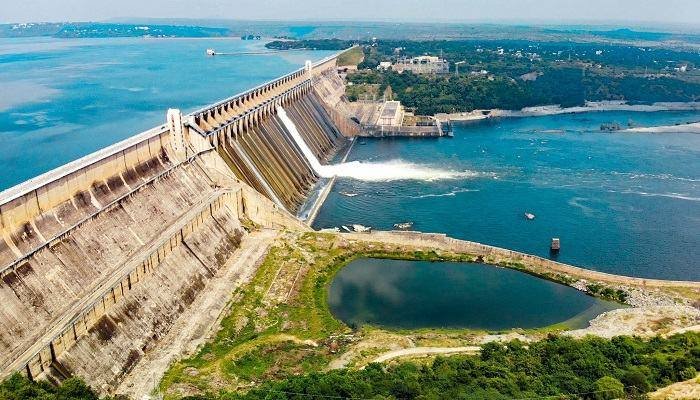
Nagarjuna Sagar Dam, across the Krishna River on the Telangana–Andhra Pradesh border, was built between 1955 and 1967 and is the world’s largest masonry dam. The reservoir submerged Nagarjunakonda, the 1st– and 2nd-century capital of the Ikshvaku dynasty and a great Buddhist centre, where the philosopher Nagarjuna is believed to have taught. Sculptures and stupas were rescued and rebuilt on Nagarjunakonda island, now a museum island reached by boat from the dam. Combine the dam, the island museum and the Ethipothala waterfalls nearby in one day. See our Nagarjuna Sagar destination guide.
5. Ananthagiri Hills — the hill station 75 km from Hyderabad

Ananthagiri Hills, in Vikarabad district about 75–80 km from Hyderabad, is Telangana’s closest answer to a hill station. Forested ridges, nature trails, coffee estates, an old temple and caves make it the standard weekend escape from the city — and the hills are the source of the Musi River, which feeds Hyderabad’s Hussain Sagar and Himayat Sagar lakes. Come for a day of walking and viewpoints, or stay a night in Vikarabad. The monsoon and the winter months show it at its greenest.
6. Yadagirigutta (Yadadri) — the hilltop temple
Yadagirigutta, about 13 km from Bhongir, is one of Telangana’s most visited pilgrimage hills: the Lakshmi Narasimha Swamy Temple on a hillock, with views over the surrounding plains. It pairs naturally with Bhongir Fort in a single day out from Hyderabad, and it is busiest on weekends — go early in the morning for the quietest darshan. There is no verified photo of Yadagirigutta in our library, so this one runs text-only.
7. Bhongir Fort — the fort on an egg-shaped rock
Bhongir Fort stands on a monolithic, egg-shaped rock about 500 feet high, roughly 50 km from Hyderabad. Its foundation was laid in the 12th century by the Western Chalukya ruler Tribhuvanamalla Vikramaditya VI, later held by the Kakatiyas, Bahmanis and Qutb Shahis. The climb is steep — a few hundred steps up the bare rock — and the reward is a 360-degree view over the Deccan plains. Start early, carry water, and allow two to three hours. There is no verified photo of Bhongir Fort in our library, so this one runs text-only.
8. Pochampally — the weaving village
Bhoodan Pochampally, about 40–50 km from Hyderabad, is where Telangana’s most famous textile is made. Pochampally ikat — yarn tie-dyed before weaving, in geometric patterns including the double-ikat technique where both warp and weft are dyed — received its Geographical Indication tag in 2004, the first GI registered from the Telangana region, and the village was named one of the UN World Tourism Organization’s Best Tourism Villages in 2021. Visit a weaver’s home or the handloom park, watch a loom at work, and buy from the maker. There is no verified photo of Pochampally in our library, so this one runs text-only.
9. Medak — the cathedral and the fort
Medak, about 100 km north of Hyderabad, holds two very different monuments. Medak Cathedral, begun in 1914 and consecrated on Christmas Day 1924, is one of the largest churches in India — a Gothic Revival building 200 feet long with a bell tower about 175 feet high, built with famine-relief labour under missionary Charles Walker Posnett. Above the town sits Medak Fort, a 12th-century Kakatiya fortification later held by the Bahmanis and the Qutb Shahis, with a 17th-century cannon and a mosque inside its walls. Together they make a comfortable day trip. There is no verified photo of Medak in our library, so this one runs text-only.
10. Kuntala Falls — the tallest waterfall in Telangana
Kuntala Falls, on the Kadam River in Adilabad district, is the tallest waterfall in Telangana at about 45 metres (around 147–150 feet), falling in two steps through dense forest. It is at its fullest after the monsoon, from about September to February, and the walk down to the base is part of the experience — wear shoes with grip, as the rocks are slippery. Adilabad town, about 58 km away, is the nearest base; the falls pair well with Pochera Falls and the Kawal Wildlife Sanctuary, known for its tigers. There is no verified photo of Kuntala Falls in our library, so this one runs text-only. See our Adilabad destination guide.
More Telangana: Basar, Bhadrachalam and the tiger country
Basar, on the Godavari in Nirmal district, holds the Gnana Saraswati Temple — one of the few temples in India dedicated to the goddess of learning, where children are traditionally brought for their first writing ceremony. Bhadrachalam, further down the Godavari, is one of South India’s great Vaishnavite pilgrimage towns, centred on the Sri Sita Ramachandra Swamy Temple. And for wildlife, the Nallamala forests hold Amrabad Tiger Reserve, while Kawal Wildlife Sanctuary in Adilabad is the state’s other tiger country. Each of these is an overnight from Hyderabad rather than a day trip. There is no verified photo of Basar, Bhadrachalam or the tiger reserves in our library, so this section runs text-only.
Best Time to Visit Telangana
October to February is the best time to visit Telangana: cool, dry days in the high teens to high twenties, comfortable for sightseeing. March to May often crosses 40°C. The monsoon months, June to September, bring green countryside and full waterfalls — the best season for Kuntala and Bogatha Falls — but heavy rain can disrupt roads and outdoor plans. Time a visit for Bathukamma in September–October or Bonalu in July–August for the state at its most festive; dates shift with the lunar calendar, so confirm before you travel. See the festivals hub for what is on.
How Many Days Are Enough for Telangana?
Five to seven days cover a proper first trip: two days in Hyderabad, one day for Warangal and Ramappa, one day for Nagarjuna Sagar, and one or two days for Ananthagiri Hills, Bhongir and Yadagirigutta or Adilabad. Three days cover Hyderabad plus one day trip. Ten days allow a relaxed pace with Bhadrachalam and the Godavari added. Our Telangana state guide plans the same ground as 3-day and 5-day itineraries.
How to Reach Telangana
Fly into Hyderabad’s Rajiv Gandhi International Airport, or arrive by train at Secunderabad or Hyderabad stations. Warangal is about 140 km from Hyderabad by rail and highway, and most other stops on this list are day trips by road from Hyderabad — hire a car for the longer runs to Adilabad and Bhadrachalam. For weekend ideas from the capital, see our best weekend trips from Hyderabad.
Watch & Feel the Place: Telangana on Film
Videos are by their respective creators.
Best Places to Visit in Telangana FAQs
What is the best time to visit Telangana?
October to February. Days are cool and dry, in the high teens to high twenties, which suits fort climbs, temple visits and Old City walks. March to May often crosses 40°C; the monsoon months of June to September are best for waterfalls but can disrupt roads. Bathukamma in September–October and Bonalu in July–August are the festive peaks — confirm the year’s dates before you travel.
How many days are enough for Telangana?
Five to seven days for a proper first trip: two days in Hyderabad, one day for Warangal and Ramappa Temple, one day for Nagarjuna Sagar, and one or two days for Ananthagiri Hills, Bhongir and Yadagirigutta or a waterfall run to Adilabad. Three days cover Hyderabad plus one day trip; ten days add Bhadrachalam and the Godavari at a relaxed pace.
What is Telangana famous for?
Deccan heritage and living craft: Charminar and Golconda Fort in Hyderabad, the Kakatiya temples of Warangal and the UNESCO-listed Ramappa Temple, the world’s largest masonry dam at Nagarjuna Sagar, GI-tagged Pochampally ikat, Hyderabadi biryani, and the Bathukamma and Bonalu festivals. It is India’s youngest state, formed on 2 June 2014, with a history running back through the Nizams, Qutb Shahis, Kakatiyas and Satavahanas.
Which waterfall is famous in Telangana?
Kuntala Falls in Adilabad district — the tallest waterfall in the state at about 45 metres, on the Kadam River, falling in two steps through dense forest. It is at its fullest after the monsoon, from about September to February. Bogatha Falls in Mulugu district, called the Niagara of Telangana, and Ethipothala Falls near Nagarjuna Sagar are the other well-known falls.
What are the top historical sites in Telangana?
Charminar and Golconda Fort in Hyderabad, the Thousand Pillar Temple and Warangal Fort, Ramappa Temple (a UNESCO World Heritage Site since 2021), the Qutb Shahi Tombs, Bhongir Fort and Medak Fort. Ramappa is the standout: built from 1213, named after its sculptor, and built with floating bricks on a sandbox foundation.
What are the famous waterfalls in Telangana?
Kuntala Falls in Adilabad, the tallest in the state; Bogatha Falls in Mulugu, known as the Niagara of Telangana; and Ethipothala Falls near Nagarjuna Sagar. Kuntala is the best-known and the tallest at about 45 metres — visit after the monsoon, when the Kadam River runs full, and wear shoes with grip for the slippery rocks.
The sculptor got the temple named after him, the bricks float, and the youngest state in India keeps the oldest surprises. Start in Hyderabad, give Warangal a full day, and save a morning for Ramappa. Next, read our best places to visit in Andhra Pradesh, our best places to visit in India, our state-by-state guide and the blog for the trip beyond Telangana.
Plan your Telangana trip
Charminar and Golconda, Kakatiya temples, a UNESCO site and the state’s tallest waterfall — in India’s youngest state.
Telangana state guide →