
Chhattisgarh · Central India State Guide
Best Places to Visit in Chhattisgarh: Chitrakoot Falls, Bastar & More

By Beauty of Bharat — India travel guide, every place, every flavour.
Guides covering all 36 States and UTs, researched from official sources and checked at publish time. Corrections welcome — see About Beauty of Bharat.

Chhattisgarh holds India's widest waterfall — a horseshoe of the Indravati River that spreads to nearly 300 metres across in the monsoon — and a festival that runs for 75 days, longer than any other in India. Yet this central Indian state, carved out of Madhya Pradesh in 2000 and still nearly 44% forest, sees only a fraction of the visitors its neighbours get. That is exactly the point: empty viewpoints, living tribal culture and temples carved like Khajuraho, without the crowds. The best places to visit in Chhattisgarh are Chitrakoot Falls, Tirathgarh Falls, Bastar and Jagdalpur, Kanger Valley National Park, Sirpur, Bhoramdeo Temple, Barnawapara Wildlife Sanctuary, Mainpat, Raipur and Dongargarh — and the best time to see them is October to February, when the weather is cool and dry. See our Chhattisgarh state guide.
What are the top 10 places to visit in Chhattisgarh?
| Top 10 places | Chitrakoot Falls, Tirathgarh Falls, Bastar & Jagdalpur, Kanger Valley, Sirpur, Bhoramdeo, Barnawapara, Mainpat, Raipur, Dongargarh |
| Most famous place | Chitrakoot Falls — India's widest waterfall, the "Niagara of India" |
| Best time to visit | October to February; July to October for Chitrakoot at full force |
| How many days | 5–7 days for the full circuit; 3–4 days for Bastar alone |
| Famous for | Waterfalls, forests, tribal culture, caves and ancient temples |
| Is it safe? | Established routes around Raipur, Jagdalpur and Chitrakoot are fine; check current advisories before interior Bastar |
1. Chitrakoot Falls — India's widest waterfall

Chitrakoot — also spelt Chitrakote — is the reason most people come to Chhattisgarh, and it earns the journey. On the Indravati River, about 38 kilometres west of Jagdalpur in Bastar district, the river drops some 29 metres over a horseshoe-shaped cliff. In the dry months it splits into three braids; in the monsoon it becomes a single sheet of water nearly 300 metres wide, which is why it is called the "Niagara of India" and why it holds the title of India's widest waterfall. It is also one of only six waterfalls in India recognised as a geomorphosite, a place of geological heritage. Go between July and October to see it at full force, or October to February for comfortable weather and boat rides below the falls when water levels allow. Read our Chitrakote Falls guide.
2. Tirathgarh Falls — the quieter cascade

If Chitrakoot is the showpiece, Tirathgarh is the place to linger. This multi-tiered waterfall drops about 100 metres in steps through the forest of Kanger Valley National Park, some 35–40 kilometres from Jagdalpur, and it is at its best just after the monsoon, when the tiers run full but the paths are walkable again. There is no single dramatic viewpoint here — instead, a series of pools and rock ledges where you can sit and watch the water work its way down. Pair it with Chitrakoot on the same Bastar day; the two falls could hardly be more different. See the Tirathgarh Falls guide.
3. Bastar & Jagdalpur — the tribal heartland
Jagdalpur is the gateway town of Bastar and the base for almost every trip into the region — the falls, the caves and the forests all radiate out from it. Bastar itself is the cultural heart of Chhattisgarh, home to Gond, Muria and Maria communities whose craft traditions are still alive: Dhokra metal casting, an ancient lost-wax technique, is the best-known export, and village markets around Jagdalpur are the place to see it made. Dantewada, south of Jagdalpur, holds the Danteshwari Temple, counted among the 52 Shakti Peethas, and it is the centre of Bastar Dussehra — a festival tradition that runs for around 75 days, among the longest continuous festival cycles anywhere in India, and nothing like the Dussehra celebrated elsewhere. See the Jagdalpur guide.
4. Kanger Valley National Park — caves and forest

Kanger Valley is the quiet side of Bastar — one of India's most biodiverse forests, and the park most travellers miss. Its headline features are underground: limestone caves, including the Kotumsar Cave and the Kailash Gufa, hollowed out over millennia beneath the forest floor. Above ground, the park holds waterfalls, including Tirathgarh, and wildlife that ranges from leopards to wild boar. The caves close in the monsoon, so check at the gate or with the tourism office before you go, and give the park a full day rather than a drive-through — it rewards the slow traveller.
5. Sirpur — the ancient city on the Mahanadi

Sirpur, on the banks of the Mahanadi about 80 kilometres from Raipur, is Chhattisgarh's great archaeological site — a town where Hindu, Buddhist and Jain remains stand side by side. The centrepiece is the Lakshman Temple, a 7th-century brick temple dedicated to Vishnu and one of the finest early brick temples in India, surrounded by the remains of ancient monasteries and viharas. It is an easy day trip from Raipur and best explored in the cool months, October to February, when you can walk the ruins without the heat. See the Sirpur guide.
6. Bhoramdeo Temple — the Khajuraho of Chhattisgarh
Bhoramdeo is the temple most visitors have never heard of, and the one that surprises them most. An 11th-century Shiva temple — completed in 1089 — it stands 18 kilometres north-west of Kawardha in Kabirdham district, at the foot of the forested Maikal hills. Its walls are covered in deities, dancers and erotic sculpture in the style of Khajuraho and Konark, which is how it earned its nickname, the "Khajuraho of Chhattisgarh". About a kilometre away stands the Madwa Mahal, a 14th-century Shiva temple, and every year in the last week of March the Bhoramdeo Mahotsav brings the complex alive. A corridor project to improve the site was announced in January 2026, so expect the approach to keep getting easier.
7. Barnawapara Wildlife Sanctuary — the wild plains
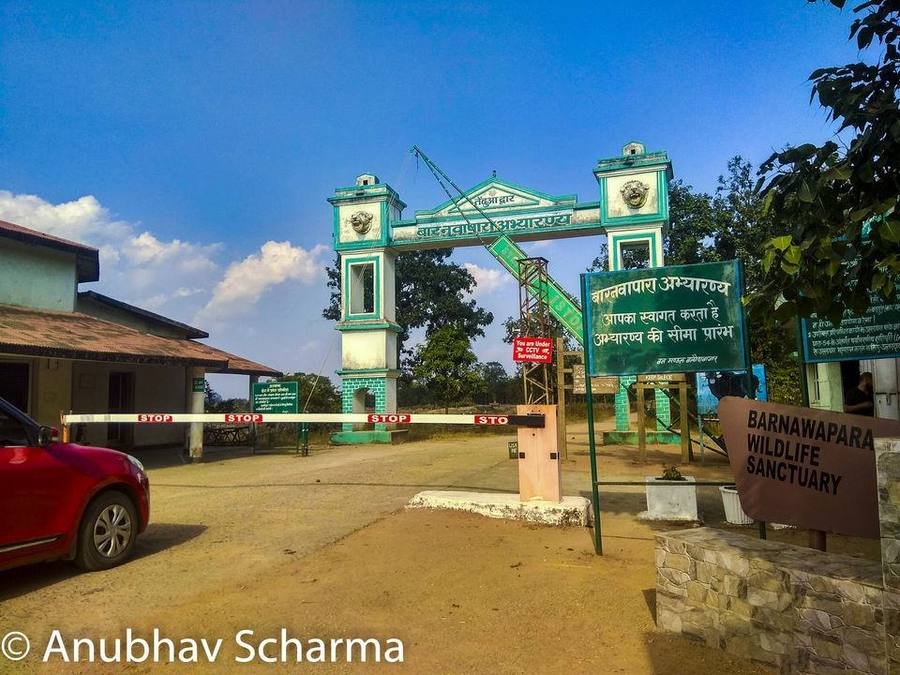
Barnawapara is Chhattisgarh's most accessible wildlife stop: a sanctuary of grassland and sal forest where leopards, gaur, sambar and wild boar roam, and where the Hareli Eco Resort sits inside the sanctuary itself — a stay that puts you in the forest at dawn, when the animals are out. It pairs naturally with Sirpur on the Raipur circuit, and winter is the best season, when the grass is low and sightings are at their best. See the Barnawapara guide.
8. Mainpat — the Mini Tibet

Mainpat, in Surguja district in the north of the state, is Chhattisgarh's cool escape — a hill plateau settled by Tibetan refugees, with monasteries, prayer flags and a climate that feels nothing like the plains below. It is called the "Mini Tibet of Chhattisgarh", and the nickname fits: this is the state's one place for slow mornings, mountain air and waterfalls that run through pine and sal forest. Come between October and February, and give it at least a night — Mainpat is a place to stay, not a place to tick off.
9. Raipur — the capital and gateway
Almost every Chhattisgarh trip starts in Raipur, the state capital and the entry point for the whole state — and it is worth a day in its own right before you head south to Bastar or east to Sirpur. The city is the transport hub, with the airport and the rail connections that make the rest of the state reachable, and it is also the best place to taste the state's food: Fara, the steamed rice-flour dumplings, Chila, the savoury pancakes, and Aamat, the tangy mixed-vegetable stew. Try Fara first — it is the dish Chhattisgarh is known for.
10. Dongargarh & Dantewada — temples on hills
Two temple towns round out the list. Dongargarh, in Rajnandgaon district, is known for the Bamleshwari Temple, which sits on a hill above the town and draws pilgrims through the year — climb it for the view as much as the darshan. Dantewada, deep in Bastar, holds the Danteshwari Temple, one of the 52 Shakti Peethas and the spiritual centre of the 75-day Bastar Dussehra. Both are best visited as part of a wider Bastar route rather than as standalone trips, and both reward travellers who arrive with time to spare.
What is the best time to visit Chhattisgarh?
October to February is the window for almost everything: the weather is cool and dry, the parks and caves are open, and the roads are at their best. November to February is the coolest stretch — misty mornings in the forests, migratory birds in the wetlands — while October brings the falls still running strong after the monsoon. If Chitrakoot at full force is your priority, go in July to October, when the Indravati runs full and the falls spread to their widest — but accept muddier roads and heavier rain. March to May is hot and best avoided for outdoor sightseeing, and June to September is the monsoon: the landscape turns intensely green, but the caves close and some forest roads become difficult.
How to plan your Chhattisgarh trip
Five to seven days is the right length for a first trip: three to four days in Bastar (Jagdalpur, Chitrakoot Falls, Tirathgarh Falls and Kanger Valley) and three days on the Raipur circuit (Sirpur and Barnawapara, with a day in the capital). Fly or take the train into Raipur, then travel south to Jagdalpur by road or overnight train. On safety: the established tourist routes around Raipur, Jagdalpur, Chitrakoot and Kanger Valley are fine for visitors, and in September 2026 the Chhattisgarh Tourism Board said the state is now Naxal-free and safe for tourists — but check current advisories before finalising plans, stick to well-known routes, and travel by day in the interior. Entry fees, safari timings and cave openings change by season, so confirm before you go. For the wider picture, see our best places to visit in India and the state-by-state guide, and for the table, try Fara, Chila and Aamat.
Watch & Feel the Place: Chhattisgarh on Film
Videos are by their respective creators.
Best Places to Visit in Chhattisgarh FAQs
What are the top 10 places to visit in Chhattisgarh?
Chitrakoot Falls, Tirathgarh Falls, Bastar and Jagdalpur, Kanger Valley National Park, Sirpur, Bhoramdeo Temple, Barnawapara Wildlife Sanctuary, Mainpat, Raipur, and Dongargarh.
What is the best time to visit Chhattisgarh?
October to February is the best window overall, when the weather is cool and dry and the parks and caves are open. Visit in July to October if you want to see Chitrakoot Falls at its widest and most powerful.
What is Chhattisgarh famous for?
Chhattisgarh is famous for its waterfalls — led by Chitrakoot, India's widest — its forests, tribal culture, limestone caves, ancient temples like Sirpur and Bhoramdeo, and crafts such as Dhokra metal casting.
How many days are enough for Chhattisgarh?
Five to seven days cover the full circuit: three to four days in Bastar (Jagdalpur, Chitrakoot, Tirathgarh and Kanger Valley) and three days on the Raipur circuit (Sirpur and Barnawapara).
Is Chhattisgarh safe for tourists?
Yes, on the established tourist routes around Raipur, Jagdalpur, Chitrakoot Falls and Kanger Valley. In September 2026 the Chhattisgarh Tourism Board said the state is now Naxal-free and safe for tourists — still, check current advisories before travelling and stick to well-known routes.
What is the best time to visit Chitrakoot Waterfall?
July to October, during and just after the monsoon, when the Indravati runs full and the falls spread to nearly 300 metres wide. October to February is the most comfortable time to visit, with cooler weather and boat rides below the falls when water levels allow.
Chhattisgarh rewards the traveller who goes looking for the quiet corners: a waterfall wider than any other in India, a festival that lasts 75 days, temples carved like Khajuraho, and forests that still feel untouched. Start in Bastar, then let the state surprise you. Next, read our state-by-state guide to India — and if central India has caught you, Madhya Pradesh is the natural next stop.
Plan your Chhattisgarh trip
Waterfalls, forests, tribal culture and ancient caves — India's quietest adventure.
Chhattisgarh state guide →