
Andhra Pradesh · Cave Guide
Belum Caves Guide: India's Second-Longest Cave System — Complete Guide

By Beauty of Bharat — India travel guide, every place, every flavour.
Guides covering all 36 States and UTs, researched from official sources and checked at publish time. Corrections welcome — see About Beauty of Bharat.
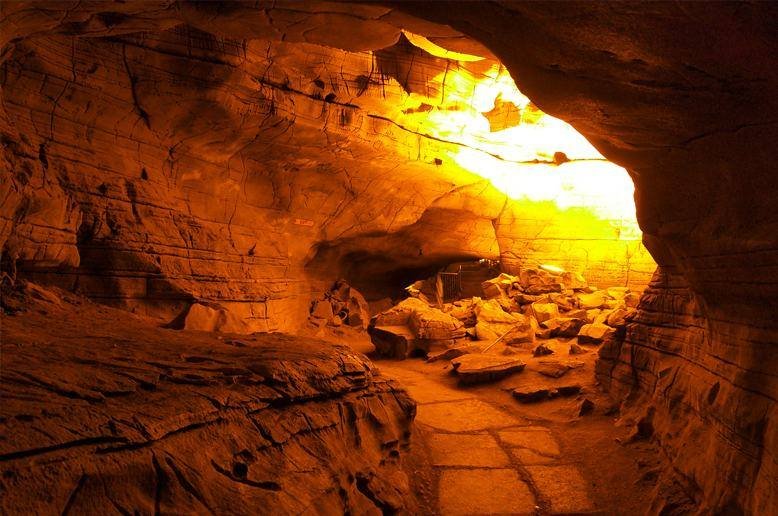
Stand on the ground above Belum Caves and nothing gives it away. The Rayalaseema plain around Belum village is flat, dry and sun-baked, with scrub and farmland stretching to the horizon — no cliffs, no gorge, no hint of what lies below. Then you walk down a staircase, the light thins, the air turns warm and damp, and you are inside the second-longest cave system in India: 3,229 metres of limestone passages, galleries and chambers carved by a river that no longer flows here, with a monks’ meditation hall, a chamber of a thousand stone lingams and a stream that vanishes into the dark. The short answer: the caves are open daily, roughly 10 am to 5 pm, the visitor route covers about 1.5 km of the 3.2 km system in around two hours, and the best months are October to February.
Belum Caves at a glance: 3,229 m of explored cave, India’s second-longest cave system after Meghalaya’s Krem Liat Prah; about 1.5 km open to visitors on a lit, marked route; deepest point about 46 m (150 ft) at Patalaganga; near Belum village, Kolimigundla mandal, Nandyal district, Andhra Pradesh; nearest railhead Tadipatri, about 30 km away; allow about 2 hours inside; open daily, roughly 10 am to 5 pm. Our Belum Caves offbeat guide has the shorter version.
What Are Belum Caves?
Belum Caves are a limestone cave system under the flat Rayalaseema plains of Andhra Pradesh, formed over immense time as underground water dissolved the limestone and dolomite rock — a process geologists call karst erosion. The sediments inside are deposits of the Chitravathi river, which once flowed through the caves when the region was far wetter. The result is long passages, spacious chambers, sinkholes, freshwater galleries and siphons, decorated with stalactites, stalagmites and other dripstone formations. The explored length is 3,229 metres (about 3.2 km), which makes Belum the second-longest cave system in India and the longest open to the public in the Indian subcontinent. In June 2025 the Geological Survey of India designated Belum Caves a Geo-heritage Site, the seventh such site in Andhra Pradesh.
The human story inside is nearly as old as the geology. Archaeological finds show people used the caves as far back as around 4500 BCE, and later Buddhist and Jain monks sheltered and meditated here — relics found inside are now kept in the museum at Anantapur. The caves were first described scientifically in 1884 by the British geologist Robert Bruce Foote, and were systematically explored and mapped in 1982–84 by a German team led by Herbert Daniel Gebauer. The Government of Andhra Pradesh declared the site protected in 1988, the Andhra Pradesh Tourism Development Corporation began developing it for visitors in 1999, and the caves opened to the public in February 2002. The science has not stopped: in 2015 researchers found a previously unknown species of cave isopod in the Patalaganga section and named it Andhracoides gebaueri after Gebauer.
What to See Inside Belum Caves
Only about 1.5 km of the system is open to visitors, on a lit pathway with bridges, staircases and fresh-air shafts built into the cave. Guides are usually available at the ticket counter and are worth taking: many chambers only make sense when someone points out the flowstone patterns and explains the river that formed them. The route is mostly walking and ducking through low passages, with occasional narrow squeezes that open suddenly into large halls.
Simhadwaram — the Lion’s Gate
The entrance to the cave is a natural arch of stalactites shaped like a lion’s head — Simhadwaram, the Lion’s Gate. It sets the tone: nothing here is named on a plaque so much as for what it resembles.
Kotilingalu Chamber
The chamber most people remember is Kotilingalu, where thousands of stalactites hang like Shiva lingams — koti is the Telugu word for ten million. It also holds a huge pillar where a stalactite and a stalagmite met after growing towards each other for centuries.
Patalaganga — the Deepest Point
Patalaganga, the Ganga of the underworld, is the deepest point of the cave, about 46 m (150 ft) below the entrance level. A perennial underground stream runs here and disappears into the depths of the earth; local tradition holds that it reappears at a well in Belum village. The approach is muddy and the air noticeably more humid.
Saptasvarala Guha — the Musical Chamber
Saptasvarala Guha, the cave of the seven notes, is named for stalactites that give off musical, almost metallic tones when struck. It is a small chamber, and the effect depends on the guide knowing which formations to tap — another reason to take one along.
Dhyan Mandir — the Meditation Hall
Dhyan Mandir is the large chamber believed to have been used by Buddhist monks for meditation. A natural formation inside resembles a bed and a pillow, and the hall’s stillness makes the claim easy to believe.
Thousand Hoods and the Banyan Tree Hall
Two more formations reward a slow look upwards. The Thousand Hoods section has a ceiling covered with formations that look like the hoods of cobras, while the Banyan Tree Hall — Voodalamari in Telugu — holds a large pillar with stalactites hanging like the aerial roots of a banyan tree. Both reward stopping and letting your eyes adjust.
The Buddha Statue Outside
Before you go in, or after you come out, look up at the 40-foot white Buddha statue seated in padmasana on a lotus on a hillock near the entrance, one hand in vitarka mudra. It commemorates the monks who once lived in the caves and is the landmark you will spot first from the road.
Belum Caves Timings and Entry Fee
Belum Caves are open every day of the week, and most sources put the hours at 10:00 am to 5:00 pm. A few recent reports give slightly different closing times, with last entry around 4:30 pm, so treat 10 am to 5 pm as the working window and arrive by mid-afternoon. You need about two hours inside to cover the open sections properly, so reach the ticket counter no later than about 3 pm. Timings can change, so check before you go.
The entry fee is the part where sources disagree, because it has risen more than once. Older reports list &rupee;50 for Indian adults; 2023 reports put it at &rupee;70; the most recent reports, from 2025–26, put Indian adult entry at roughly &rupee;65 to &rupee;90 and children aged 5 to 10 at roughly &rupee;45 to &rupee;60, with children under 5 free. Foreign visitors are consistently reported at &rupee;300. Parking is reported at around &rupee;10 to &rupee;20 per car, and guides at the gate at roughly &rupee;100 to &rupee;200. Treat all of these as reported ranges and confirm the current fee at the ticket counter. Carry cash: mobile connectivity around the caves is patchy, so online payments may not work when you need them.
Belum Caves Best Time to Visit
October to February is the best time to visit Belum Caves, with December and January the driest and coolest months on the Rayalaseema plain. That window matters for the journey as much as for the caves: the approach across the plains is far more pleasant in winter, and the same months are the best for pairing Belum with Gandikota and the temples around Tadipatri.
One warning applies in every season: the cave interior stays warm and humid all year round, whatever the weather outside. Visitors come out sweating even in December, so wear light clothing and carry drinking water — there is no food or water once you are inside — and wear shoes you do not mind getting muddy, because parts of the route, especially near Patalaganga, are wet and slushy. Avoid the peak summer months, when the surface heat is harsh, and note that monsoon rain can make the surrounding tracks muddy. The caves are not recommended for elderly visitors or for people with claustrophobia, breathing difficulty or heart conditions, because the route involves low passages, steps and two hours underground in warm, humid air.
How to Reach Belum Caves
Belum Caves sit near Belum village in Kolimigundla mandal. Tadipatri railway station (station code TU) is the nearest railhead, about 30 km away, with buses and taxis onward to the caves; Nandyal, the district headquarters, also connects by bus. By road, Belum is about 106 km from Kurnool and roughly 290 km from Bengaluru, a drive of about four and a half to five hours. From Hyderabad the drive takes around six hours. Kadapa is the nearest airport, but flights there are generally not direct, so most visitors fly into Bengaluru or Hyderabad and drive the rest of the way.
Driving yourself is the easiest option, because public transport to the cave entrance itself is limited — most visitors hire a car from Tadipatri or Nandyal and keep it waiting at the entrance. The ticket counter is at the entrance, and a spiral metal staircase leads down into the cavern; the same point serves as both entry and exit. APTDC runs a Haritha restaurant on the site, though most visitors stay in Tadipatri and treat Belum as a half-day stop. There is no mobile network inside the cave, so download your maps before you go down.
Belum Caves to Gandikota Distance
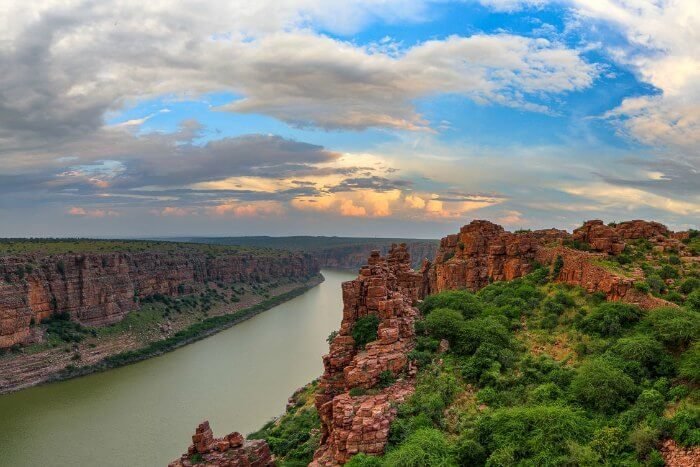
Belum Caves to Gandikota is about 61 to 67 km by road, roughly an hour to an hour and a half of driving, which is why almost every visitor pairs the two. The combination works because the two places are opposites: Gandikota is an open gorge you look down into, Belum is a cave system you descend into, and together they make a complete day in Rayalaseema. The usual plan is Belum in the morning and Gandikota for the afternoon sunset over the Pennar gorge. Our Gandikota guide covers the fort, the gorge and the sunset viewpoint, and our Gandikota offbeat guide has the shorter version. If you have a second day, the temples of Tadipatri — the Bugga Ramalingeswara and Chintala Venkataramana temples — and Yaganti are the natural additions.
Watch & Feel the Place
Videos are by their respective creators.
Belum Caves FAQs
In which district are Belum Caves located?
Belum Caves are in Nandyal district of Andhra Pradesh, near Belum village in Kolimigundla mandal. The district was formerly part of Kurnool district, which is why older guides still say Kurnool.
What is the entry fee for Belum Caves?
Recent visitor reports put Indian adult entry at roughly &rupee;65 to &rupee;90 and children aged 5 to 10 at roughly &rupee;45 to &rupee;60, with children under 5 free. Foreign visitors are reported at &rupee;300. Fees have risen more than once, so confirm the current fee at the ticket counter before you go.
What are the Belum Caves timings?
Belum Caves are open every day, most sources giving 10:00 am to 5:00 pm. A few recent reports give slightly different closing times, with last entry around 4:30 pm, so arrive by mid-afternoon and allow about two hours inside.
How much time do I need for Belum Caves?
Allow about two hours. The visitor route covers roughly 1.5 km of lit passages and chambers, and most visitors take between 80 minutes and two hours to walk it, longer if you take a guide and stop at every formation.
How far is Gandikota from Belum Caves?
About 61 to 67 km by road, roughly an hour to an hour and a half of driving. The two are the classic Rayalaseema pairing: Belum in the morning and Gandikota for the afternoon and sunset over the Pennar gorge.
Is Belum Caves worth visiting?
Yes, if you enjoy unusual places and natural formations. It is India’s second-longest cave system and the longest open to the public, with chambers, a meditation hall and a stream that vanishes underground — an experience quite unlike any other cave in India. Take a guide, wear comfortable shoes and carry water, because the route is warm, humid and involves low passages and steps.
Walk out of Belum Caves and the plain looks exactly as it did when you arrived — flat, dry, ordinary. That is the whole trick of the place: one of India’s great natural wonders is hiding under farmland, marked only by a staircase in the ground and a white Buddha on a hillock. If the underground leaves you wanting the opposite view, read our Gandikota guide next — and if you are planning the wider state, our Andhra Pradesh guide and famous food of Andhra Pradesh guide cover where to go and what to eat around it.
Plan your Andhra Pradesh trip
Belum’s caves below the ground, Gandikota’s gorge above it and the temples of Tadipatri in between — two days in Rayalaseema covers the best of it.
Andhra Pradesh state guide →